

NEWS
LCD Soundsystem - This is Happening
Apr. 25, 2010Everyone needs something to shake that bootay too. Luckily, LCD Soundsystem stepped
Everyone needs something to shake that bootay too. Luckily, LCD Soundsystem stepped

Brian Fallon and gang try to continue their success after the critically acclaimed The '59 Sound. Fallon has said that the song writing was going to be different from their previous two albums. It is always risky to tamper with a working formula, but maturity is a good thing to see from a band. Hopefully this leads to good things for The Gaslight Anthem.

Some students living in Fargo Quadrangle are petitioning for monetary compensation. They believe their living environment this year has been unsatisfactory. John Collins, a sophomore accounting major, and Fargo resident, is fed up with the University Residence Halls and Apartments. For the past year his dorm room, as well as others on his side of building one have dealt with the inconvenience of the noise from the construction on the future William R. Greiner residence hall. "The noise is not conducive to living," said Owen Eichensehr, a junior accounting major and Fargo resident. "50 to 60 people have had to put up with this all year." Angered by the constant interruptions, Collins decided to take action and form a petition to compensate Fargo residents for their disruptive living environment. He acts as a representative for the students listed the petition he created. "I had no idea the construction would be happening when I picked my room in March of last year. It wasn't until August that I found out," said Collins. "We are paying $5,928 a year for rooms just like everyone else but we are not getting the same product. We are owed some compensation." Collins isn't the only Fargo resident upset by the constant noise from construction. Close to 50 people have signed his petition for compensation so far and Collins believes this is the only way to get through to the residents hall about this irritating problem. "The only contact [with RH&A] prior to this petition was in the form of two e-mails, one of which I found offensive," Collins said. "They came up with ideas but never executed them, and when they did with the white noise machines, it was a joke." Collins is referring to a machine that releases noise from a fan, which is about four inches high and is the size of a bowl. "It just makes more annoying noise that doesn't cancel the noise from construction," Collins said. "They also gave us hours of all the study spaces available on campus." Eichensehr agrees with Collins that the white noise machines do not work. "[RH&A's] idea of how to fix the problem with the white noise machines was not well thought out. They don't work, and we were never informed they were available. You have to put in a special request to get one." This petition, residents hope, will prompt RH&A to monetarily compensate those students negatively affected by their living experience. Brett Wymer, a sophomore international business and finance major, feels as if compensation is necessary. "This consistently has been going on all year and has significantly affected the amount of sleep I've gotten," Wymer said. "The construction makes all kinds of ridiculous noise and it doesn't seem like anyone is helping us with this. I hope the university would do something to compensate us for this because it was been an awful experience and one of the worst sleeping and living environments." University Residence Halls and Apartments addressed this issue in an e-mail sent in December. In the e-mail, Joseph J. Krakowiak, director of URH&A, stated that his organization was "…concerned with the impact the South Ellicott construction project may have on [residents]" and that they would like to minimize the disruption students may experience." But, residents claim little to nothing has been done. URH&A Senior Staff Associate Kevin Ahuna met with Collins regarding this issue and according to Collins was "very understanding about the student situation," but could make no promises until Krakowiak returned to the office. URH&A declined comment to The Spectrum until Monday. E-mail: news@ubspectrum.com
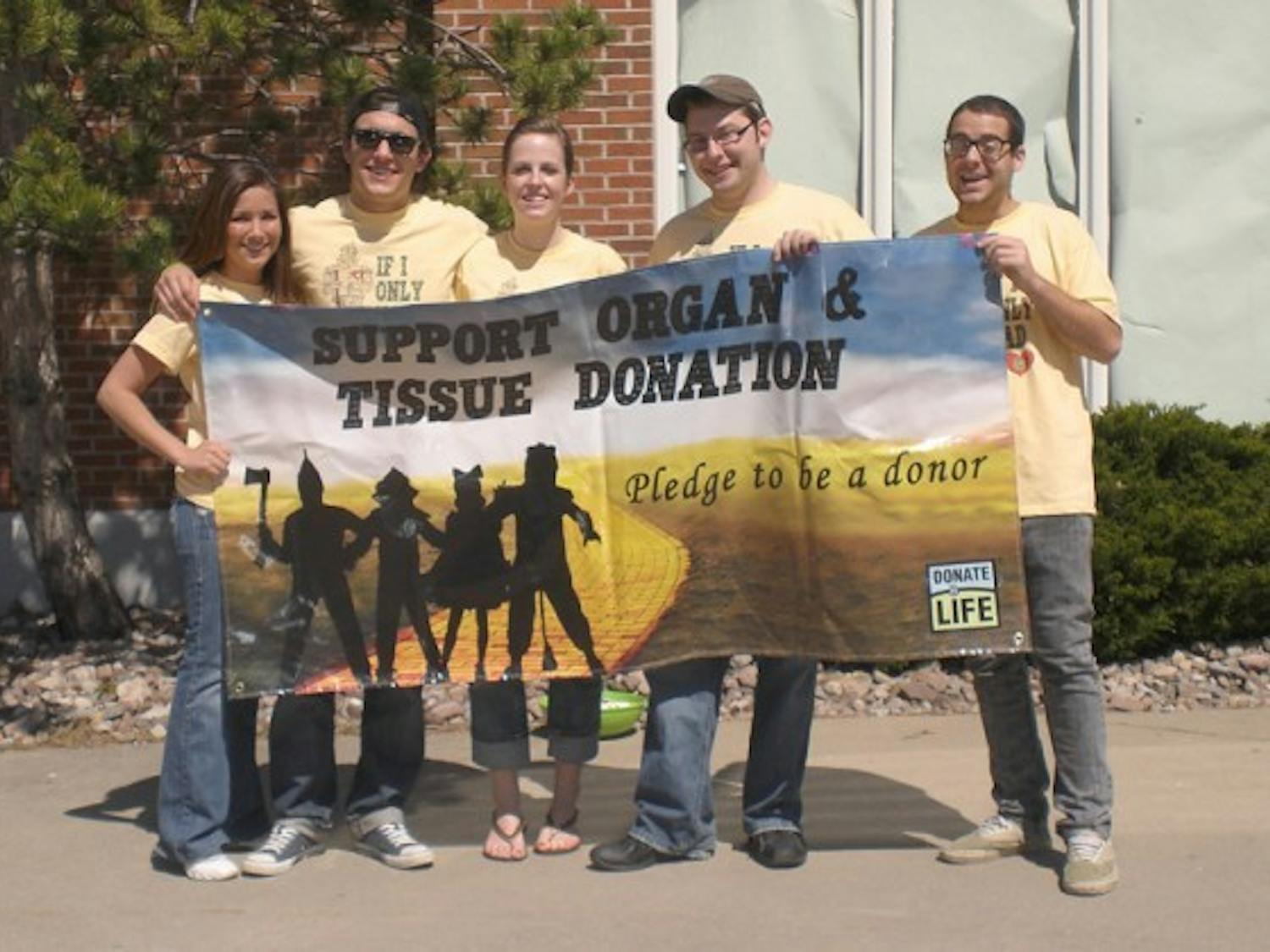
Eighteen people will die today waiting for an organ transplant. University at Buffalo students enrolled in the COM 441 Advanced Public Relations course are hosting a special carnival-themed event in the Student Union Wednesday, in hopes of changing this number. "The goal is twofold," said Karen Swierski, the course professor and executive director of the Western New York Chapter of the Juvenile Diabetes Research Foundation. "The first is to create more awareness of the need for organ and tissue donation, and the second is to sign people up for the NYS Organ and Tissue Donation Registry." The students from the COM 441 class will be partnering with Upstate New York Transplant Services today in hosting the carnival, which will be held from 10 a.m. to 2 p.m. Swierski, who has taught COM 441 for the past seven years, believes that having her students organize a real public relations campaign, where they have an actual budget, deadlines and a clearly defined goal, teaches them in a way that supersedes what they could learn in the classroom. "[The students] get to experience what working in public relations in ‘the real world' is like," Swierski said. "It helps them define their career objectives more clearly." Danielle Keller, a Donate Life Education Coordinator for UNYTS, discussed with the students the importance of their assistance to her organization. "I would like to encourage them to think about the waiting list that has over 106,000 people who need an organ," Keller said. "And on the blood side, knowing that one out three people will need a blood transfusion at some point in their life reminds us all that blood donation is crucial." Keller also introduced the class to her daughter, Lexi, a young lady who was given a second chance at life because of an organ donation. Lexi was born with a congenital heart defect and has struggled with this life threatening condition since she was born. Lexi was in a medically induced coma when her family finally got the news that they had been praying for – the doctors had found her a heart. She received the heart transplant in 2004, and woke up from her coma less than two weeks before her fifth birthday. Now in fifth grade at St. Peter's Lutheran School in Sanborn, Lexi is a happy, healthy and vibrant example of the power of organ donation. Inspired by stories about the thousands of people who are waiting for a transplant, Swierski's students used their promotional skills learned in class to increase awareness about a worthwhile cause, and they have found that the experience has been truly rewarding. Rebecca Hoy, a member of the campaign's special events team, encourages all students to stop by the carnival. "It's a fun day we have planned for everyone," Hoy said. "But while you're having fun, you can also help a good cause. Who doesn't love a bouncy castle? The COM 441 course will try to persuade students to commit to organ donation through their slogan, "If I Only Had a Heart," which Keller believes is an appropriate name for the campaign. "I am so inspired by the work and dedication from Karen and her students," Keller said. "It is so moving to see young people embracing our mission and helping to raise awareness. As a mom of a transplant recipient, I am personally touched by these campaigns." E-mail: features@ubspectrum.com

Raj J. Kaul, a revered professor of the Department of Electrical Engineering, passed away April 9 from a "prolonged illness."
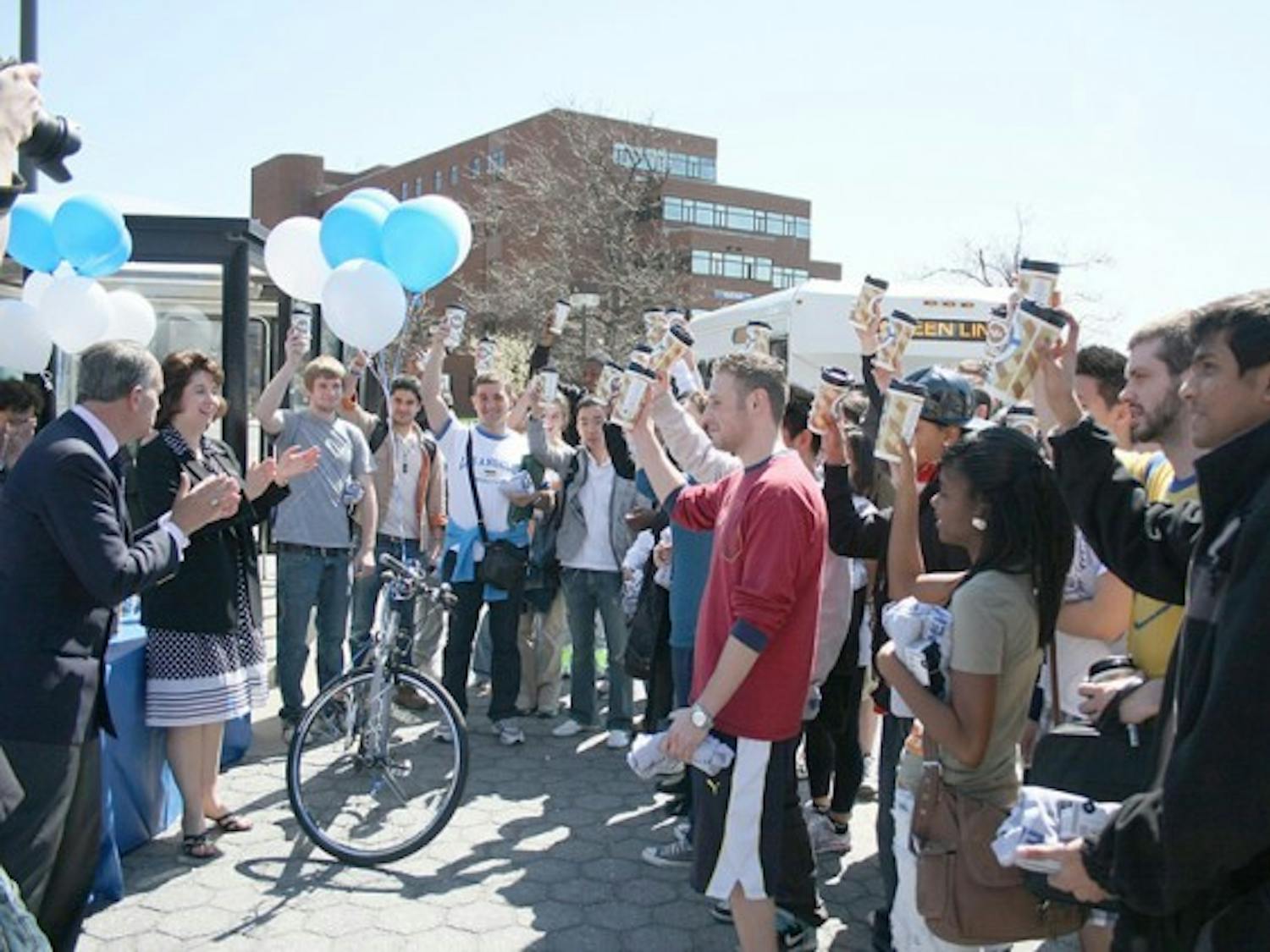
The UB Stampede, the University at Buffalo's intercampus bus service, celebrated its 15 millionth passenger on Wednesday. The 15 millionth rider was calculated based off of the number of buses used in a day, taking into consideration the average number of passengers on board. All passengers on the winning bus received prizes as a token of appreciation for utilizing the university transportation. Many received T-shirts and UB campus dining and shops mugs. One random mug contained a plastic bicycle replica and the student who received the mug containing it won a new bike. "We are very pleased with the event," said Chris Austin, assistant director of parking and transportation services. "[We are also] pleased to highlight all the students and staff who utilize our public transportation." This celebration was meant to highlight the benefits public transportation has on the environment as well as to commend those who take advantage of it. "The UB Stampede has an enormous impact on the environment," said Maria Wallace, the director of parking and transportation services, in a press release. "It transports more than 20,000 passengers daily, saving 8,800 personal vehicle trips each weekday and eliminating more than 49 million pounds of carbon dioxide annually. The 15 millionth passenger campaign showcases UB's progress toward fulfilling our commitment to sustainability and climate neutrality." E-mail: news@ubspectrum.com

Most people wouldn't expect the Buffalo area to have its own secluded oasis. But the town of West Seneca recently received a donation in the form of a relatively pristine 14-acre wetland.

Since 1985, the Relay for Life has raised money, spread cancer awareness and given communities across the nation the opportunity to celebrate life. The University at Buffalo hosted a relay event from Mar. 27-28 for the sixth straight year, and for the fourth straight year, senior Cristina Simonow was a leader among activists. Simonow, a senior psychology major, captained her Relay for Life team for the second consecutive year. But this time, the relay had an added importance to her. Simonow was the relay's top fundraiser. "I relay so that one day people will be able to say, ‘I don't know anyone who has had cancer,'" Simonow said. "[I don't want] kids [to] lose their parents. [I relay] so that people no longer have to lose people so special and important to them." Simonow's grandfather died of lung cancer when she was a freshman and other family members – including her grandmother, mother and father – have felt the effects of the deadly disease. Even her boyfriend is a cancer survivor. When Simonow was a senior in high school, her best friend died from non-Hodgkin's lymphoma. "He taught me to fish when I was little…I was in his wedding party," Simonow said. "Greg died only a few weeks before the birth of a baby whose mother had agreed to donate the cord blood for the stem cells as a treatment. He left behind a wife and kids. I know they're growing up without him and that kills me, too." Simonow's favorite part of the Relay is the Lumineria lap – a single lap walk in honor and remembrance of those that have lost the battle and those who are still fighting. Every year, the walk has brought Simonow to tears because of the painful memories. This year, the relay honored 35 cancer survivors and recognized six American Cancer Society funded researchers who currently work at UB. The event amassed 150 teams that equated to 1,300 participants. Thus far, participants have raised nearly $60,000 and are within $7,000 of the campus's record amount of donations. "Each person who shares the relay experience can take pride in knowing that they are working to create a world where this disease will no longer threaten the lives of our loved ones, or claim another year of anyone's life," said Stacie Waddell, the director of special events with the American Cancer Society. As depressing as cancer is to think about, the Relay for Life is not meant to be a sad experience. "It's about bringing hope and celebrating the survivors and their families. It's supposed to be a fun night, and it always is," Simonow said. The top fundraisers all have very personal reasons to want to participate in the relay. Fred Rich, a first-year education graduate student, takes pride in the event. "This year's event meant that I had to fundraise like I had never fundraised before because I lost an aunt who I loved very much on Feb. 27 to pancreatic cancer," Rich said. UB's Relay for Life will contribute its earned funds to programs intent on one day finding a cure to the life-threatening disease. "The relay is a really positive event with a positive message. We can work together to make a change. We can bring comfort to those fighting cancer. We can help women deal with the repercussions of losing their hair and we can provide transportation for people who need treatment. The relay is a way for regular people to make a difference." E-mail: news@ubspectrum.com

UB students inspire junior urban plannersBy BRENDON BOCHACKIAssistant News Editor
In a recent study released by Harvard's John Kennedy School of Government, college-age students were polled to reveal answers about post-graduation anxiety. This national Web-enabled survey tested 3,117 18-29 year-olds in America and focused on life after graduation. The poll found that 60 percent of young adults were concerned with "keeping their heads above water" which includes being able to pay off student debts and other financial obligations. Fifty-eight percent of those surveyed were worried about finding affordable housing, 45 percent worried about not being able to stay in school and 46 percent were worried about finding and keeping a job. The study hits close to home as students prepare for graduation in May. Many UB students are worried about post-graduation life and the prospects waiting in the job market. "I'm seriously considering law school," said Thomas Topper, a junior management major. "Not only because I have legitimate interest in the law, but also because I'm worried about the local job market." Fear of the job industry after graduation keeps many students in higher education longer. According to The National Associated of Colleges and Employers, in 2009, 27 percent of college graduates reported that they planned on attending graduate school. Richard J. Porter, a senior political science major plans to attend UB's law school in the fall of 2010 and is confident in his decision. "UB has strong ties to the Western New York legal community and its alumni network across New York State is top notch," Porter said. Graduate school has become an attractive alternative to many students worried about what the job market has in store for them. Dave Leven, a 2009 graduate of the University of Rochester with degrees in financial economics and political science, is just one example. Leven has been working as a mover for a local family operation as well as a personal assistant for a Rochester area executive since graduation. While the idea of having two jobs seems fantastic to some, Leven's reality is not. "I work two jobs and between them I work between 60 and 80 hours on an average week," Leven said. "You'd think I would be living the life, but I'm not." The University of Rochester expects students to spend in excess of $50,000 a year for their undergraduate education, while consistently ranking within the top 50 National Universities, according to USNEWS. UB is ranked slightly above 100 in the USNEWS survey of national universities. The fear of not being able to pay back student loans, or find a job in the competitive job atmosphere remains a constant worry for many undergraduate students looking toward the future. E-mail: news@ubspectrum.com

Ilan Pappé's March 24 lecture certainly stirred up talk within the community. Ernest Sternberg, professor of Urban and Regional Planning, feels that Pappé's lecture bordered on hate speech. Sternberg believes Pappé is "creating evil or sinister causes out of [the] context of war." Where Pappé blames Zionists for rewriting history, Sternberg sees the opposite. "[Pappé is] taking history and distorting it to blame one people," Sternberg said. "The claim it makes of ethnic cleansing is an example of this." Sternberg, an advocate for peace in Israel, wonders why Pappé was invited to speak by the Western New York Peace Center. "Why would the Peace Center invite an extremist?" Sternberg said. "[There is] something fundamentally wrong with this." There are a few radicals on campus, all with Marxist backgrounds, according to Sternberg. "When history didn't work out the right way, they needed to a find a new enemy," Sternberg said. Sternberg believes the Jews have always been convenient to blame. He feels that Pappé has taken much of the Palestinian expulsion out of the context of history. "It is possible to take history out of context," he said. In 1948, Israel – Palestine at the time – experienced a mass migration of Jews from Europe. The country was under English control after the British took it from the Ottoman Empire. The British stopped allowing Jews into Palestine, even after the Arab revolts against the Jews in 1933 and the Holocaust. One hundred thousand Jews were left in displacement camps. Sternberg's own family survived Auschwitz, one of the worst Nazi concentration camps. Unlike Pappé, they see Zionism as a "collective to take care of ourselves, defend ourselves." "[My mother said] how stupid we were to not take our lives in our own hands," Sternberg said. After the UN created the enclave for Jews in the Middle East, five armies attacked the fledgling state. "It would have been like the Holocaust again," Sternberg said. He went on to say that the Palestinian expulsion was in the "context of a total war." "If Israel wanted to ‘ethnically cleanse,' why didn't they get rid of the Arabs, then?" Sternberg said. Instead, Sternberg points out that though some Palestinians were expelled from Israel during the war, many left the country on their own. But all Jews were expelled from the West Bank. "[It is] disturbing to me that this is the image international students get," Sternberg said of the publicized pro-Palestinian views. "[It is] really depressing to me that [some] Muslim students have no radical bone in their body and the most radical image of Israel is being pushed on them." Israel is a land where Jews of all ethnic backgrounds are welcome. Many have Arab ethnicities. They fled the Arab and North African countries where they lived when their citizenship was revoked. They were also tired of living under Shar'ia Laws, which made non-Muslims subservient to Muslims. Sternberg stands by his belief that Pappé is taking a people and making them seem evil. "The question is why Ilan Pappé wants to do this," Sternberg said. E-mail: news@ubspectrum.com

UB's new student information system will go live in phases over the next year. The new system will include improvements and simplifications to tasks, registration, grading and processing financial aid. Kara Saunders, assistant vice provost for Undergraduate Education, announced the news to the Faculty Senate at its Tuesday meeting. "A few years ago, the faculty, staff and students at UB were frustrated across the boards with the IT services," Saunders said. "They weren't getting what they expected." The UB 2020 Web Content Initiative Project also includes representatives from three different areas: University Communications (UC), The School of Medicine and Biomedical Sciences (SMBS), and The Office of the Chief Information Officer (CIO.) A Project Team of around 50-70 people, including UB staff, is on board for the project. The new system, which will include personal software, could be beneficial to UB staff and students. The result of the Web Content Initiative Project could result in long-lasting relationships with its many diverse constituencies. "After deciding to use Oracle/PeopleSoft which is used by a number of other universities, we made the system into our own," Saunders said. "We configured the system and it is now called UBSIS. We wanted to personalize the system." Saunders is certain that the changes to the system will provide students with the interactive content they need. "The main message that we want to get out to students is that we feel the transformation will be a really good change and will leave students with greater opportunities at their fingertips." Saunders said. The project will benefit the community, but there are some concerns. While members of the UB community may struggle to adapt to changes, the Student Services Transformation project, part of the UB 2020 long-range strategic plan, will ultimately modernize the university's operations. This will benefit students, staff and faculty, according to an article in the UB Reporter. MyUB will also be seeing some changes. Changes to the look, feel and functions of the MyUB portal will be among the most visible improvements on the way. The new program will increase functionality with MyUB. Students will also be able to view financial aid and their credit balance on MyUB. Faculty members will also benefit from advancements like the new system's ability to assign multiple instructors to a single course. This will also allow multiple professors in team-taught classes to grade and review student lists. The system will streamline data collection, enabling authorized offices across the institution to share students' personal information. "The driver behind the project was partly frustration," Saunders said. "It was also what we needed -- we needed to provide student services and make them more available." E-mail: news@ubspectrum.com

These days, it seems like there is talk about taxes on many commodities that were never thought of as taxable. Some taxes, however, might be beneficial to the general public's health. Dr. Leonard Epstein, a distinguished professor of pediatrics and social and preventive medicine at UB, has found evidence that when junk foods are taxed, mothers tend to buy less of them, which could result in some degree of prevention of childhood obesity. The study Epstein conducted had various mothers go grocery shopping in an analog grocery store where the prices of products were altered in one of two ways: food considered to be junk food was taxed by either 12.5 percent or 25 percent, or the food considered to be healthy was subsidized by either 12.5 or 25 percent. "People bought fewer junk foods with less fats, less carbohydrates and lower calories," Epstein said. "When you tax, people buy less. It's common sense." A less expected result occurred when the healthier foods were subsidized. "When the healthy foods were subsidized, we found that there were more healthy foods [in their baskets], but there was also more junk food," Epstein said. People like subsidies since it's like being rewarded with money rather than having to pay more, as in the case of taxes. "Subsidies are always looked at as a great idea … people might have the idea that they spend $100 on groceries a week and then with a subsidy, they think it's extra money towards that and want to buy more Oreos," Epstein said. The public has seen the result of what happens when the government has taxed something unhealthy. Once cigarettes began to be taxed, people bought less. The same would be true for things like candy bars and soda pop if the government ever decided to tax such unhealthy items. "The reason for doing this [study] is to inform public policy," Epstein said. Other measures, in addition to a tax, could have an effect on the types of food people buy. Another implementation that has become more common is that the nutritional facts are posted for consumers to see. This policy has had an effect on consumers' buying habits, but not universally. At Starbucks, for example, "customers with higher incomes were influenced by the number of calories in a product and people with lower income were influenced less," Epstein said. This means that when people have the wiggle room associated with having plenty of money, they are willing to pay more for the product that is healthier. Something customers can be aware of to reduce the amount of unhealthy foods they buy is the variable of shopping while hungry. It is not the best idea to shop for food while hungry because the food in front of someone might take precedence over how much money is in his or her pockets when he or she is hungry, according to Epstein. Not everyone agrees with instating taxes in order to influence decisions as personal as what goes into people's mouths, but at the same time it can be argued that people do not always know what is good for them. This really becomes an issue when it comes to children because they generally do not choose what they eat, and it is mom that makes their nutritional decisions. Epstein believes the tax would be helpful because it takes a lot less willpower to just not purchase junk food for the hour that someone is in the grocery store, rather than to resist eating junk food for the days or even weeks that it is in the house. "If the food isn't in your house, you can't eat it," Epstein said. E-mail: news@ubspectrum.com

Build an event where there is dancing and loud music, and the students will come. Students were able to escape the looming cloud of final projects and exams to celebrate in style at the annual Student Association Spring Gala at Samuel's Grand Manor in Clarence. "Tickets were sold out faster than we all anticipated, which was a pleasant surprise," said SA President Ernesto Alvarado. Approximately 1,000 tickets were sold, with most tickets gone well before the event Friday. "The money made from Gala is used to replenish some of our budget lines and solidify our reserves for the following academic school year," Alvarado said. "This money is imperative because the [ticket sales] are then used for other large events such as Winter Gala or [Fall or Spring] Fests." Students stormed the dance floor as the music began, but the highlight of Gala for some was the open bar and dinner. However, for Alvarado it was something else. "The best part of Gala for me is getting to enjoy a night with staff and friends outside of the office environment," said Alvarado. "Getting to meet students and actually putting a name to a face is always great as well because it's so much easier to show them that you are just another person." With the promotional efforts of Lauren Skompinski, SA's public relations manager, the night was a huge success. "Gala really runs itself," Skompinski said. "The most hectic thing is usually sitting down with a graphic designer and getting the advertisement the way I want it - and of course, picking out a dress." According to Skompinski, Spring Gala holds special significance for certain students. "Spring Gala really belongs to the graduating seniors," Skompinski said. "It's your last time to all be together all dressed up and having a great time. This year was particularly special because I am finally one of those graduates." Sam Burstyn, a senior health and human services major, felt the same way. "My favorite part was being able to have one last major hurrah with all my friends before graduation," Burstyn said. The evening began with a three-course meal, catered by Samuel's before students hit the bar and dance floor. The University Police were on hand making sure things went smoothly and when the dance ended at midnight, shuttle busses provided students with a safe ride home. The night wasn't only a success for college students; SA's professional staff could also be spotted on the dance floor enjoying the evening. Gala was one of the final events that the outgoing Alvarado administration will host for this academic year. It also symbolized the transition into next year's E-board with Alvarado introducing Nischal Vasant, Shervin Stoney, and Antonio Roman as the 2010 - 2011 SA leadership. "For the most part, we try to keep the event as traditional as possible and reach out to as many students as possible with the outgoing and incoming executive boards," Alvarado said. The evening was bittersweet for everyone involved. Gala marked one of the last times for students to get together before summer break, and for other graduating students, their last SA formal. "I thought Gala was very successful this year. There were no major issues and everyone had a good time," Stoney said. "The best part was the sheer volume of people who attended to make the event even better." Email: features@ubspectrum.com

With his fluffy white hair, piercing blue eyes and a beard so famous that it has its own Twitter account, it's not surprising that the UB Alumni Association honored CNN anchor Wolf Blitzer on Friday. Blitzer received UB's Distinguished Alumni Award for his exceptional career accomplishments and service to the UB community. Blitzer was honored with a dinner and award ceremony in Lippes Concert Hall in Slee Hall on North Campus on Friday. Blitzer was born in Augsburg, Germany in 1948 and raised in Buffalo. Blitzer spent his childhood in Kenmore and attended Kenmore West Senior High School. He visited his alma mater on Friday, speaking with current students about careers in journalism and media while posting his pride on his Twitter account: "Thrilled to be at Kenmore West Senior High School. I love this place. Remember: West is best; East is least." Blitzer received a bachelor's degree in history from UB in 1970 and said the degree and courses helped him pursue a career as a journalist. "When all is said and done, what is journalism? It's a first draft of history," Blitzer said. "So we write that draft and then others come along and polish it and revise it and make it better based on more information. The history education I received in Buffalo was fabulous." Blitzer continued to speak fondly about his time at UB – he attended the university in the midst of the Vietnam War, one of the most turbulent times in American history. This turmoil extended to UB's campus. "It was a really politically charged period, the anti-war movement. The Vietnam War was going on. I spent four years here, 1966-70, right in the middle of all the activity in Buffalo," Blitzer said. Blitzer also remembers the tension on campus felt by the male students, who were worried that once their student deferrals expired after graduation, they would be sent to Vietnam in the draft and perhaps never make it home to start their careers. During Blitzer's senior year, a draft lottery system was put into effect. "They only needed about a third of those eligible. Your birthday was put into a lottery. If you had a high number, you were drafted; if you had a low number, you weren't drafted. My number was very low, so I wasn't drafted and I didn't have to worry," Blitzer said. Blitzer finished out his degree without the threat of the Vietnam War looming ominously over his head, which allowed him to focus on his career and life after UB. He said that the university played an integral role in getting him where he is today. Blitzer attributes much of his success to UB's activist students and faculty. Despite not quite understanding the full impact that the anti-war movement had on the '60s and '70s, he said that the movement led to a certain inquisitiveness that eventually took him down his current, politically charged career path. "It was a great experience, all in all. I can't complain," Blitzer said. "As I look back today on my career, those four years helped inspire me even though I didn't appreciate or understand what was going on at the time. I think that it built up a curiosity factor in me and got me into this field." Blitzer is currently the host of "The Situation Room" on CNN and is CNN's lead political anchor. He began his career in political media after receiving his master's degree in international relations from Johns Hopkins University in 1972. He was inspired to apply to the program by one of his Buffalo history professors, Clifton Yearley, who saw his potential. After graduating, Blitzer landed a job with Reuters news agency in the Tel Aviv bureau and soon after became the Washington correspondent for the Jerusalem Report, an English-language Israeli newspaper. Blitzer spent much of his early career asking the tough questions about the state of Israel and its relations with other nations, including the U.S. and Egypt. He was the first person in news media to ask Egyptian leader Anwar Sadat about the tensions between Israel and Egypt. Some sources credit Blitzer with making the peace talks between the two countries possible. According to Blitzer, his UB education taught him to ask those tough questions. "[The classes at UB weren't] just open your book and read it. The lectures were thrilling and knowledgeable," Blitzer said. "I loved history and I still do. I think it's one of the reasons I went into journalism." Blitzer moved to CNN in 1990, while many current UB students were still in diapers. From there he rose in the ranks from a military affairs reporter to a White House correspondent, and eventually hosted a series of news programs. He won an Emmy for his coverage of the Oklahoma City bombing in 1999. Even with his massive amount of success, Blitzer has still found time to give back to UB. In 2003, he endowed the UB David Blitzer Lecture Series in Jewish Studies in honor of his late father. This year, the lecture series features a number of influential Jewish activists and scholars, including Kenneth Seeskin, a professor of Jewish Civilization at Northwestern University. Blitzer often visits Buffalo and is thankful to the city for all of the opportunities it gave him and his family when they first came to this country. "Buffalo was a fabulous community for my family and for me. Some of my best friends today are young people I met in Buffalo," Blitzer said. "I just think Buffalo is a warm community that took my family in and welcomed them and gave us a lot of opportunities. I think I miss that the most [when I'm away]." With all of the paths he's followed on the road to becoming one of CNN's most influential anchors, Blitzer has only two pieces of advice for those hoping to follow in his footsteps: ask questions and practice. "Ask lots of questions and you'll have a front row seat to history," Blitzer said. "Also, practice. If you want to be a reporter, go out and report, just like if you want to be a tennis player, you go out and play tennis. Practice." E-mail: news@ubspectrum.com

April is the month to grab life by the balls. Well, at least that's what Canisius College and Roswell Park Cancer Institute are saying.Canisius and Roswell have teamed up to create the first comprehensive testicular cancer awareness campaign on a Western New York college campus.

Dan Shaw was leaving ultimate Frisbee practice on Kunz Stadium across from Cooke Hall and Hochstetter Hall around 8 p.m. Tuesday night when he was hit by a car. Shaw, a sophomore psychology major, was sent airborne when a car driven by Robert Schwaner, a senior aerospace engineering major, swerved in the rainy weather striking him while driving down Augspurger Road from Flint Road. Shaw sustained only minor injuries and a concussion. He is also being checked for a possible knee injury. Augspurger Road was shut down from Hadley Road to Flint Road for about 45 minutes while University Police and emergency personnel ensured the situation was under control. Timothy Burns, a computer science graduate student was with Shaw when the accident occurred and said that the whole situation was very strange. "We were walking back to our cars from practice and crossed the street when we saw a break in the traffic," Burns said. "We saw the car approach faster and faster. I was already across the street and two other guys ran back. Unfortunately [Shaw] got caught in the middle. He flew." Schwaner declined comment on the situation. Burns immediately called the University Police Department who he said arrived quickly with a Twin City ambulance and the Getzville fire company. All precautions were taken including putting a neck collar on Shaw, carefully strapping him to a backboard and transporting him to Erie County Medical Center, according to UPD Lt. Dave Urbanek. "We do not have any information that would indicate we will file any charges. All the pieces fit and as far as we could tell [Schwaner] was not speeding and was not drinking," Urbanek said. "There were six witnesses and four more associates…everyone kind of told the same story. It seems to have been just an unfortunate accident." According to Burns, Shaw was released from the hospital last night trying to get some rest. "Thankfully [Shaw] was not seriously injured," Burns said. Burns believes that this unfortunate incident should serve as a lesson to the university. He feels that the safety of Augspurger Road should be one of UB's top priorities because of its high volume of pedestrian traffic. "Many club and intramural sports practice on that field and park in the lots across the street. The stadium has lights but they are largely blocked by the pine trees that surround the field," Burns said. Burns feels that UB should take some measures to ensure that pedestrians are able to cross the roads safely, such as a watch for pedestrians sign, a crosswalk or even some more on street lighting. Burns is sure that Tuesday night's heavy rain probably contributed to the accident and understands that sometimes accidents like this cannot be prevented. "I'm not talking about anything drastic but this area of campus needs to be made safer for pedestrians," Burns said. "I would be on board with anything UB would propose." Additional Reporting by Jennifer Good, City Editor E-mail: news@ubspectrum.com

The University at Buffalo Police Department continued to encourage proper safety measures and education to the public as it completed its second Citizen Police Academy session on March 31. This seven-week long program, which includes one patrol car ride-along, offers Buffalo area citizens the opportunity to learn from professionals with specialized training and years of experience at no charge. "For the people that attend [the Citizen Police Academy], we expose what we do, how we train, what we can do, what we can't do, what is legal and what is not legal," said UPD Lt. Dave Urbanek. Urbanek serves as the coordinator of the program and also leads most of the course, acting as a guide to its participants. University at Buffalo police chief Gerald W. Schoenle, Jr. presented diplomas at the academy's graduation ceremony. "It is important for us to teach members of the community what we do on a daily basis," Schoenle said. "It gives the participants the opportunity to understand policing at a university level." Within this course, education was given to participants on fire and first aid situations, the emergency dispatch system, New York State penal law, patrol procedures, traffic and accident investigations, recruiting and training procedures, the Criminal Investigation Bureau, crime scene investigations, family offenses and domestic violence, sexual offenses, alcohol issues, narcotics and hazmat incidents. One of the 16 participants that participated in the last session, Anna Sotelo-Peryea, resource and planning coordinator and violence prevention specialist at UB, was pleasantly surprised by what she got out of the Citizen Police Academy and felt it enlightened her on what, exactly, the UPD does and consists of. "I had no idea how many specialized units they have within the police department," Sotelo-Peryea said. "I also thought it was kind of interesting how diverse [all of the officers'] backgrounds were." Sotelo-Peryea, who decided to enroll in the academy because of curiosity and her close work connections with UPD officers, felt the academy couldn't have run much smoother and covered so much material that it didn't have much room for improvement. "We learned defensive tactics, got experience on different maneuvers, learned what weapons were legal and which were illegal, when to shoot and when not to shoot," she said. "I enjoyed [the program] the way it was," she said. The remaining 15 participants from the Buffalo area that recently graduated from the program include David Stall, Jenna Ward, Amie Schirching, Bradley Curthoys, Ryan Standish, Carol Adler, Joe Paulter, Mike Rockey, Jeanette Detraglia, Benjamin Abel, Patrick Hoar, Rachel Brown, Bethany Torres, Marjory Jaeger and Jaclyn Russello. "It's a good experience," Urbanek said. "If people want to know what we do and why we do it, they should sign up for the next [course], which will probably happen next February." Those interested in attending future sessions should contact Lt. Dave Urbanek at 716-645-2227. E-mail: news@ubspectrum.com

DeMario Cordelius, 21, was sentenced to 25 years in prison for the murder of Javon Jackson last May. Cordelius pleaded guilty to the killing on March 2. Jackson died May 10, after an altercation on Main Street near Lisbon Avenue hours after his graduation from UB. Senior Erie County Judge Michael L. D'Amico today imposed the 25-year prison term that defense attorney John R. Nuchereno proposed. D'Amico said the sentence "is what it is" and didn't comment further on what he called "this tragic event." Christian T. Klenke's sentencing for supplying Cordelius with the handgun he used to kill Jackson has been pushed back to April 13, due to a controversy over the 15 years that homicide detectives want him to receive. Klenke, 19, pleaded guilty in November to a felony weapons charge for providing the gun. E-mail: news@ubspectrum.com

The houses are dilapidated. Boarded up. Vacant lots abound. Shards of glass are crunched into smaller pieces with each passing Escalade. Rap music rattles windowpanes. This is Massachusetts Avenue in Buffalo, a neighborhood filled with crime, drugs and debris. This urban environment is an unlikely place for agriculture. Yet eight lots of land were reclaimed for the youth program, Growing Green, for that very purpose. In the winter the garden is barren and desolate, with only the brightly painted Growing Green mural of flowers and vines brightening the dreary atmosphere. When spring arrives, the garden creates new life and new beginnings in both the plants and the teenagers of the youth program. The Growing Green Anthem, written by Romero Gossom, supports the new beginnings in the inner city youth through this particular verse: "We are trying to be some better teens with new routines, you know what I mean, it's all about Growing Green!" Ashley McGuffin is in her fourth year of the program, and looking back, she believes she has changed as a person. When she first entered the program, she didn't care about her schoolwork and rarely spent time studying. Each summer, inner city youth like McGuffin are selected to work on the urban farm. However, this year the county has cut the employment program that pays for the paychecks of 50 teenagers. Erin Sharkey, the communications director for Growing Green, is devastated by this recent budget cut. Sharkey's hands may not be rough and calloused like a farmer's, but she works hard to spread the word about Growing Green. She organizes door-to-door visits describing what Growing Green does for the community. The last thing she wants to see is this program fold because of the cuts. She is brainstorming for ways to find the funds, so that the kids can continue to help their families pay for electric bills and school supplies. Different fundraisers, like the pancake breakfast, will help raise money. Community members and the teens and staff of Growing Green do not want to witness the disappearance of this program. The Growing Green program was implemented with the help of the Massachusetts Avenue Project (MAP), which had its own beginnings as a community block club. Growing Green fights hunger, promotes economic development and is an educational environmental program for inner city youth. Before the budget cut MAP's building caught fire and burnt to the ground. MAP had a chance for rebirth. After the City of Buffalo closed many of its public libraries, MAP converted the library at 271 Grant Street into its office building. It leases this building from the city. Growing Green could again address the needs of the West side neighborhood - food security and access to fresh affordable food. The future of Growing Green depends on community support. "People on the West side are always moving in and out of the area, making it a constant challenge to make community members aware of the program," Sharkey said. Once the community hears about the program they are excited that the neighborhood provides a nice after school activity at a time when the school district keeps making cuts in school programs. A resident of Buffalo, Claity Massey, appreciates the concept of Growing Green, and thinks it has great potential. "It teaches people to eat in healthy ways and to create meals that are a much better bargain than just going to McDonalds." Massey said. The most popular event among the teens and the community is "Be Local, Eat Local," according to Jordan Velazquez, a first year participant in Growing Green. Velazquez's excitement is heard in his voice. He talks a mile-a-minute, and his grin gets larger. "The whole entire community comes for a cookout in the summer," Velazquez said. "The event is free with music and plays are put on all day long. I gave out information about food systems, and other people from Growing Green talked about our local garden." Growing up on the West side, teens are not exposed to fresh produce, let alone forests. Samina Raja, associate professor in UB's Urban and Regional Planning department, addressed the need for gardens in Buffalo after finding multiple food deserts in her Queen City Gardens Plan. "A food desert is an area with an abundance of corner stores and fast food," Sharkey said. "They are areas where fresh food is not readily available." Growing Green tries to eliminate food deserts with their Mobile Markets. Last year, they distributed over 2,500 pounds of food to the community. A new addition to the program is an aquaponics system. This system has fish in a barrel of water. Their waste products are nutrient rich, and it provides fertilizer when pumped into the garden beds of salad greens. Along with the sale of fresh produce the tilapia from the aquaponics system are now for sale. A small greenhouse made of straw, adobe mud and polycarbonate plastic has tripled food growth at the MAP garden. "While we can't grow enough food for the whole community, at least many kids are eating produce when they didn't eat it before the program," Sharkey said. Jessie Hersher, a UB graduate student in the School of Urban Planning, embraces community gardens. "I try hard to stuff the freezer with local products," Hersher said. She doesn't have a backyard at her Elmwood Avenue home, and would like space to grow her own vegetables and produce. Hersher enjoys seeing green spaces on her block because the houses are squeezed together in confined spaces. "I think one of the best things about Buffalo is the sense of community, and community gardens enhance this sense of community," Hersher said. "Buffalo will have more value, and it's more likely that people will move there from the sense of community that exists." Community gardens not only change a community's physical appearance, but it positively impacts the community members. Sharkey remembers one particular life changing experience for a mother and her daughter. "A mother came in looking for emergency food referrals, and she was also interested in opportunities for her daughter to get involved in the program to help out financially at home," Sharkey said. "This girl entered the program shy and quiet. She believed her opinion didn't matter. After being involved in the program she became more social, and expressed herself." Memories like this one remind Sharkey of why she will continue to fight for grant money to ensure teens are given a paycheck for their hard work. She will continue to put in endless hours at work. Why does she do this? She does it for the smiles on the children's faces, the well-being of a community that didn't have access to fresh produce, and most importantly, she promotes social change through urban gardens. E-mail: news@ubspectrum.com
 Solutions by The State News