
Ten thousand calories. That's what most students consume during the course of a week. But for binge eaters, ten thousand calories can make up just one meal.
Fortunately, a new study has shed some light on the subject, and there is help for those who are affected. Previously classified as an "Eating Disorder Not Otherwise Specified" by the American Psychiatric Association, this disorder is becoming increasingly prevalent in American culture and is gaining recognition as such.
"Binge eating disorder is very common, and sometimes trickier to identify because it can be confused with overeating," explained Tracy Welchoff, a psychologist specializing in eating disorders with the Behavioral Healthcare Network via email.
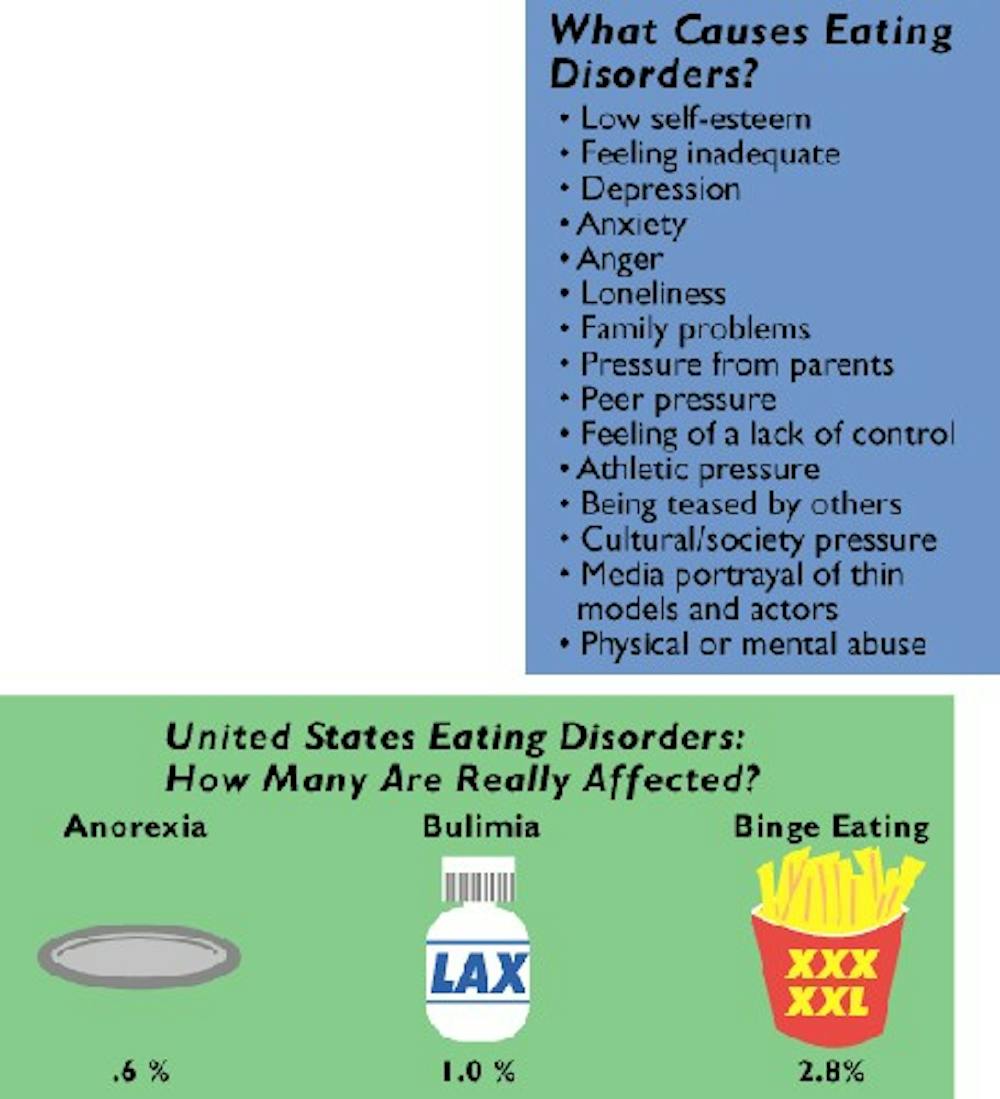
Binge eating affects approximately 2.8 percent of the Americans, according to a study published in Harvard's Biological Psychology publication earlier this year. By comparison, anorexia and bulimia affect 0.6 percent and 1 percent of the Americans, respectively.
"Binge eating disorder is more common than anorexia and bulimia," Welchoff said. "Often (it's) not identified as an eating disorder, people just think it's a lack of willpower."
While most people occasionally overeat during the holidays, times of stress or to relieve boredom, occasional bouts of overeating are not signs of a problem according to Janice Cochran, a registered dietician with Student Health & Wellness. A person with binge eating disorder has two to three binging episodes per week over a six-month period.
The difference between binge eating disorder and bulimia is a lack of compensatory behavior - binge eaters make no use of laxatives, purging, or excessive exercise.
While most people struggle with weight and physical appearance issues, binge eating disorder combines more serious problems concerning eating habits. An obsession with weight, appearance and dieting are all warning signs of a developing eating disorder. More often than not, binge eaters are overweight or obese.
Because binge eating occurs in secret, warning signs of a problem include being socially withdrawn and losing interest in normal activities. Social isolation is a much stronger indicator of a problem than having a second helping at dinner.
People who suffer from binge eating disorder often have other mental health problems as well. Most commonly these may include depression, anxiety or post-traumatic stress disorder. Like other eating disorders, food is used as a coping mechanism. The focus is not on food itself, so telling someone to "just stop" is not going to help, said Cochran.
"Eating disorders can be very difficult to manage by yourself," said Dr. Mary Stock of Student Health Services. "Counseling, certain medications, guidance from a dietician can all help. The Eating Disorders Treatment Team can provide these necessary services."
There are many resources available on campus for students. The Eating Disorders Treatment Team combines the efforts of psychologists, physicians and a registered dietician. Counseling Services in the Ellicott Complex on North Campus, Health Services on South Campus and Wellness Services in the Student Union are all available to help students.
"We have many students coming in," Cochran said. "But due to the nature of the disorder, there are many more students who are dealing with it but are not coming in."
Breakout box:
What causes eating disorders
Low self-esteem
Feeling inadequate
Depression
Anxiety
Anger
Loneliness
Family problems
Pressure from parents
Peer pressure
Feeling of a lack of control
Athletic pressure
Being teased by others
Cultural/society pressure
Media portrayal of thin models and actors
Physical or mental abuse



