Editors note: edits have been made to this article.
For over a decade, Drake has been almost impossible to avoid. Whether it’s a new album drop, a song trending on social media or lyrics turning into captions, his presence in music has been constant. In an industry where most artists struggle to stay relevant for even a few years, that kind of consistency stands out. Many artists define this generation in opposite ways, but Drake’s longevity, versatility and cultural influence are reasons why he stands above the rest.
What makes his career more interesting is how it started. Before becoming one of the biggest names in music, Drake was known for acting in Degrassi: The Next Generation. His transition into music was not taken seriously at first, but that quickly changed with the release of “So Far Gone” in 2009. His album introduced audiences to a sound like no other; rap blended with melody in a way that felt different at the time. It laid the foundation for artists to build careers through exploration rather than sticking to one niche.
Calling someone the “best” artist of a generation takes more than just looking at numbers. It’s about who doesn’t flop, who adapts and who actually shapes the culture around them. Drake is one of the artists who checks all of those boxes. Since the late 2000s, he has managed to stay relevant through major shifts in music, especially since there’s a new trend every other day.
Naima Galeas, a sophomore political science major who grew up listening to Drake said, “He's like, top 10 most influential only because of how long he's been making music. I remember I was like six [years old] bumping to Drake, and he’s had a lot of different eras… he makes music for different groups and different occasions, which makes him different. He kind of knows how to read the room.”
Hafsa Hassan, a pharmacy graduate student, offered her perspective on the personal impact of his music, “Drake shaped the way people listen to music today in so many ways, especially when I go to the gym, and motivates me when I'm studying. It keeps me locked in, like he has the soft side, he has the fun side, the rap, the R&B, which is amazing.”
These insights highlight how Drake’s ability to connect with different audiences and his knack for adapting his style to meet a wide audience has contributed to his cultural influence.
One of the main reasons for his longevity is his versatility. Instead of sticking to one specific area, Drake has built a career on being able to shift between styles. His works span both rap and R&B, while also incorporating other genres when relevant. “Tried Our Best” and “OMW” show his melodic and emotionally expressive side, while songs like “Started From The Bottom” emphasize traditional rap themes of ambition and success. This range allows his music to resonate with a wide audience and remain relevant across different listening contexts.
“He’s stayed popular because he switches up his vibe… he’s a businessman — he knows how to profit off what’s happening. He makes music for whatever the industry is giving at the moment, and that keeps him relevant. I definitely think he'll stay relevant because he’s influential.” Galeas stated.
Hassan added, “Yeah, I think his ability to adapt to any type of genre opens him up to a wider variety. So I feel like it's amazing that so many different people from so many different walks of life can relate to him because of his adaptability.”
Together, these perspectives show that Drake’s success is not only about talent but also strategic awareness, allowing him to grow and expand as the industry changes.
At the same time, Drake has never been free of criticism. Some people argue that his music is starting to get repetitive or that he focuses too much on making hits instead of taking risks. Others feel that his earlier music is better than his new projects, like his “Take Care” album. Despite these critiques, his position in the music industry remains largely unaffected.
“I don’t think his old music is better, just more iconic. His new songs are good too. I think he switched his whole aesthetic.” Galeas said. Her perspective shows that while critics may compare past and present works, fans often value the artist’s different eras.
Hassan shared her own take on how Drake balances old and new material depending on the listener’s mood, “His older music, I like it for studying. I like it for walking and, more of a chill vibe. His newer stuff, I like it for going out, having a fun time, cleaning the house, going to the gym.” Drake’s influence also goes outside of music itself. His lyrics, delivery and overall style often shape trends, especially online. His songs regularly become part of everyday culture, whether through social media, shared playlists, or friendships. He is not just making music; he is shaping how it is experienced and brings bonding.
“My friends talk about Drake a lot… he’s just a go-to artist,” says Galeas.
Hassan reinstated the same idea by explaining how Drake’s music caters to different moments and social interactions. “We always send each other Drake songs that we kind of are feeling at the moment… like nighttime vibe, morning vibe, gym vibe, school vibe, studying vibe, there's a song for every single moment of the day, which I think is iconic.”
The ability to resonate with listeners across moods and moments shows why Drake isn’t just a musician; he’s a part of how this generation experiences music.
“When people look back at this time, they’re going to have to talk about his music,” Galeas said.
The arts desk can be reached at arts@ubspectrum.com

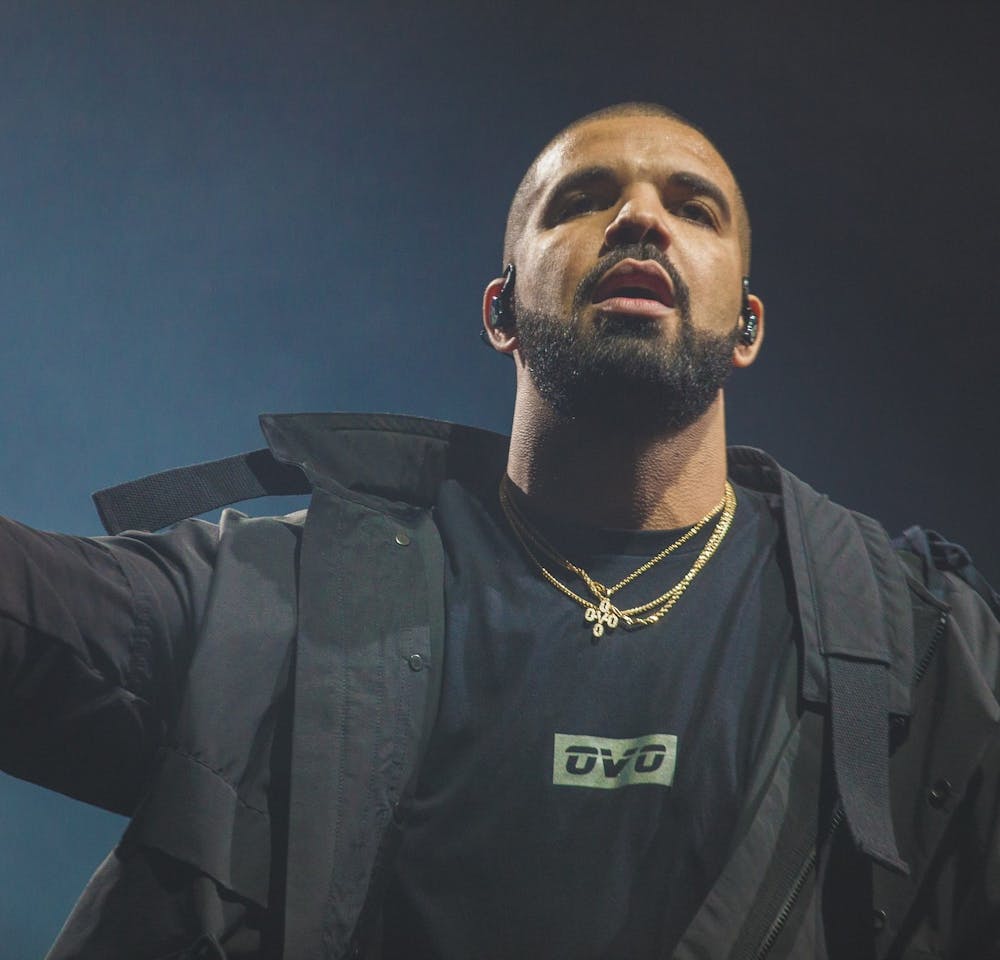
 Photo: Wikimedia Commons | Courtesy of Quintin Soloviev