
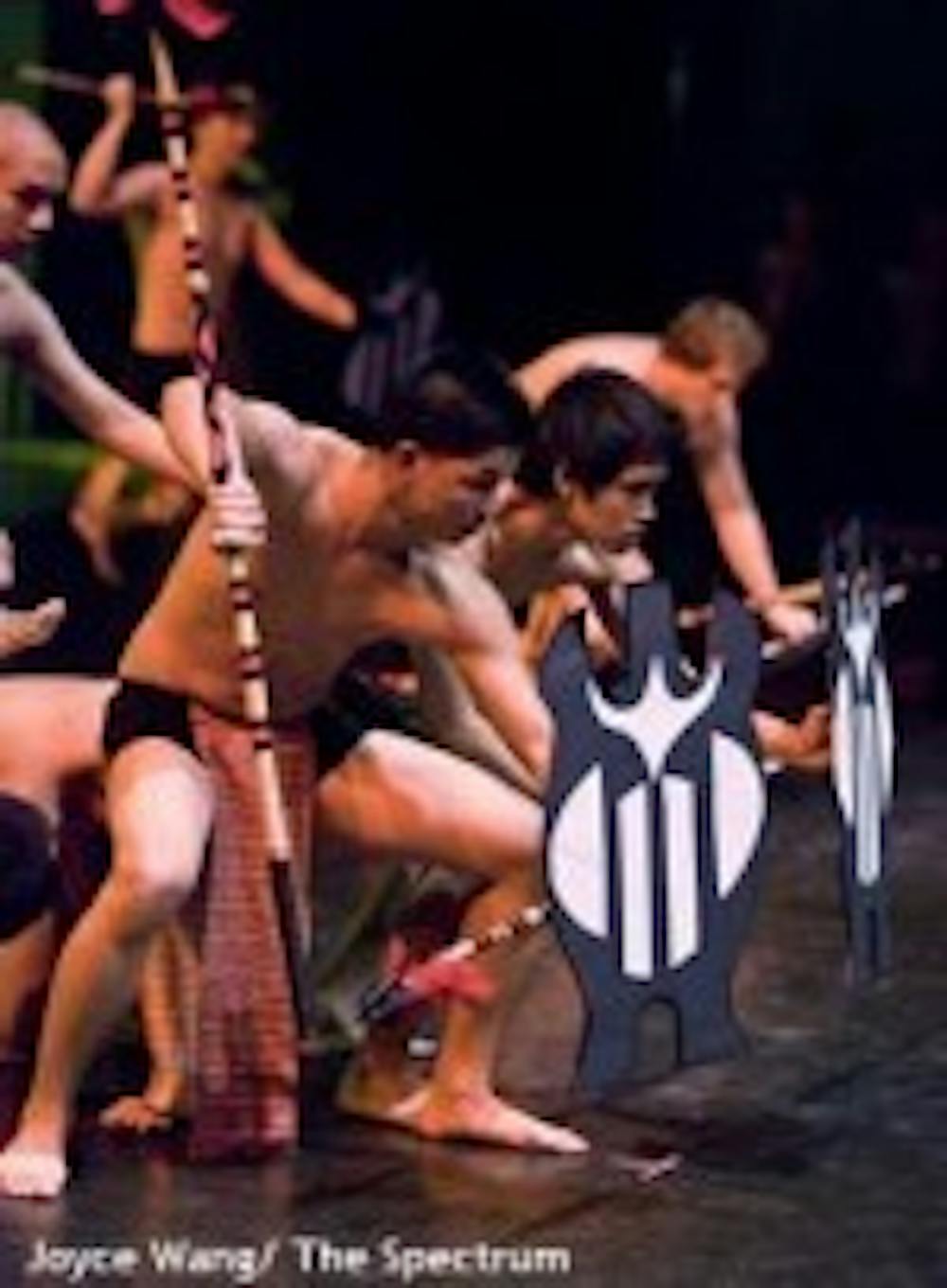
Eight Student Association clubs took to the Mainstage of the Center of the Arts Friday night for International Fiesta 2008 in front of the biggest audience the event has ever housed. Performers showcased their culture through choreographed dances and in extravagant traditional costumes with this year's theme of "Culture Shock" in mind.
The competition was intense, but in the end Indian Student Association (ISA) won, reclaiming their first-place status that was first claimed in 2005.
ISA dancers dazzled spectators with traditional dance moves and vibrant, colorful costumes. Following ISA was the Japanese SA in a very close second place, breaking their two-year winning streak. The Filipino-American SA walked away in third place.
Nisha Patel, a senior biomedical science major and President of ISA, was thrilled by the win.
"It feels amazing to have won tonight," Patel said. "We have been preparing since the beginning of spring semester so it really has paid off and we will definitely be working just has hard next year."
Many audience members were returning fans of the event Meneka Bansal, a sophomore biology major.
"I came last year and I loved seeing all the various dances and costumes from all the different cultures and thought I had to come back this year," Bansal said. "It's important to see how everyone is different and how we can all come together and celebrate those differences."
Fiesta has come a long way since its days held in the Student Union due to the overwhelming increasing response from interested spectators. The event was moved out of the Student Union and into the Center for the Arts in 2005. Due to the show's ever-growing popularity, it appears that history may repeat itself.
According to SA's International Coordinator Ann Abraham, it's becoming apparent that SA will need a larger venue to hold this popular event.
"Every seat was sold out by noon the first day they were out," said Anumol Mavomkal, a senior nursing and psychology major and the event's coordinator assistant. "There is talk, definitely nothing written in stone, of moving the event to Alumni Arena because of the increasing turnout each year, which is a good thing."
Five emcees entertained the audience with witty jokes, costume changes, and little snippets of free-style acts throughout the show.
The two-man duo, French Connection, opened the show as a noncompetitive act. They captivated the crowd with their performance of a combination of hip-hop, break dance, and robotic dance moves.
"I really enjoyed watching their performance," said Joe Buck, a junior legal studies major. "They way they moved and twisted their bodies made for true entertainment. I think they should have been part of the competition."
Competing clubs then followed as they came out one by one to the lively auditorium.
First in the lineup, as well as first time performing at International Fiesta, was the Chinese SA. Dressed in black and red, performers danced to the electric tone of their Chinese heritage. Choreographers brought out the traditional Chinese dragon and snake on the stage while maneuvering the apparatus to the sounds of the beating drums and gongs.
African SA began their performance with a narrative and visual portrayal of an ancient African story. Male performers danced and hovered around another dancer dressed as a lion. The club's female performers soon joined them, dancing in sequence to the roaring percussion of the rhythmic drums.
"I think it's awesome, every act (was) very colorful and energetic. I like African SA the best," said Sara Ridna, a sophomore biology major. "Their performance was different because there was a storyline. It was not like a modern performance, they took it back to their roots, which is so nice to watch. Anyone can turn on MTV to watch choreography, but ASA displayed true, authentic African dance which is what makes this event so special."
The Japanese SA presented the audience with a storyline as well.
"Our dance was based on a traditional Japanese story. The name of the dance we choose to do translates to 'choreographed routine', and that's what we wanted to do this year, a choreographed story-line," said Arisa Sakamoto, a senior theatre major.
The performers were dressed like the traditional characters of the ancient Japanese story.
"We had one of our members dress the part of 'Tennyo,' which translates to heavenly maiden, and we believe is the goddess of the moon. So that part of our culture was really important to incorporate in our routine," Sakamoto said.
The Organization of Arab Students presented a performance with a combination of belly dancing and the traditional Middle Eastern line dance called Dabkeh. Dancers showed off their intricate footwork to the rhythmic drumming of a staple Dabkeh song.
Randomnation, a musical group whose members are from different countries from around the world, concluded the show.
"I thought the show was a great success. It was nice to see clubs that haven't performed in a while came back and came back strong," said Chris Drucker, a graduate student studying industrial and systems engineering. "Overall, the people who were placed as top champions rightfully deserved it."
The competition aspect is meant to bring together the clubs, not separate them.
According to Abraham, the international council of 22 different clubs representing students from various places of the world is the place for clubs who are interested in promoting their culture - this is their night to shine.
"International Fiesta is a display of culture, tradition and history through art, dance and music. It is a tribute to their pride, their diligence and determination," Abraham said. "My goal this year was to unify the clubs within the council, and the only way I could do this is through competition. Although International Fiesta is a competition, it unites the various people in this council."



