
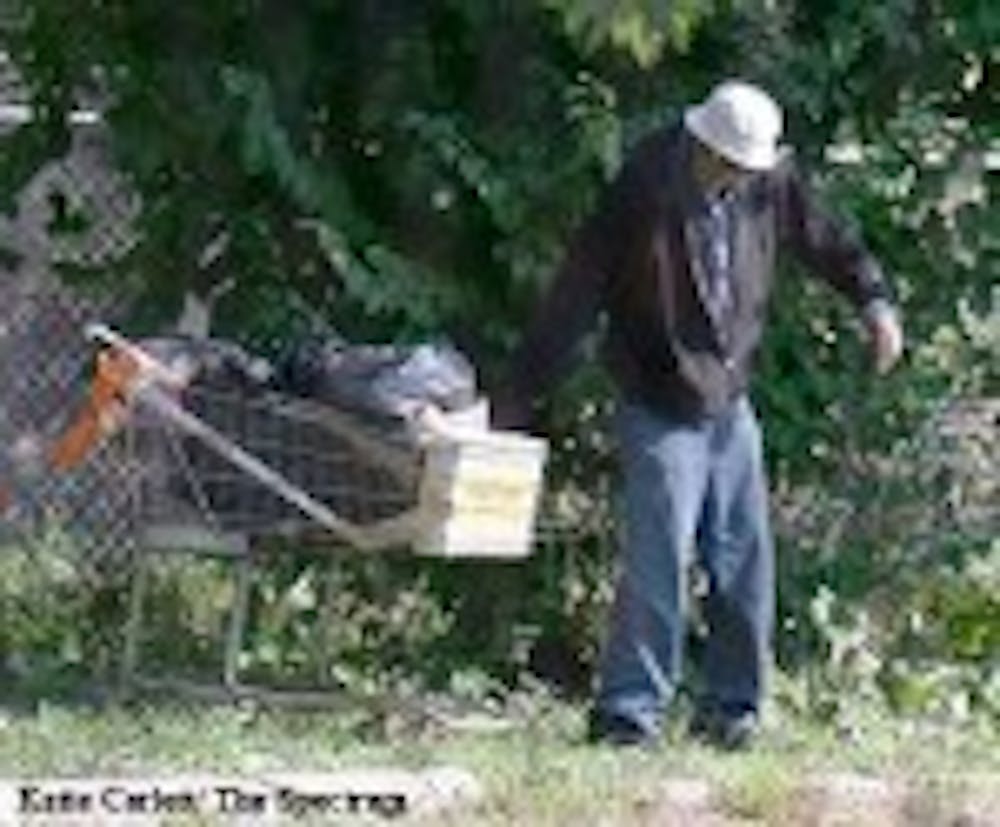
The streets of Buffalo are home to hundreds of people who suffer through harsh winters with no hope for change. What makes this picture drearier is that while the problem of homelessness has grown worse, stereotypes surrounding the issue have followed suit.
The National Law Center on Homelessness and Poverty estimates that 3.5 million people experience homelessness each year, according to Rob Silverman, an associate professor of the Department of Urban and Regional Planning and senior research associate of the Center for Urban Studies. On any given night in February, 842,000 people access homeless shelters or other services in the U.S.
Unfortunately, many homeless people are turned away from shelters due to overcrowding. Statistics are significantly underestimated because the shelter system isn't able to count the people who try to survive outside, according to Silverman.
"Stereotypes about homeless people living in cardboard boxes and having drug and alcohol problems really don't represent the majority of the people who are homeless," Silverman said. "Even in the most conservative estimates, you might really only be talking about 15 percent of the homeless population."
Race and ethnicity may also be perceived inaccurately. The homeless community is estimated to consist of 52 percent Caucasian, 42 percent African-American, 4 percent Native American and 2 percent Asian, according to Silverman.
Buffalo homeless shelters house over 3,300 people but can only provide 1,500 beds. In the city there are many activities that have become criminalized which discriminate against the homeless, according to Silverman.
"One thing that hit me the most is that homeless people sleeping outside, taking refuge in the streets is illegal or considered a crime, and at the same time there isn't enough space for them in the shelters so they really don't have anywhere to go," said Aaron Selkridge, a freshman aerospace engineer major.
According to Silverman, the list of prohibited activities is extensive. Bathing in public waters, begging in public places, loitering or sleeping in public areas and vagrancy in the form of obstructing sidewalks and other public places are illegal.
"The winter approaching creates a lot of added problems for the homeless; they are really down to basic survival, and homeless men who might not have as much access to a variety of different types of shelters are often left to fend for themselves," Silverman said.
Often times, homeless people need specific medication or treatment, but they no longer have access to proper medical care. These problems, combined with the difficult conditions of living outside, can be fatal.
"Sometimes the homeless develop even worse problems. As a result of their difficult lives, people might try to stay warm by drinking alcohol and end up becoming chronic alcoholics," Silverman said. "They might develop compound problems because they are not in a shelter where they can get access to screening and medical care."
Mental illness can be a lot more difficult to manage as a homeless person, because one of the ways people get access to medication, counseling and doctors is by having a permanent place to live.
"Homelessness [can be] the result of something happening that was outside of the individual's control: loss of a job, increasing housing costs, domestic violence, broken homes, abusive environments, or even running away in some cases," he said.
There are stereotypes about how people become homeless that make it harder for those individuals to get the services they need, to find access to housing or medicine or to be treated with respect in society, according to Silverman.
Education, domestic violence counseling, psychological counseling and treatment, employment, income assistance and heath care are just some of the needs and services that thousands of homeless people require.
"More solutions can be generated if we recognize homelessness as a human rights issue," Silverman said. "Everyone should have a right to permanent shelters."
Silverman also said that the issue of homelessness can be reduced if society begins to demand changes such as living wages for all, more affordable housing and health care and child care. He hopes that more communities will adopt Housing First initiatives and other programs intended to assist the homeless.
"I would like to volunteer more. It is a very rewarding experience," said Osiris Gomez, a freshman political science major.
People can offer help in many ways: donating food, offering professional services as courtesy, donating money and volunteering or helping to raise awareness.
"I think in general people are compassionate and want to help the homeless," Silverman said. "It's just a matter of having enough outlets to do that."



