
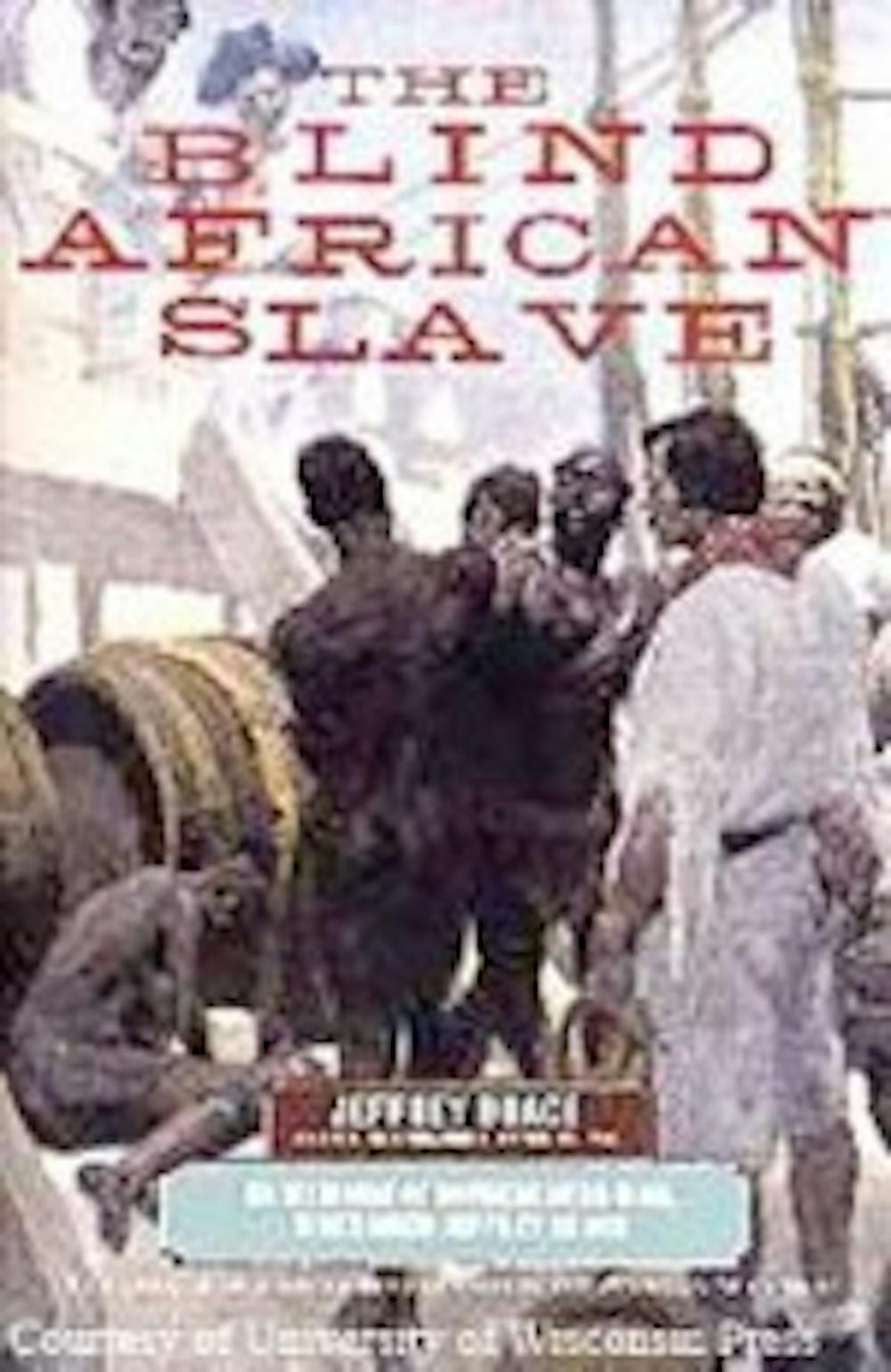
When Jeffrey Brace went blind in his early '60s, he decided to tell the story of his life as a former slave who came from Africa and eventually gained his freedom. His memoir had somehow slipped through history's cracks until it was "rediscovered" by Kari Winter.
Winter, a professor of American studies, was the first to rediscover this memoir after her friend William Andrews, a professor at the University of North Carolina, told her to take a look.
As soon as Winter started reading, she immediately "took to the narrator's voice."
After spending a total of 10 years researching, she republished Brace's memoir in a book titled The Blind American Slave.
"The significance of this book is being able to read a narrative about slavery from a slave's point of view," Winter said. "Normally you can only get it from the trader's or the master's [point of view]."
According to Winter, Brace's memoir helped bring some balance to a biased history.
"Brace was one of few African-American slaves who was taught to read and write," Winter said. "He was taught by Mary Stiles, one of his masters, after leaving the school she enrolled him in because of prevalent racism."
Stiles played a key role as Brace's teacher, and a paradoxically close bond formed between slave and master. According to Winter, because of their bond Brace was able to grow into a strong leader.
He enlisted in two wars (the American Revolution and the Seven Year's War), believing it would help him gain freedom and also fought with the abolitionist movement. His home state of Vermont was already a free state and he longed to set others free as well.
Winter said the memoir at first seemed too good to be true. She did extensive research, before publishing the piece, to properly validate its legitimacy.
When the book was first published in 2004, an article written about it made it into the hands of some of Brace's descendents in Massachusetts.
Upon receiving the article, the Braces quickly contacted Winter with news that Brace's ancestors were still alive.
Winter said that locating the Brace family was only one of the excitements of her research. Even still, with actual living proof located in New England, the truth of the memoir became even stronger.
According to Winter, in order to create a better future, the past needs to be understood. Through research on lives like that of Jeffrey Brace, understanding can come from the past, and history can become real.



