College students don't spend their days thinking about serious fires, chemical spills, or bomb threats on campus. Students don't think that their campus can be the next Virginia Tech.
Most students are focused on daily activities and balancing a heavy workload.
"When I'm at school, I think about what I have to do later," said Lisa Epstein, a freshman English major. "I think about the homework load I have each night and how long it will take to do each thing."
While students are focusing on their college experiences, UB has the All Hazard Plan Emergency Policy Group to think about what is mostly ignored.
The Policy Group consists of senior administration officers whose job is to design and maintain an ever-evolving plan that keeps students safe, no matter what sort of emergency there might be on campus.
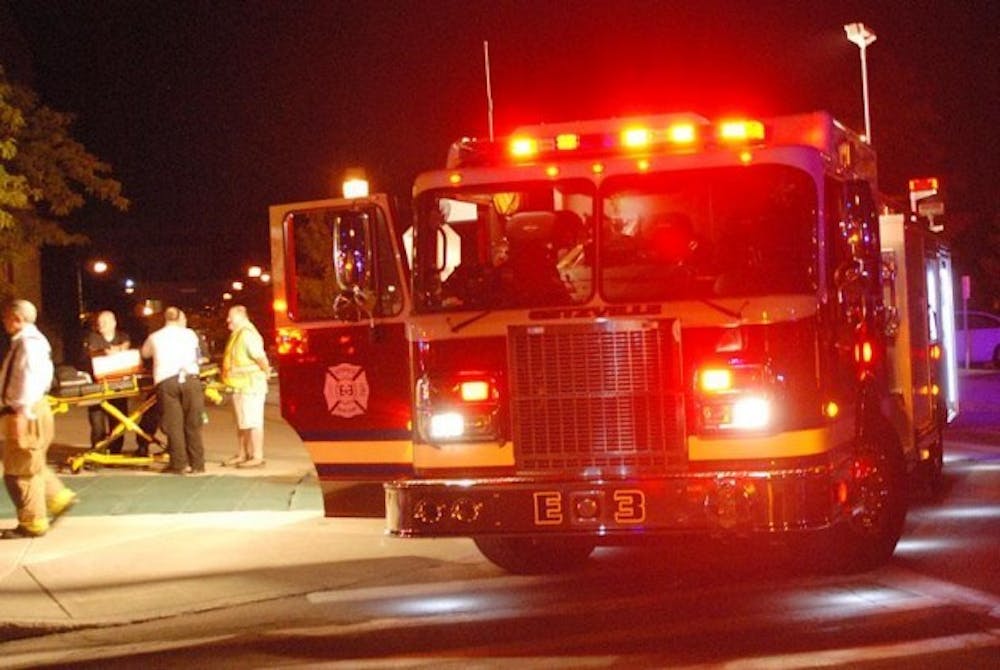
The students have seen one example of the All Hazard Plan in effect this semester with the evacuation at Clemens Hall after a fire was reported.
Older students may remember back to February 2010 when an alleged gunman was reported in Lockwood library.
Both of these situations were serious threats that ended without incident. The fire was only minor – an electrical fire due to a malfunctioning heater. No students, faculty, or facilities were harmed or damaged.
As for the "UB Gunman," university police never definitively confirmed that there was a shooter on the property; police from the campus, as well as from neighboring communities, engaged in a search for the alleged shooter.
"We have expertise at this university related to risk management," said Ezra Zubrow, Faculty Senate executive committee chair.
That expertise culminates in a comprehensive plan designed around the four basic tenets of emergency management: preparation, response, recovery, and mitigation.
Students received alerts about the alleged gunman and the Clemens evacuation via text and email. This is part of the university's plan to inform students and work to alleviate students' concerns.
"We use an all-hazard approach," said James Reger, university emergency planning manager. "It's a team approach that ensures a continuity of operations."
UB Alert is the university's crisis communication system. It generates automated emails to all buffalo.eduemails in the event of an emergency. Students can also have the same messages sent to alternative email addresses, such as Gmail, if they sign up at the UB Alert website. Students can also use the website to have the messages sent to their phones in a text message.
"We're using as many routes of communication as we can," said Joseph A. Brennan, associate vice president for university communications. "We use texts, email, Facebook, Twitter. There's a hotline students can call to get information. We use traditional media, print and TV. We'll even use fliers if that's the most appropriate method. Communication is the number one issue during all phases of an emergency."
Now that the upgrades to the blue light phone system are finally complete, students can also anticipate that this system would be used if the university needed to make a campus-wide announcement. In addition to the new lights' simpler interface and security cameras, the lights also now have the ability to transmit messages to students in case of an emergency.
However, most issues that concern students don't involve the entire campus. Most days on campus don't involve a suspected shooter, a fire, or even a massive snowstorm.
"[The system] helps a lot, but the campus is so big," Epstein said. " You can't always get the texts or emails in time. I personally don't even have the text messaging system set up."
Most student safety concerns are one-on-one issues, and this is where university police plays a large part.
The university police system has been around since 1999. The New York State University Police system was put into place after a series of disturbing crimes on state campuses, including a hostage situation and the disappearance of a female student at SUNY Albany, and the murder of UB student Linda Yalem by the "bike path rapist."
The university police force currently consists of 61 sworn police officers, overseen by Chief Gerald W. Schoenle, Jr. In addition to patrol officers and detectives, the department has an officer attached to the joint terrorism task force.
"Most of my friends don't [think about dangerous situations]," Epstein said. "You think that when you have all these police officers going around campus that they're going to be there to help you out if you're in trouble."
The university police doesn't deal with cases of murder and terrorism on a daily basis. It is more concerned dealing with loitering, larceny, criminal mischief, drug abuse, and DWI, based on the 2010 Clery Daily Crime Log.
The Clery Act was signed into effect in 1990 and mandates that campus crime statistics for the three previous years be made available to the public.
In 2010, UPD responded to 12,859 calls for service, according to the annual police report that was made available. Four hundred and thirty-seven arrests were made in the same year.
The police force has been steadily lowering its crime rates – according to the same annual Clery Report – which is good news for students and faculty. Schoenle credits much of that reduction to a proactive approach combined with effective communication.
"We do door checks on the dorm rooms, going around to see if students have locked their rooms," Schoenle said. "We'll leave ‘report cards' on cars, letting the owner know if they passed or failed."
The "car report cards" are designed to lower the incidents of break-ins. University police will leave a post card on the car, letting the owner know if they passed, if they failed, and the reasons why. Often it's for leaving valuables in plain sight.
Most students can get through their time at UB without experiencing anything more alarming than a fire bell going off because of an overtaxed microwave or a parking ticket.
But as students at Virginia Tech and other colleges that were sites of deadly shootings know, emergency situations can and do arise. At that moment, it is imperative that a school be prepared.
UB is taking as many steps as possible to ensure that its students, faculty, and staff remain safe and remain informed.
"If I'm driving my car somewhere, I plan out where I'm going to park," Epstein said. "I'm usually alone so I'll park closer to a light. If I'm in my room, I think about if there's a fire, ‘we're all going to die,' because there aren't any sprinkler systems. I mean I'll think about [things] like that, but most of my friends don't. They're not really worried about things like that."
Email: news@ubspectrum.com