
With some help from a grant from the National Institutes of Health (NIH), UB is boosting its efforts for combating HIV/AIDS on an international scale.
The NIH has awarded a total of $2.3 million to the UB HIV Clinical Pharmacology Research Program Laboratory, which has portions housed in both the School of Pharmacy and Pharmaceutical Sciences and the New York State Center for Excellence in Bioinformatics and Life Sciences.
The award serves as recognition for the 10-plus years that the program has fought the global AIDS epidemic. The program has hosted visiting pharmaceutical scientists from countries like Zimbabwe and Nigeria in order to teach them how to conduct clinical trials and research on disease.
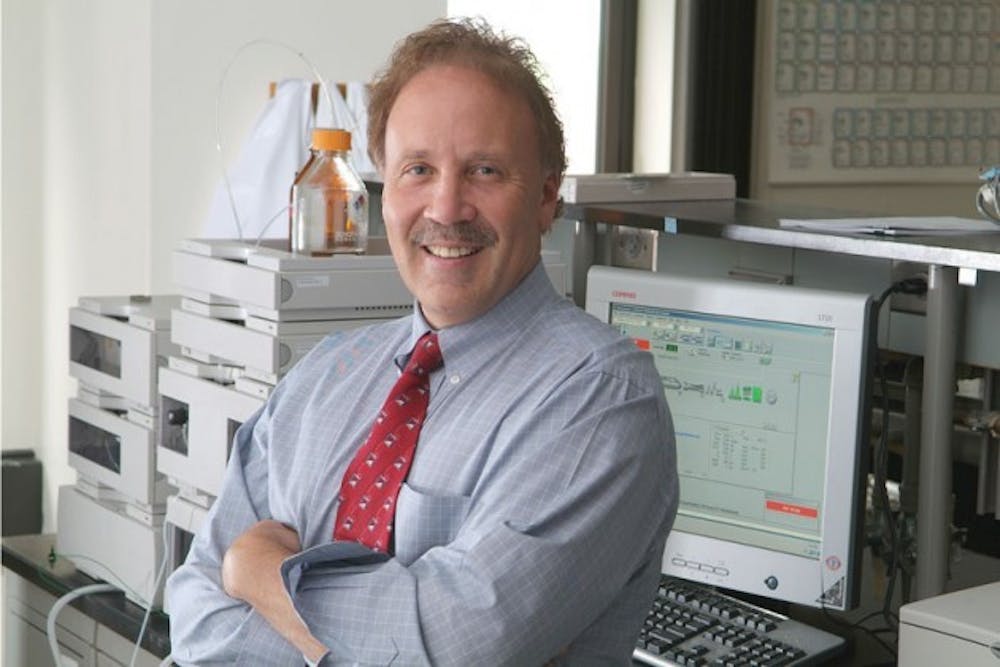
The research team, led by Gene Morse, professor of pharmacy and associate dean for Clinical & Translational Research, will impart its clinical pharmacology expertise to multidisciplinary international teams in hopes of achieving the HIV/AIDS research goals in countries where infection rates are highest.
The information and methods that Morse and his team obtain from these interactions will then be introduced in different countries' laboratories and clinics, aiming to positively impact both research and treatment in those countries.
Morse's colleagues believe that UB was chosen to receive this grant based on his team's established track record in this area.
"His team was previously awarded a seven year, $7.6 million contract that provided funds to train in-country laboratory specialists where HIV/AIDS infection rates are highest, test their proficiency, and conduct quality-control analysis of HIV/AIDS clinical trials," said Alexander N. Cartwright, interim vice president for research. "This contract is ongoing and is producing results on which the project team could make the case that these additional funds would accomplish additional important goals in HIV research in Africa."
The HIV Clinical Pharmacology laboratory, which Morse directs, has gained an international reputation for bioanalysis, pharmacokinetics, and pharmacogenomics.
Morse has high hopes that the new grant will expand the goals of his ongoing research project.
"The research programs are up and running," Morse said. "The programs are being funded to support a continuing effort to build new research capacity in resource-limited countries and to conduct new research in areas of the HIV epidemic that occur in southern African countries, such as how to provide optimal HIV treatment, along with treatment for tuberculosis, malaria, and hepatitis C."
Treating HIV/AIDS patients in Africa is far more complicated than simply providing them with anti-retroviral medications. There are other pharmacological issues that need to be addressed, such as evaluating resistance and quality outcomes by monitoring viral loads, expanding public health education, and ensuring that counterfeit drugs are not being distributed.
"Counterfeit drugs are common around the world," said Wayne K. Anderson, dean of the School of Pharmacy and Pharmaceutical Sciences. "An important goal of our program is to train scientists from African nations in chemical surveillance to insure that the drugs they are distributing are real, potent and will yield positive outcomes."
So far, UB has brought in seven pharmaceutical and clinical scientists from African nations for visits lasting several months. In addition to their pharmacology training in the lab, these scientists have also benefited by participating in the HIV Adherence Pharmacology program at the Erie County Medical Center, the Women and Children's Hospital of Buffalo, and the Western New York AIDS Community Services Center.
UB and the NYS Center for Excellence in Bioinformatics and Health Sciences have goals in research administration and management, laboratory space, and state-of-the-art equipment, which will attempt to create an environment at UB that is conducive to cutting-edge research.
E-mail: news@ubspectrum.com



