
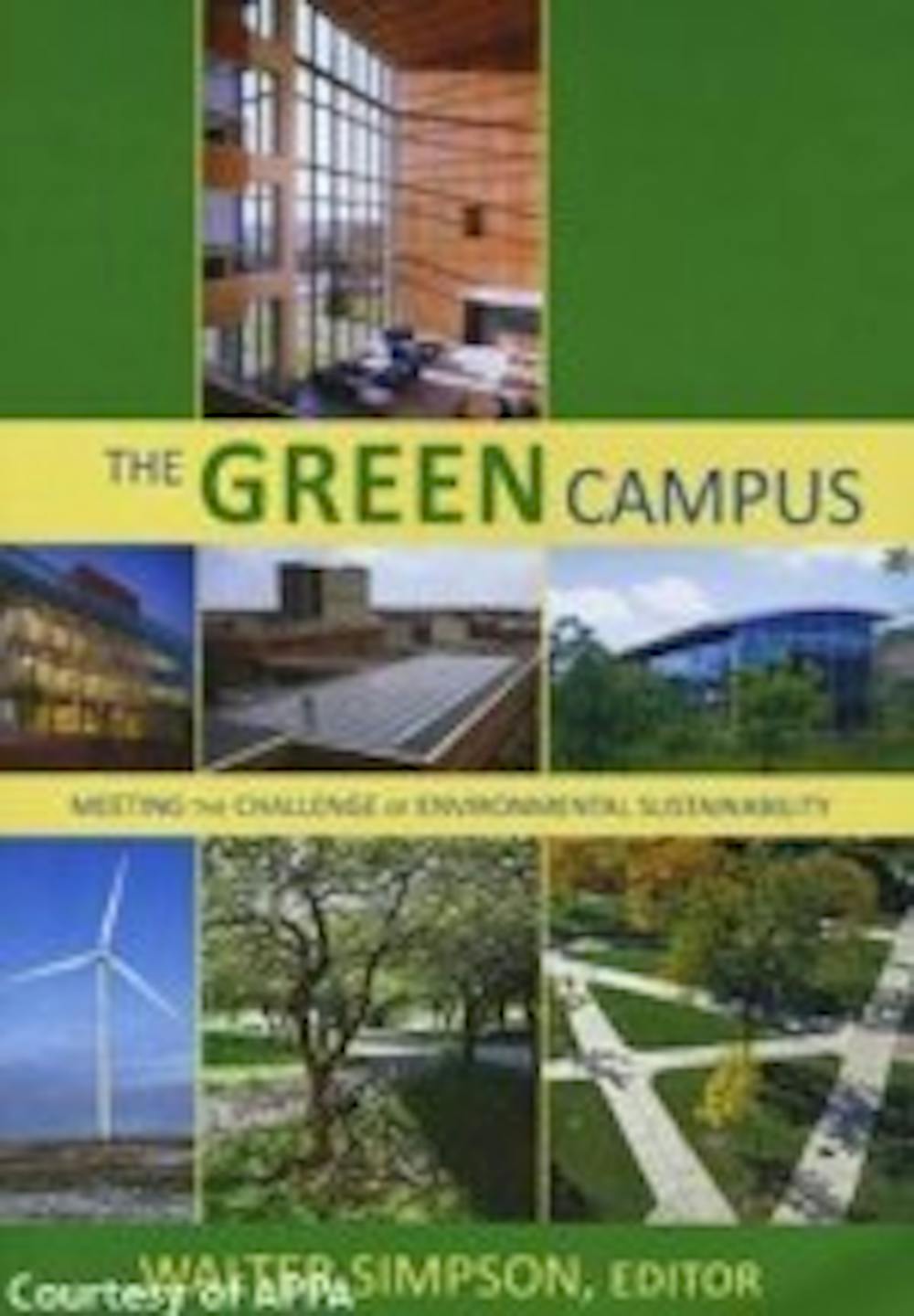
Walter Simpson, director of UB Green, will retire from UB this year as a published author. His book, The Green Campus: Meeting the Challenge of Environmental Sustainability, was published this April and serves as a compilation of his work and the work of others concerning the green movement and college campuses.
"I've been concerned about the national green campus movement and excited by the fact that there has been substantial progress made on many campuses around the country and in the past few years," Simpson said. "I thought I could contribute to the movement by creating a book that would help administrators, sustainability managers and teachers learn about the best practices for creating a green campus."
Simpson's book includes a "green campus by example" excerpt, including thoughts about his work at UB as well as movements at other schools such as Arizona State and Ball State.
The book looks at opportunities colleges have for reducing their environmental footprint, with an emphasis on climate change, Simpson said.
"I believe that climate change is the most serious problem we face, and that universities and institutions of higher learning can substantially reduce their carbon footprints and at the same time provide national leadership," Simpson said.
According to Simpson, colleges and universities need to be leaders in reducing climate change. Simpson said that change isn't going to come on a national or international level. For this reason, efforts to reduce environmental evils like greenhouse gas emissions need to come at a regional and community level.
"There has been such little action on climate change for the past seven years," Simpson said. "For that reason, regional, state and local leadership, including leadership by colleges and universities, is all the more important...we have to show the way."
Simpson started work on his book during May of last year and finished it in January 2008. Simpson credits his earnest attitude towards publication to the need for those involved in making campuses and communities greener to set the standard for others.
While his work originally focused on energy conservation at UB, he believes that the campus needs to shift its priorities to focus on reducing carbon and other greenhouse gas emissions
"Much of my work at UB, especially in the earlier years, was focused on campus energy conservation. It's a field I know well, and one where UB has been a leader," Simpson said. "From this experience, I thought giving examples about [making] changes on campus could be helpful to other campuses."
Simpson's book also includes articles and submissions by national and local environmentalists. Simpson said that he decided to include a number of contributors to show, through example, progress already made in the green movement to inspire and guide the work of others.
"I wanted to include the movers and the shakers of the green campus movement," Simpson said. "I wanted to include an intellectual weight to the book, especially on the subject of climate change. I have been strongly influenced by [Hansen's] warnings that we have only 10 more years to correct the energy trajectory we are now on and begin reducing greenhouse gas emissions before it's too late. He's a hero of mine, and so I wanted him in the book."
Students or community members interested in reading The Green Campus: Meeting the Challenge of Environmental Sustainability can pick up copies available for loan at the UB Environmental Library, located at 220 Winspear Avenue on South Campus. Simpson will also be donating a book to one of the libraries on North Campus.
Simpson said that although he is leaving UB at the end of the school year, he hopes his work will leave a lasting impact on the campus and the community.
"It was exciting for me to write and edit this book because it was an opportunity to reflect back on my career here at UB, and the work myself and others have done on all of these issues," Simpson said. "My hope for the book is that it will inspire and empower others across the country to do the kind of work that I've been privileged to do here at UB."



