
Vive La Casa (also called VIVE by its employees) is more than a non-profit refugee shelter; in many cases, it's a refugee's last hope of avoiding deportation back to their country of origin, as reported by Generation magazine in 2004.
But a lot has changed in four years, and the organization today is struggling to keep its head above water in the wake of government funding cuts.
"If you compare us to four years ago, things are worse," said Brian Brown-Cashdollar, VIVE executive director. "But if you compare things to last year, we're better off."
He explained that VIVE previously receive 60 percent of its funding from government sources, but that number has dropped to 19 percent in recent years. Since then, individuals and charitable "faith-based groups" have footed the bill for the missing funding.
For an organization whose stated purpose, as shown on their Web site, is to "provide refugees with safe shelter, food, legal services, limited health care and other urgent needs," VIVE is not receiving the financial support needed to run at its optimal efficiency.
A vital service
VIVE's mission statement describes the organization as "an interfaith organization that assists refugees seeking protection under the Geneva Convention in the United States and Canada." Most of the group's work revolves around helping qualified refugees file the paperwork necessary to get them safely immigrated to Canada - or, failing that, to a safe location in the US.
Clients can receive medical advice and referrals, legal help, asylum, and most importantly, a safe place to eat and sleep.
The difference between "immigrant" and "refugee" status, explained by VIVE volunteer and UB alumnus Daniel Whalen, is the urgency of need: those leaving a country in an unplanned time of crisis or persecution are "refugees," and are usually entitled to most benefits. Those who aren't able to prove their immediate need for asylum are "immigrants."
Approximately one third of the organization's clients are children, and about 20 percent of the women who travel through VIVE are in "some stage of pregnancy," according to Brown-Cashdollar.
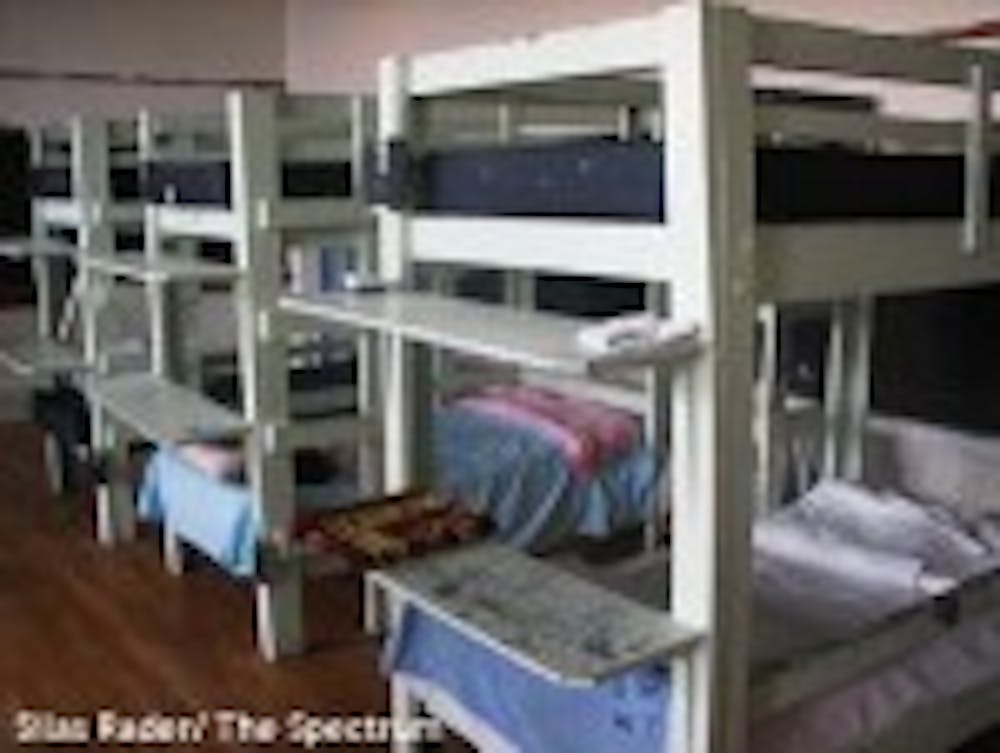
Currently located on Wyoming Avenue on Buffalo's east side, the grounds consist of the 32,000 square foot church that houses their administrative offices and most of their beds. The playground and residence buildings are nearby.
About 130 people work and temporarily reside on the grounds, including the volunteer staff.
The state of the funding
"As the government funding has disappeared, VIVE's support from religious organizations and individuals has grown to nearly 70 percent of our budget," according to the informational pamphlet you can pick up at VIVE's front door.
According to Brown-Cashdollar, funding dried up because of the carelessness in which funding is allotted.
"It's arbitrary. [It's] not because it's VIVE, but because that's what the government arbitrarily does."
One such example of arbitrary funding loss is former Gov. Eliot Spitzer's $25,000 recommended increase for the group on the 2007 Erie County budget. Post-scandal, the numbers have gotten lost in state bureaucracy.
"The money just never got there," said an internal source who wished to remain anonymous. "But state money rarely does."
VIVE has helped 63,000 refugees since its inception and assisted 3,500 last year.
"I don't think someone can make the argument that we don't qualify for government funding," Brown-Cashdollar said.
Where that leaves them
With refugee court cases taking sometimes as long as two years, certain VIVE residents are there to stay a while.
The organization served 118,000 meals last year, consisting of 8,000 pounds of food a month donated by the Food Bank. Without help like that, VIVE's outlook would be grim, according to Brown-Cashdollar. But not all of the organization's success is donated.
The group resolved a bedbug problem earlier this year with "intensive cleaning, all the time." No amount of funding cuts will reduce the work being put into the grounds by volunteers and clients, employees said.
As Brown-Cashdollar passed by the play lounge during this part of the interview, he stopped to indicate the row of computers against one wall.
"There hasn't been much maintenance over the past two years because of the budget cuts...we had two [computer monitors] pop today," he said.
On the other side of the room was a television playing cartoons.
"Glad to see the kids are hanging out in front of the TV," Brown-Cashdollar said sarcastically. Rather, the children in the room were playing with crayons, building blocks and each other.
No help coming
Shannon Ring is a Canisius student who got involved volunteering for VIVE as part of her French service learning requirement. Though her required service is long up, she continues to volunteer because she says she finds it "extremely rewarding."
"Every thank you, every smile that comes from a person that I have helped to clarify something for, or that I have helped move one step closer to their goal makes my time spent at VIVE worthwhile," Ring said.
Brown-Cashdollar attributes much of the group's success to people like Ring and Whalen.
"We're always looking for volunteers," he said.
He invites anyone interested to investigate VIVE's opportunities in the legal clinic, and the work with children and those in need.
"Most shelters don't do what we do."



