
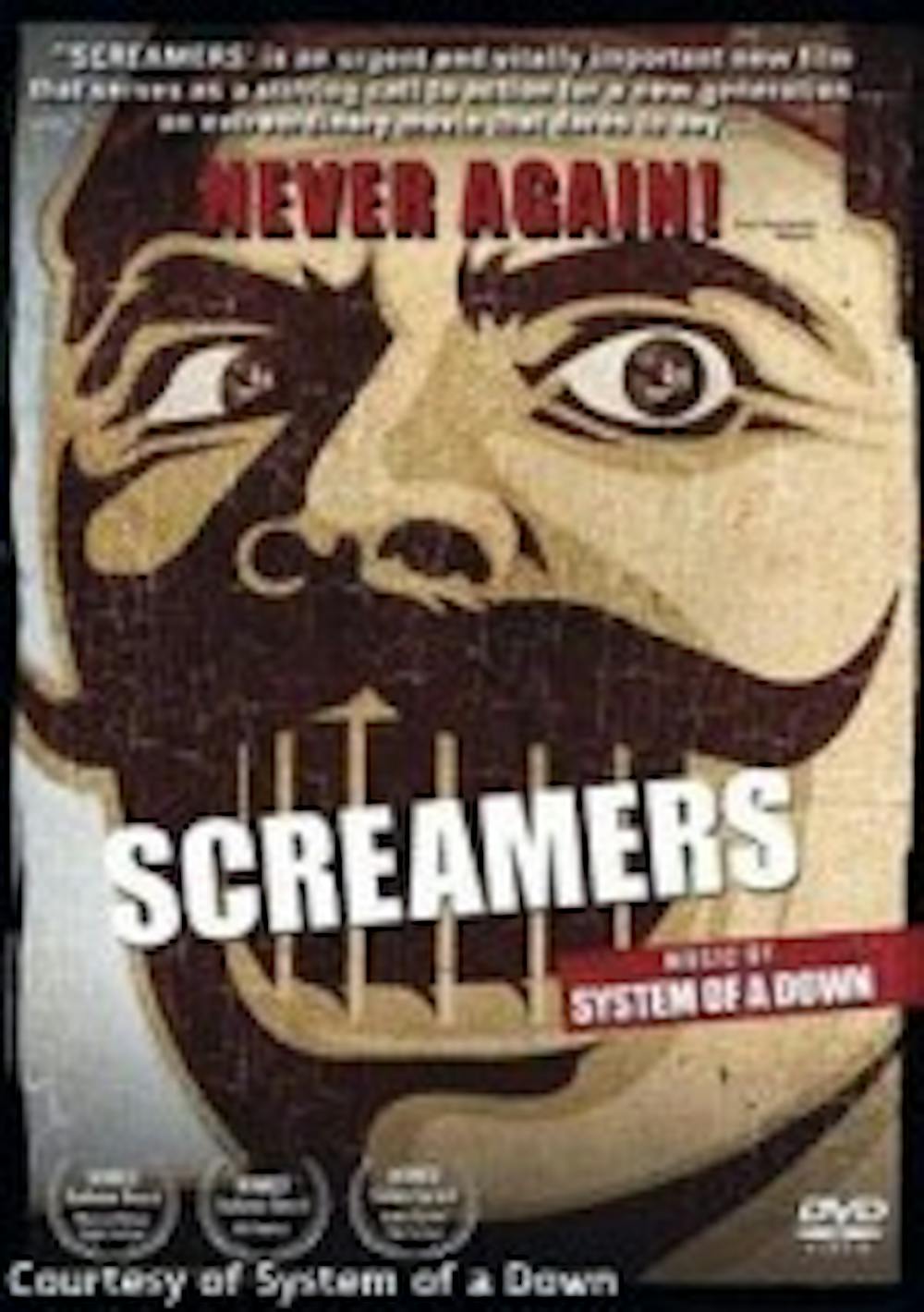
Normally the only screaming heard at a rock concert is from the righteous audience, destroying their vocal cords singing for the band, not political change. That is, unless you're the politically inclined rock-metal band System of a Down, which serves as the celebrity center of the recent documentary Screamers.
Throughout the film, directed by Carla Garapedian, lead System singer Serj Tankian goes as far as to publicly confront the former Speaker of the House, Dennis Hastert. Though the Speaker is disinclined to speak, Tankian is unperturbed.
Known primarily as a band that makes people kick heads in before grabbing a picket sign, they have a reason for their passion. Every member of the band is of Armenian descent, and each is the grandson of a man who survived the Armenian Genocide of 1915.
The Grammy award-winning band condemns the US for refusing to publicly acknowledge the genocide due to its temperamental relations with Turkey. Screamers shows the Turkish government's efforts to suppress the existence of such events through forms of propaganda.
Live performances of the band playing around the world are interspersed with an ethereal montage of various victims of genocide. Images are shown of the Holocaust, Cambodia, Bosnia, Rwanda, and Darfur.
The camera work of the band's performances is unnecessarily erratic. Too many shots are from bad angles and sometimes the lights just blind the audience. At one point the filmmakers cut out from System performing in one country, flashing over a brief educational intermission before returning to the band playing the same exact song elsewhere, which is confusing.
They do, however, show plenty of the group's more intense and prevalent songs, including "BYOB" and "Holy Mountain." Their performance is as intense as it is riveting, and if the documentary doesn't shatter some misconceptions and open eyes, then check the pulse of the audience.
"This band didn't start to change the world. This band didn't start to change your mind. This band just started to make you ask questions," said lead guitarist Daron Malakian.
In order to accomplish this goal, the audience is exposed to personal accounts of both the drummer John Dolmayan and Tankian. Bassist Shavo Odadjian has no family members left alive; he is the last branch of his family tree. Tankian still has his grandfather who is in a retirement home. System's lead singer interviews his elder, including a tragic home video of the man's testimonial.
Some of the stories told are plain horrifying: children's heads being bashed together, and a clip of System organizing a protest in front of a congressman's office in Washington, DC, tallying the lives lost to the multitude of genocides. The documentary closes with a haunting series of the bands actual ancestors, most of whom are deceased.
As well as performing exciting shows, System of a Down is actively involved in educating people about events that are rarely discussed in general schooling. They hand out packets of information about racial cleansing to their fans, which are addressed to the kids' teachers.
Fans love the fact that the group is multifaceted, and not just out to make some dollars. At the beginning of the film, people entering the film's testimonials explain their reason for loving the band, and their efforts towards enlightenment.
Screamers pay homage to the victims of genocide while attacking the governments that allow racial cleansing to continue. Though it is not flashy, it is the brutal simplicity that proves to be effective. They have no need to dress up their message; they know the truth of it is provocative enough as long as people are aware of it.



