
UB researchers have found that Celebrex, a popular drug that relieves the pain and stiffness associated with osteoarthritis and rheumatoid arthritis, can induce irregular heartbeat rhythms.
On average, over one million Celebrex prescriptions are filled each month, according to the Celebrex Web site. Unlike Vioxx, an arthritis medication that was taken off the market in 2004 due to patients reporting cardiovascular side effects, Celebrex has never been pulled off pharmaceutical shelves. Celebrex is a product of Pfizer.
Celebrex works by inhibiting an enzyme called COX-2, which has been shown to induce arrhythmia. According to the American Heart Association Web site, "arrhythmias can occur in a healthy heart and be of minimal consequence." However, "they also may indicate a serious problem and lead to heart disease, stroke or sudden cardiac death."
Increased risks of heart attack or stroke are listed as possible side effects of Celebrex and other non-steroidal anti-inflammatory drugs (NSAID) on the Food and Drug Administration's Web site. Still, Randall D. Shortage, Ph.D., associate professor of biological sciences, said UB's research finding raises new questions about the drug.
"The research is notable because it opens up newer questions [for] which they do not yet have answers," Shortage said.
Vioxx used the same enzyme to produce desired affects for arthritis sufferers; this similarity sparked the interest of UB researchers and led them to initiate tests on flies and rat cells.
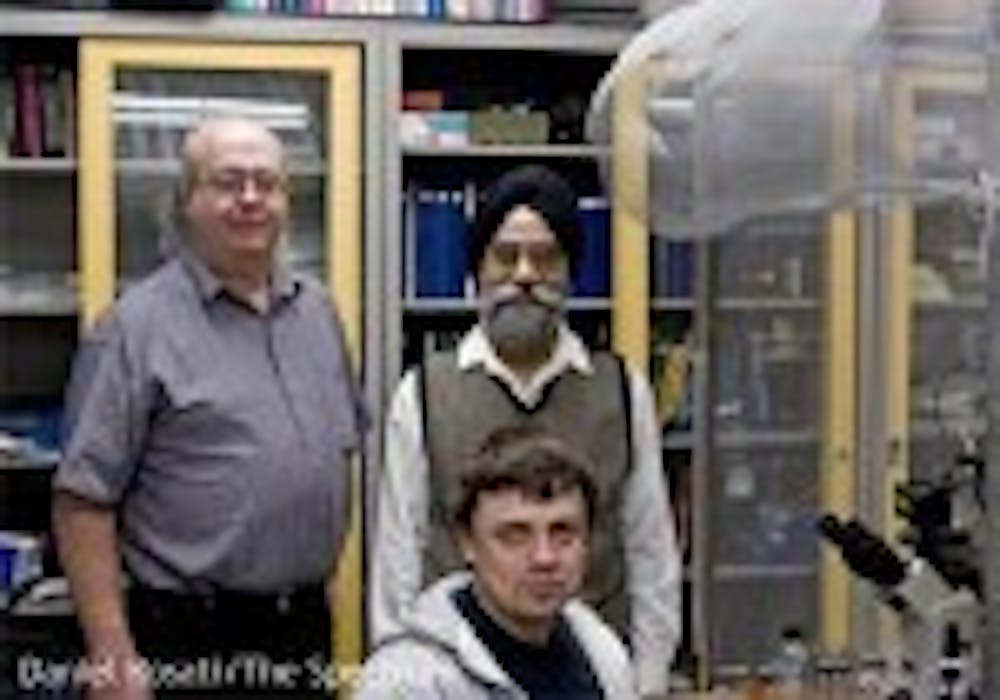
According to Satpal Singh, Ph.D., associate professor of pharmacology and toxicology and the senior author on the study, the fly is an insect that provides a strong model for studying cardiac physiology, as are rat heart cells. The researchers conducted tests on them to determine the cardiovascular effects of Celebrex.
"Celebrex induces arrhythmia in fly heart and in rat heart cells in culture," Singh said. "It does so by a novel mechanism - by inhibiting a category of potassium channels that play an important role in physiology of the heart and other tissues."
According to Roman Frolov, a doctoral student that participated in Singh's research, the finding may or may not contribute to a decision as to whether or not Celebrex should follow in Vioxx's footsteps and be removed from the shelves.
"Any decision by the regulatory body must be balanced between the strength of factual evidence with the respect to side effects and clinical benefits for the patient," Frolov said. "If the main action of a drug outweighs its deleterious side effects, then the drug may be administered with caution."
Although the results are decisive, the research has just begun.
"At the present time, the implications of research are interesting, yet at the same time, the implications should not be taken as conclusion," Shortage said.
Both Shortage and Singh agree that there are questions to be asked on both the researchers' and the pharmaceutical company's ends based on the conclusions of their research to this point.
"These include questions on the clinical relevance of our observations, as the particular potassium channels affected by the drug [are] expressed not only in the heart but also in many other tissues such as the brain, pancreas, and pulmonary arteries," Singh said. "In addition, there are other questions, such as...any effects on channels other than potassium channels [and] the relevance of the study to other COX-2 inhibitors."
According to Frolov, no research is an island of its own, and this study may substantially help other investigators that are looking into the possible side effects of COX-2 inhibitor drugs.
The study, now in its third year, is funded by grants from the National Science Foundation.



