
Amongst all of the resolutions being made this New Year, it seems that the WGA (Writers Guild of America) strike, which has already lost the television/film industry over a billion dollars, cannot be resolved, despite its increasingly painful effect on American entertainment.
Thursday nights no longer bring the nail biting melodrama of Grey' Anatomy or the thrilling conclusions of CSI. And while this is just entertainment, and there are undoubtedly more important problems, there's no denying the virtual absence of the most influential media city in the world.
"[The AMPTP (Alliance of Motion Picture and Television Producers)] needs to pay the writers their money and get this s**t done with. Let us get back to our shows," said Ryan Storrs, a senior communications design major.
Starting on Nov. 5 of last year, the strike primarily involved the writers' DVD residuals (percentage of profit off each DVD sold that the writers had a hand in creating) and the inclusion of reality show writers and animation writers within the WGA.
Despite the overall loss of shows, the 2008 season has seen some of the old, and the precious few new, coming back from the brink, in one form or another.
"I've recently been watching the Terminator series," said Chris Twarozek, an undecided freshman.
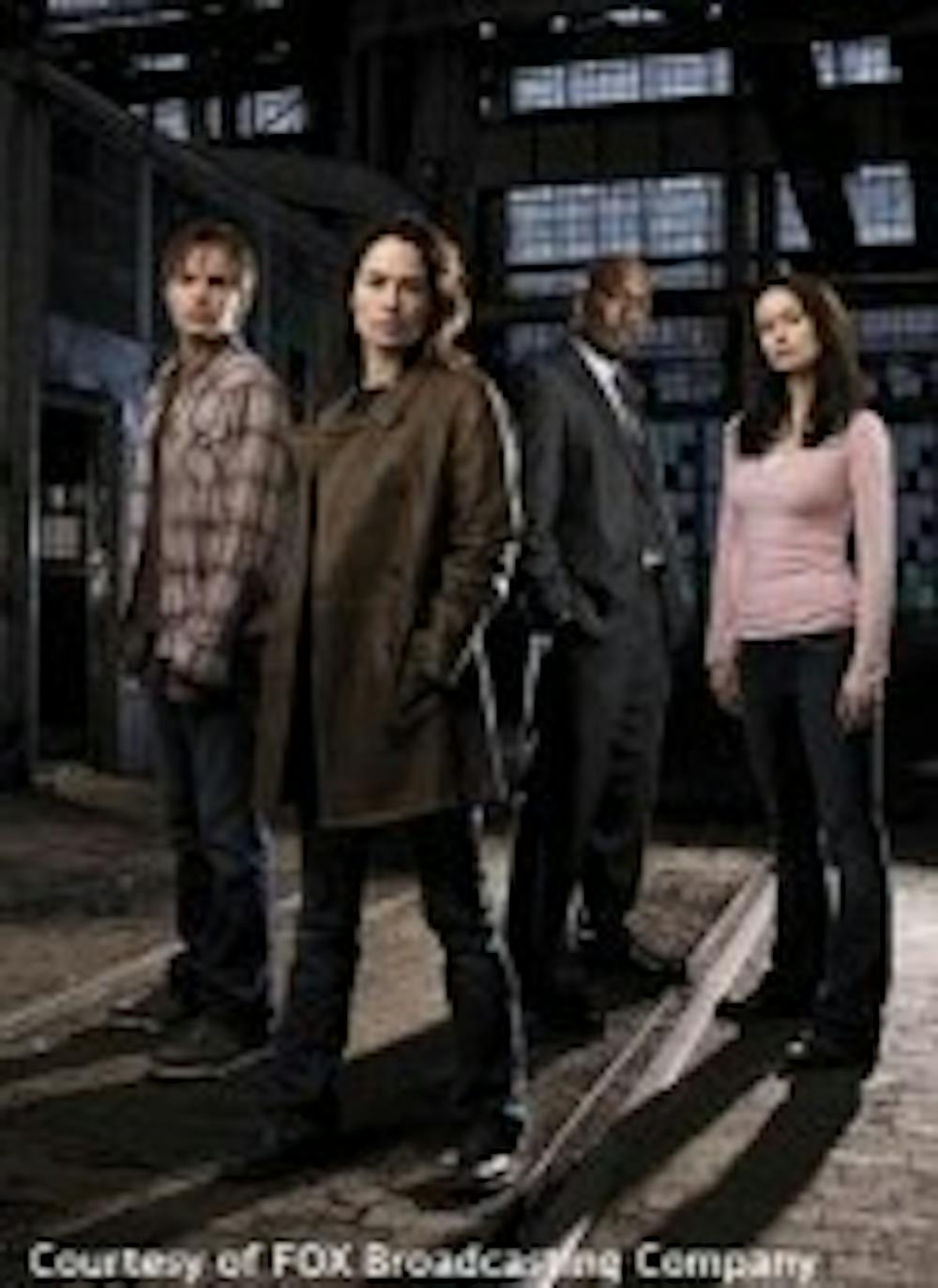
Terminator: The Sarah Connor Chronicles, starring Lena Headey (300) as the title heroine, debuted at 9 p.m. on FOX on Monday, after weeks of abundant advertisement and up-selling by the channel. Networks are doing their best to use the strike to their advantage, drawing in disgruntled, and bored, viewers to a show that plays like a summer blockbuster.
Some shows, however, seem to be retreads looking for life in a near lifeless television season.
"Cashmere Mafia, worst show ever!" said Allison Unger, a senior social science interdisciplinary major, criticizing the new Sex In The City-like show starring Lucy Liu (Lucky Number Slevin) and Miranda Otto (War of the Worlds).
As for the oldies that have found new life, that resurgence comes without writers, and mostly restricted to the late night realm.
"I am glad that The Late Night with David Letterman is back," said Brian Crooks, a freshman computer engineering major.
So if you're an "early to bed, early to rise" kind of person, sorry. Most of the nighttime warriors, from Conan O'Brien to Stephen Colbert, have returned to the air, defending their scab-like returns as a means to keep their non-writing employees employed, avoiding vicious layoffs. Meanwhile, David Letterman made a direct deal with the writers, through his small independent business, Worldwide Pants, hiring back writers for both his Late Show and Craig Ferguson's Late Late Show.
And while Letterman may have snuck back with writing talent, the lack of said talent elsewhere, come midnight, is undeniably noticeable.
"You can tell it's a little worse. For example, at the beginning of The Colbert Report, (Colbert) usually does funny headline segments. He doesn't do that anymore. I miss that man," said Mike Granato, an undecided sophomore and avid fan of Jon Stewart's Daily Show.
However, despite the slight decrease in comedy, Granato acknowledges the importance of the strike to the writers, willing to take a little less for the time being.
"[The shows] are still pretty decent," Granato reasoned.
For now, this "mish-mash" style of television, made up of 3-4 episode arcs, a brutal amount of reality shows (including an upcoming season of American Idol), and non-written talk shows has received extremely mixed reactions, largely depending on where movies and television sit in each person's lifestyle.
"I just want Grey's back!" declared senior social science interdisciplinary major Alyssa Marder. Some are, in fact, getting a small taste of those much-loved shows, such as fans of the enigmatic series Lost.
"Lost, I hear they are going to play the 12 episodes they have already filmed," said senior accounting major, and Lost fan Tyler Robbins.
Television's bare bones semi-survival isn't the only form of media fallen victim to the union strike. Let us not forget the movie industry, which has seen it's prime season fall into the shadows so far, money quickly falling by the wayside.
"I can't believe it has gone on for so long. It is affecting so many people," said Tara Dowling, sociology major.
This past Sunday, America watched The Golden Globes Awards, a less glamorous (but arguably more fun) awards show than the Oscars. The results were read off by the unbearably, uninformed and aloof "Entertainment Weekly" hosts Billy Bush and Nancy O'Dell, whose attempts to infuse excitement into the announcements proved futile. The whole event, which usually lasts two hours plus, took 32 minutes, the shortest Golden Globes in history. And worse for it, nobody came to play. There was no George Clooney, Ryan Gosling, or Keira Knightley.
Now, with the small time awards show gone and brutalized, the question is thrown the way of the Oscars, a television tradition only less popular than the Super Bowl in terms of viewer-ship.
Some couldn't care either way, ignoring television all together.
"I don't watch TV," said senior social science interdisciplinary major Liz Hollander.
Senior accounting major Tyler Robbins echoed, "I don't care" when asked about the possibility of an Oscar cancellation.
"I wouldn't care; entertainment has gone downhill," said Emily Wittlinger, a freshman intended business management major.
According to a Yahoo! News article released last Tuesday (Jan. 8), the Oscar show is still scheduled to go on. While the WGA has already disallowed any of its writers to script the show for host Jon Stewart, it has, as of yet, not confirmed whether or not it will picket the show itself. The union decided not to picket the upcoming Screen Actors Guild (SAG) Awards (airing Sunday, Jan. 27 on TNT), an awards show that the WGA erected, since becoming one of the final, accurate indicators of potential Oscar favorites.
There's no denying that the absence of Oscar would result in a huge loss in money for ABC, the channel airing the show, selling commercial slots for the show at around $1.5 million a pop. With the majority of actors, most of the members of SAG, standing by the writers' protest, if the Oscars do in fact go on, it may be to an empty house.
These same performers will not be able to walk into that prestigious Kodak Theatre (constructed only a few years ago directly for the Oscars) and receive the recognition they work their entire careers towards. Newcomers, such as Ellen Page, of Juno fame, or Marion Cotillard (A Good Year), who earned a surprise Best Actress Golden Globe win for her portrayal of singer Edith Piaf, maybe forced to sit at home and bite their nails in front of a television screen while the likes of Billy Bush and Nancy O'Dell read the results.
Will anyone be present to see Johnny Depp potentially take home his first Oscar trophy, a possibility after his unnoticed Golden Globe win this past Sunday for his blood-curdling performance in Tim Burton's Sweeney Todd.
As the Oscars show date of Feb. 24 at 8 p.m. creeps closer, students seemed split between frustration and understanding in terms of the strike and the benefits the writers look to win over.
"They don't get enough credit. It's not like there's not money to give. It's obviously a pretty big industry," Granato said.
One does have to wonder, in an industry where over $200 million is dedicated to films such as Pirates of the Caribbean: At World's End, is there not enough money to allow writers the 2.5 percent of DVD sales they are asking for?
"It's an effective means of getting what they deserve," said senior political science major Jaime Rigal.
While this is true, film is an ever-growing art form, thousands of college students graduating every semester with the intention to write and direct the next great American film. How long will the WGA's power dissuade the young, ambitious scabbers looking for a chance?
"It's hard to believe that only a certain amount of people can write a show," Storrs said.



