
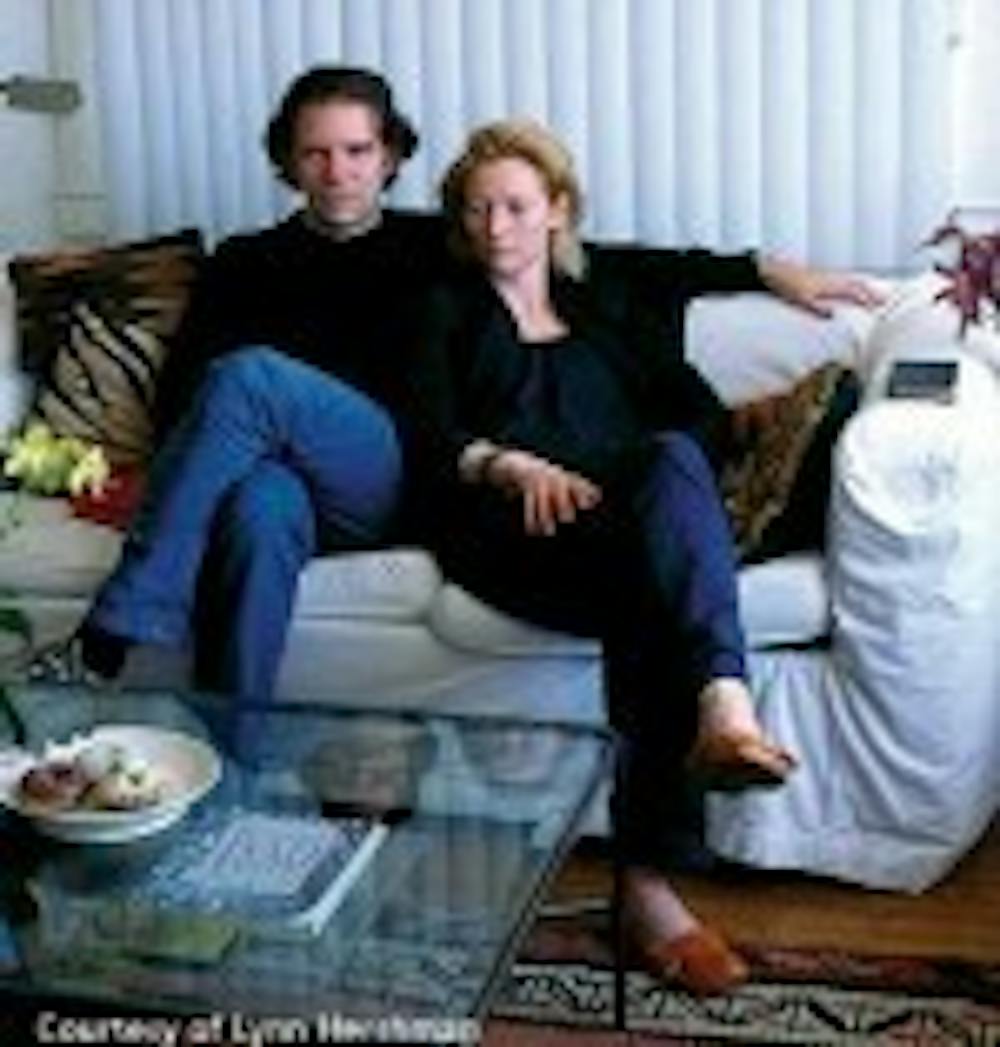
Playing like a thriller with a Hitchcockian twist, the story of UB Professor Steven Kurtz reads like political fiction: an innocent man who finds himself falsely accused and helpless.
Strange Culture, a docudrama from director Lynn Hershman-Leeson (Teknolust), attempts to tell this bizarre tale. The film premiered Saturday at the Market Arcade Film & Art Center and will run until this Thursday, September 13. Jumping between documentary and reenactment, the film's style is reminiscent of American Splendor.
There are a handful of flaws within the frames, from the original score to a distracting subplot involving students and a petition. Beyond that, the movie flows smoothly and the subject matter makes it a relevant movie to anyone with an interest in art, expression, civil liberties or the modern American cultural climate.
On May 11, 2004, Mr. Kurtz (Thomas Jay Ryan, Fay Grim) woke up to find his wife, Hope, dead in her sleep. When the police arrive (as reenacted in Culture), they find samples of bacteria in his house, which Kurtz explains is harmless, legally obtained materials used in his artwork regarding genetically engineered food products.
Despite this, the police call in the FBI, who additionally find a paper with Arabic writing, which Kurtz explains is an invitation to an art exhibit.
Not before long, Kurtz finds himself arrested and detained on an investigation of bio-terrorism.
Meanwhile, his house, computers, wife's body and even his cat are confiscated. Seven days later, it was revealed the harmless bacterium was, in fact, harmless.
Kurtz now stands charged with wire and mail fraud along with University at Pittsburgh Professor Robert Farrel. After the bio-terrorism charges falls through, the case winds up being reduced to stating that Farrell illegally transported these bacteria samples to Kurtz, as they were intended only for the University of Pittsburgh.
For this, due to certain provisions within the Patriot Act, these two men could face 20 years in jail.
Following the screening was a Q&A session with Kurtz, where he spoke about topics ranging from his art, to his case, to modern America.
On his own arrest, Kurtz says he was not surprised.
"A cop could walk in here and arrest whoever he wanted; there's plenty (of laws) to choose from."
Ryan plays Kurtz well, with an "art professor" sophistication about him. He's not a hero of any kind or a "generic everyman," but rather a victim of his government. Ryan succeeds in walking this fine line throughout the film.
Alongside Ryan is veteran actress Tilda Swinton (Michael Clayton) as Kurtz's wife. Robert Farrell, who has a case of terminal cancer, could not participate in the film. Instead, a statement from Farrell is read by actor Peter Coyote (Resurrecting The Champ).
Avoiding dry facts and the outright boredom that often plagues docudramas, Leeson provides a cinematic energy to this hybrid project, fusing documentary-reporting with a fictional, artistic quality that is fitting given the dramatic subject matter.
When asked about his legal fund, Kurtz continued to reiterate his overall concept.
"The remaining money will go to guys who are like me, who don't have an auditorium full of people supporting them," Kurtz replied, to much applause.
He was specific about the implications of his case, as it reaches into everything from art, to terrorism, to the Patriot Act.
Being that the professor is the first US citizen to be brought up on these specific provisions, enabling a civil contract dispute to become a criminal charge, Kurtz is determined to follow his case to the end.
"At this point, if I were to be told tomorrow that all of this could be over, and I would only need to do a week of community service in return, I would tell them no."



