
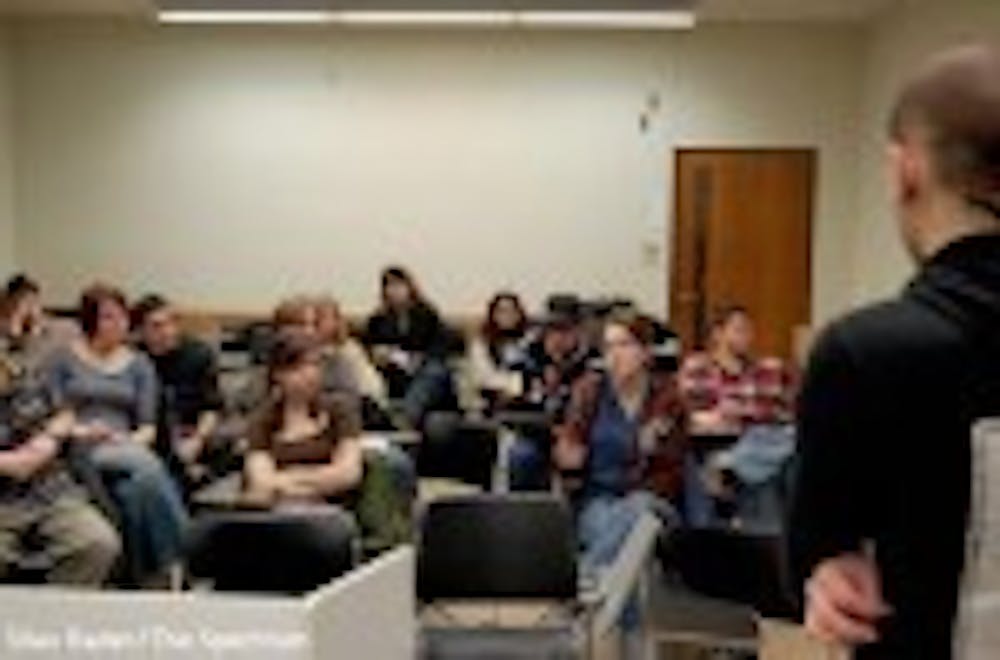
Approximately 30 students and other members of UB Students Against Sweatshops gathered in an empty classroom at 7 p.m. on Thursday to discuss the new Designated Supplier Program.
The DSP was unveiled this semester as part of the UBSAS plan to discourage unjust working conditions in contracted manufacturing. It was labeled "Phase II" of the UBSAS plan during the meeting.
The gathering was led largely by Matthew Cole, a sophomore American studies major and Joanna Boron, a sophomore linguistics major.
Cole explained that the "middle men" in manufacturing consist of subcontractors and industrial management, and that the new program cuts them out.
"The DSP connects UB directly to the factory," he said. He went on to describe how pressure from programs like the Worker Rights Consortium and the DSP don't endanger factory workers. Instead, after working conditions are inspected by the WRC and a factory improves, two-thirds of their products are purchased by participating universities like UB. The remaining third is left open, but factory conditions have still been cleaned up, so the workers still benefit from the program.
"This sounds really important," said Patrick Lang, a freshman political science major. "Nobody is in support of bad working conditions. The trick is getting people to understand they can do something about it."
At the start of the meeting, Boron asked everyone present to inspect their clothing tags to find out where it was made. A map on the chalkboard, dotted for each tag, denoted where the major locations were. None of the clothing was made in the United States, and China and India were the two most common locations. No further explanation was made, perhaps in hope that the point was clear enough without words.
She explained that anything with a UB logo on it was manufactured through contract with industries under inspection from the WRC. To continue to protect workers' rights, she explained, more universities need to take part in the DSP.
"Students are not just here to go to school and leave," said Sophia Azeb, UB Anti-War Action Leader. "We want to make a mark and help the community."



