
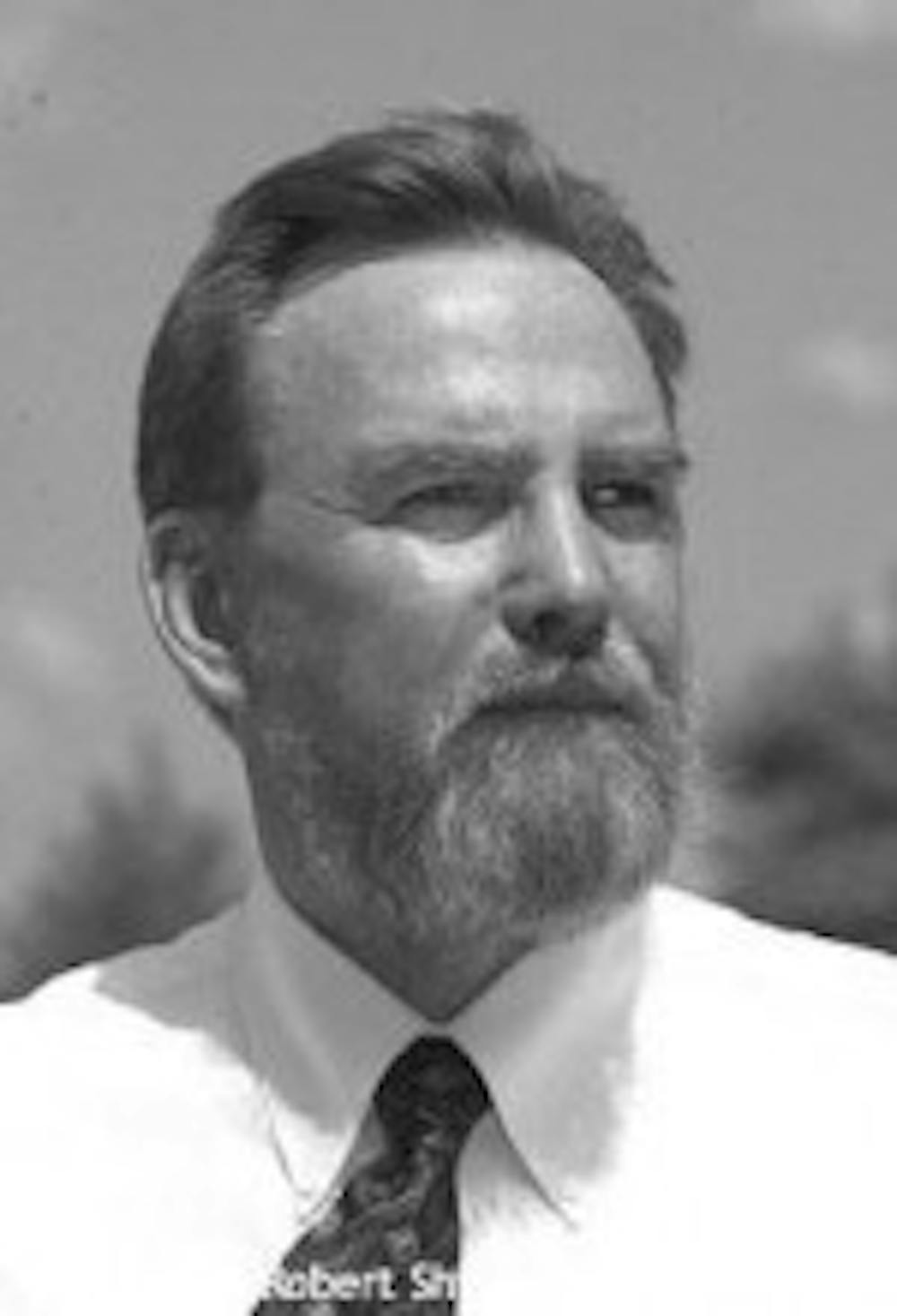
Robert G. Shibley, a professor of architecture at the School of Architecture and Planning, has received an appointment to the federal Erie Canalway National Heritage Commission. Shibley will serve a three-year term on the 27-member Federal Commission based on a nomination by U.S. Senator Hillary Rodham Clinton.
Shibley defines a heritage area as a region consisting of geographical, natural, and cultural features worthy of preservation and enhancement - the Erie Canalway is one of about a dozen in the nation.
"In this case it is the celebration of the canalway itself as a birthplace of commerce and trade," Shibley said. "It opened the flow of goods from the West to the East and immigrants from the East to the West."
The two previous projects Shibley worked on provided much of the experience Clinton was looking for when she nominated Shibley to the Federal Commission.
Shibley edited with Bradshaw Hovey a collection of advice, stories and insights about the Erie Canal in Buffalo, called "A Canal Conversation."
"We recorded and synthesized the conversation," he said. "It relates to Buffalo heritage and culture, the origins of the Erie Canal System, and offered examples of experiences from other heritage sites."
Shibley is also involved in many projects as the director of The Urban Design Project here at the School of Architecture and Planning.
"The Urban Design Project is about creating some of the planning infrastructure of the Buffalo/Niagara area with a broad base of faculty, students, and constituents," he said.
Shibley said that he believes relationships are the key idea behind planning and architecture.
"I believe that you don't build a city - you build the relationships between and among buildings, building the relationship between the downtown and the city, the city and the region," he said.
One of the more successful Urban Design Project efforts is the nationally acclaimed and award winning "Queen City Hub." Shibley said that it is a downtown development strategy. Working with Buffalo Place Incorporated, the Downtown Business Improvement District in Buffalo, Shibley laid out all the mapping, analytical work, public engagement, planning, and writing for the project.
"It is an effort to understand where investments have been made in the city and where they ought to go in the future," he said.
Shibley has been an architect since concluding his Bachelor of Architecture studies at the University of Oregon, where he received degrees in both psychology and architecture. At the Catholic University of America, he received a Masters of Architecture in Urban Design.
"While still in graduate school I was also in the service, working for the U.S. Army's Office of the Chief of Engineers where we did a lot of research and built buildings all over the world," he said.
Shibley worked as a branch chief for the U.S. Department of Energy's Passive and Hybrid Solar Division before coming to UB as chairman of the Department of Architecture in 1982. He said he wanted to come to Buffalo because of the quality of architecture in the region and a desire to teach.
"I was told I should come to Buffalo because it had every problem that I ever wanted to study," he said. "As chairman, I got hooked on the region. Buffalo has a tremendously rich history and is a wonderful place to live. I believe it is a comeback city. It is showing signs of turning around and UB has a big role in this."
At UB, Shibley is also overseeing the University's comprehensive physical planning process for UB 2020. His objective is to put the faculty, community and UB leadership vision for the campus on paper and see the campus support more essential academic community life.
"My job is to help create the physical plan driven by academic 2020, to figure out where... and with what qualities the University at Buffalo should develop," he said. "With a goal of growing by 10,000 we have to plan how to accommodate that."
Along with these immense responsibilities Shibley also teaches a course at UB called "Buffalo Niagara by Design."
"The urban design course is about who plans Buffalo/Niagara, what their motives are, and how they do it. It offers 'placemaking' as a critical lens to evaluate the process. That is what I profess," he said. "Placemaking is how to make a place you live into a place you love, transforming environments into places where you can live life well. It's a kind of civics."
Shibley said that all his ventures are part of the same larger project.
"It is all the same project," he said. "Working at UB, finding the physical capacity to grow, creating additional jobs, creating higher quality of living on and off campus, making a better region, and doing the scholarship on how places are made support such activity."
He said the real value of higher education lies in how much a person contributes to society.
"Scholarship in professional schools is often scholarship on or about direct action in the world," he said.
Shibley said that UB is capable of growing a great deal, but is already much better than most people think.
"I believe UB is way better than we allow ourselves to state. Even so, we are nowhere near as good as we will be. We are a school with very strong disciplines.
He said that UB is helping to define what it means to be a 21st century university in a global economy.
"Our academic programming builds confidence that working cross disciplines will allow us to do collaboratively what no one discipline can do by itself," he said. "That is the promise of a 21st century university - UB can further define that promise."



