
From the twisted mind of up-and-coming filmmaker Guillermo del Toro comes the most undeniably original and visually stunning fantasy tale told in years.
"Pan's Labyrinth" shatters the conventional image of modern film narrative by creating a mesmerizing, violent and at times terrifying fairy tale that was conceived strictly for adult audiences. While it has its fill of monsters and magic, the Spanish film is also rich with allegorical messages that revolve around the film's deep-rooted political undertones, themes too subliminal and convoluted for a child to comprehend.
It is unfair to simply categorize "Pan's Labyrinth" as a fantasy film, since the story of the labyrinth and its many bugged-out creatures only encompass half of the story. The movie is actually one part fantasy, one part wartime tragedy.
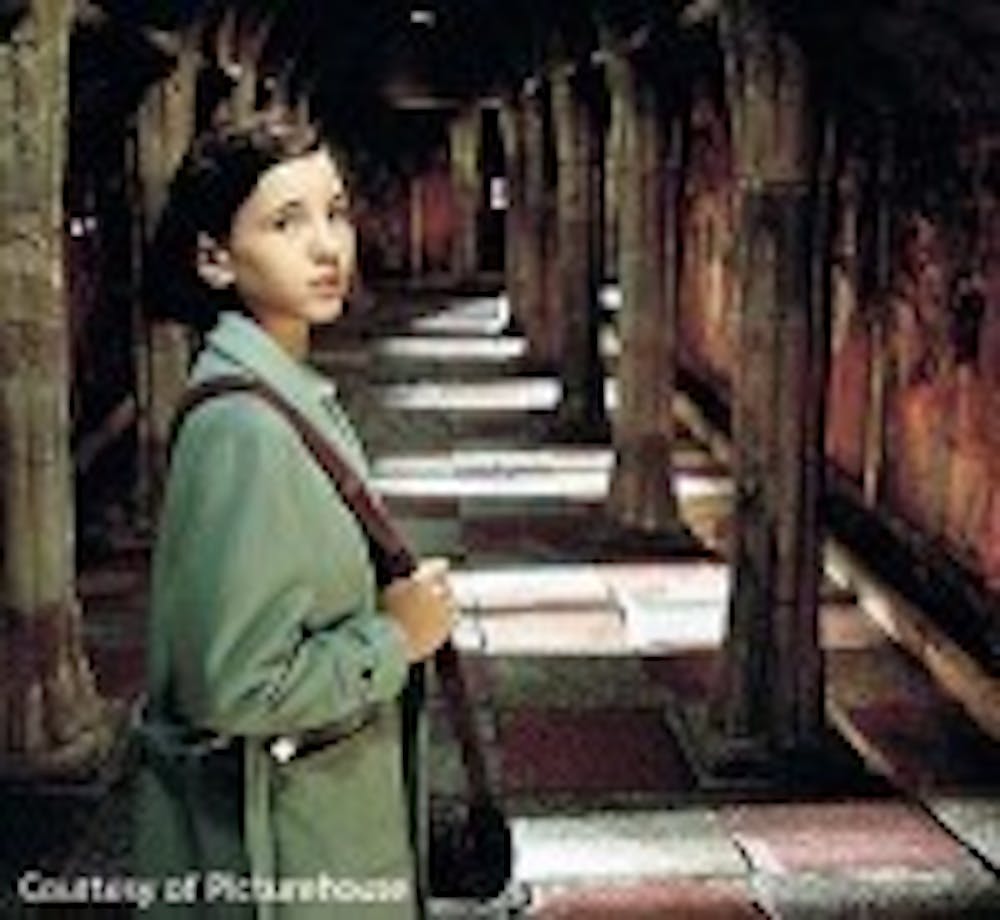
Taking place in 1940s fascist Spain, both themes center on the child dreamer girl Ofelia, who uses fantasy as a form of escapism. Ofelia, played brilliantly by newcomer Ivana Baquero ("Rottweiler"), is unwilling to come to terms with the unmistakable darkness of the world around her. After her father dies in the war, her sick, pregnant mother brings her to live with her new husband, a malevolent captain in the Spanish army.
The Captain is as ruthless a villain as cinema has ever seen, nonchalantly tormenting and murdering members of the resistance. He is only concerned with the future of his unborn son, who is eventually to become Ofelia's brother. While the Captain is off pursuing his enemies, Ofelia wanders into a disturbingly vivid psychedelic dream world. What becomes truly frightening for the audience is the inability to distinguish between the two worlds; the line between fantasy and reality is ambiguously uncertain.
The bizarre creatures that del Toro ("Hellboy") incarnates steal the show. Pan is an ancient faun who is said to be composed of the earth itself. The grotesque monster towers over Ofelia, lumbering around his labyrinth with lethargic movements that suggest both a sense of terror and a sense of modesty at the same time. Then there is the hideous conjuration known as the Pale Man, who carries his eyeballs in the palms of his hands and threatens to feast on flesh if awakened.
Despite having to constantly cross such creatures in her adventures in the labyrinth, Ofelia would rather take them on then deal with the constant cycle of death and sadness that exists in her real life.
Up in the real world, the supporting cast impresses as well. The Captain is played with ruthless efficiency by Sergi Lopez ("Dirty Pretty Things"). His performance sends chills down the spine, coming off as far more hideous than the demonic creatures that exist in the labyrinth. Ofelia's nanny, Mercedes, is played passionately by Maribel Verdu ("Y Tu Mama Tambien"). Mercedes serves as a surrogate mother figure for Ofelia, as well as one of the leading members of the resistance.
Despite its stunning artistry and remarkable cinematography, "Pan's Labyrinth" is not without its faults. In the end, the movie comes off as rather depressing, due in most part to the combination of its horrific images and tragic plot. Viewers who intend to go see the film should keep in mind that it is not the typical movie going experience. Only those with an open mind and an optimistic attitude towards subtitles (the film is shot entirely in Spanish) need apply.
Regardless of its shortcomings, "Pan's Labyrinth" is unlike any movie to come out in years, a successful merging of two unlike genres that is capable of evoking feelings of childlike wonder and amazement in adults of all ages.



