
While many clubs and organizations on campus see their community service requirements as chores, others go out of their way to make a difference in the greater Buffalo community.
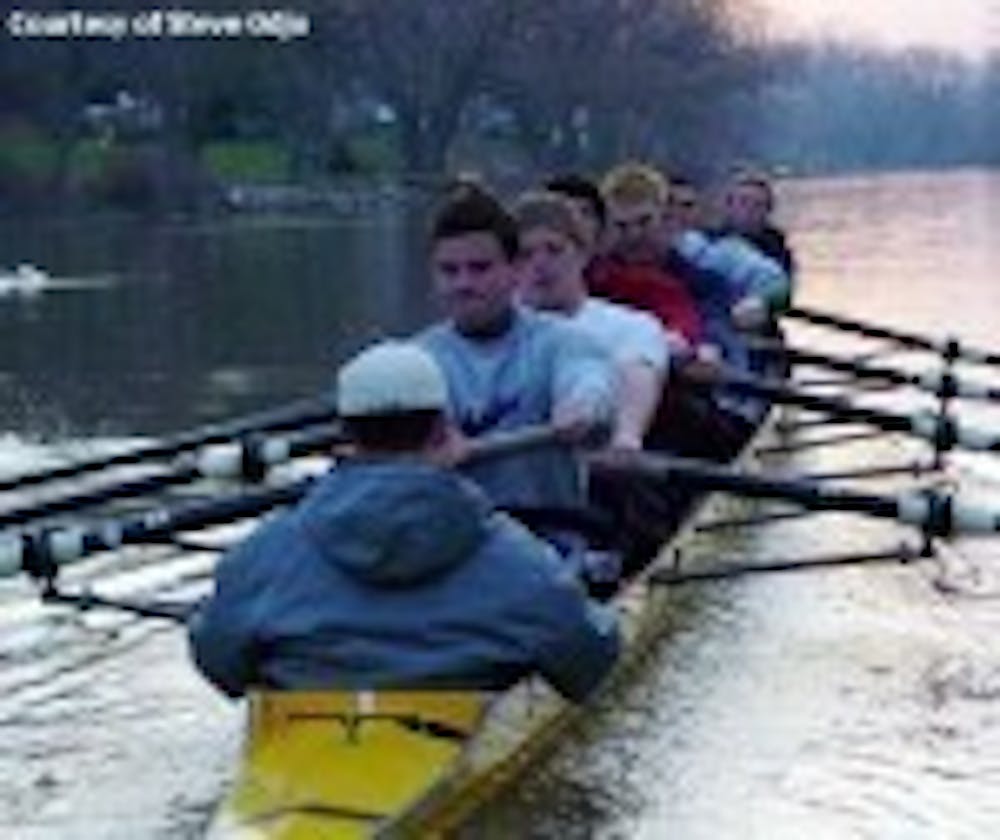
The men's crew team is an example of the latter, recently participating in an act of kindness that has the potential to save lives. Tired of picking up garbage, or doing other relatively inconsequential things around campus, the team decided to make their community service count this year.
"We usually do clothing and can drives, just little things around campus," said John Lampard, a member of the varsity team. "But this semester I really wanted to make an effort and do something that could affect the community."
Lampard, after considering a multitude of community service options, opted to help the Red Cross. The nationwide organization provides a variety of services to communities in need, and is probably most recognizable for its blood drives.
"I knew if we did something with the Red Cross we could make a big difference," said Lampard. The men's crew team, because of their frequent competitions, is unable to cope with the loss of physical strength that typically accompanies blood donation. It was for this reason that they chose to give units of plasma and platelets, a process that although similar to giving blood, is less commonly done, and therefore more in demand.
So on a Saturday afternoon in October, Lampard and 12 of his teammates gave up some of their time to complete the process. During a plasma donation, whole blood is taken from one arm and transferred to a sterile collection kit that is inside a cell-separating machine. This piece of equipment separates the blood so that only the plasma or platelets are collected, and after being transferred through that component, the blood, and all the red and white blood cells, are returned to the donor.
In some cases donors may experience chills or a slight tingling sensation, but because the red blood cells are returned to the donor after the process, the donors typically do not experience the long periods of weakness afterwards. It also allows a person to donate every two to three weeks.
"The process wasn't painful or difficult," said Tony Clark, a junior, and president of the men's crew team. "I had never donated blood or platelets before so I was a little nervous, but the process was explained really well."
During the process donors typically pass their time reading, watching television, or pick a movie from a library of old and new films that the Red Cross provides.
Scott Prince, administrative assistant for apheresis at the Buffalo chapter of the Red Cross said that the point is to make the process as comfortable as possible for the donor.
Prince stressed the importance of recruiting repeat donors, people who would give their time multiple times a year to help satisfy the need for plasma and platelets in Buffalo.
"In a time of shortage, we contact as many past donors as possible," said Prince. "These units of plasma and platelets can be used in severe burn cases, other emergency situations, and cancer cases; with leukemia being in the forefront."
The Red Cross in Buffalo currently has about 900 returning donors, and gives most of the donations they collect to Roswell Park, offering cancer patients a chance for better health and an easier recovery.
For those interested in donating platelets or plasma, the Red Cross, which is always looking for new volunteers, is open seven days a week and located on Delaware Avenue in downtown Buffalo. To donate, one must be 17 years old, weigh at least 110 pounds, and be in good health.
The crew team is conscious of the effect they've had on the community, and plan on repeating the process in the next few weeks.
"It was a good thing to do," said Clark. "I would definitely donate again."
Prince said he realizes that donating plasma or platelets on a regular basis is a large commitment, and he expressed his appreciation for volunteers, especially students, who make room in their schedules to travel downtown and donate.
"It takes a really special type of individual to devote two hours of time to sit in a chair, donate blood, and help cancer patients who they will never see," he said.



