
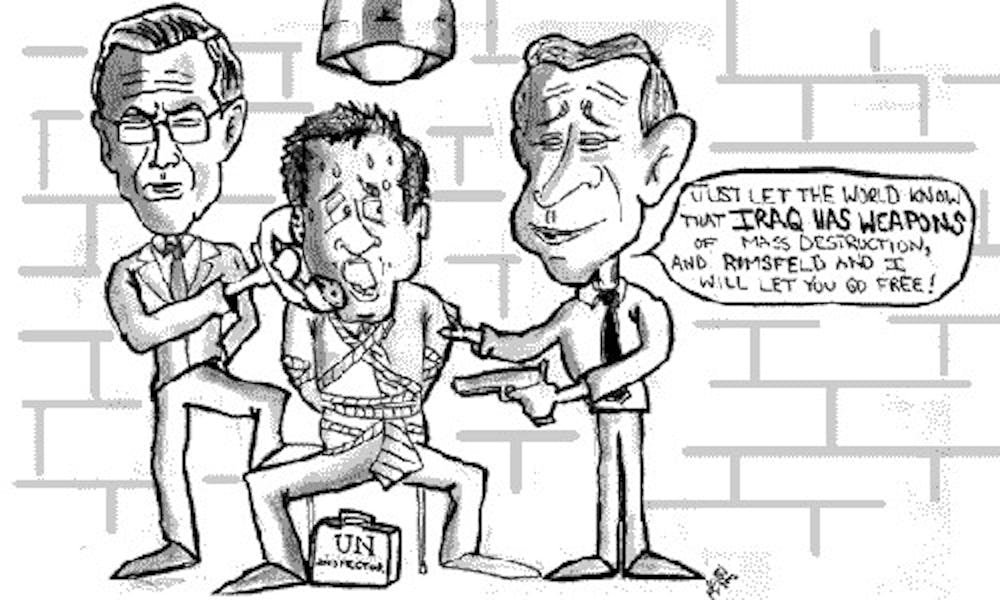
As the United States braces itself for a possible attack on Iraq, millions of people are beginning to wonder if war is the right answer and if President George W. Bush's policy of "pre-emptive war" is one that has the world's best interest in mind. Pressure on Saddam Hussein is required, but waging war is not. An attack will disregard America's allies, and, perhaps more importantly, logic.
As far as allies are concerned, America has already succeeded in losing the support of Russia, China, Germany and France. Those countries, all of which hold important positions on the United Nations Security Council, have objected to the belligerent way the United States has conducted itself. The American government's hostility towards Iraq has spread to other countries, particularly Yemen, from which the United States immediately cut billions of dollars in aide when the country voted against the first United Nations resolution.
The promulgation of war hawk ideology also disregards common sense. Since Hussein knows he is being watched, he will not attack. While he is inarguably a terrible dictator, much of the world is assured that he is not a threat to anyone outside of his own country. Even if Hussein does have weapons of mass destruction, he will not use them if he knows that the nations currently attempting to discourage American aggression are likely to approve of a U.S. attack against Iraq afterwards.
According to the United Nation's charter, nations have the right to retaliate against countries that attack them. Therefore, Hussein has a right to take whatever actions necessary to defend himself and his country following an attack by the United States. By putting soldiers in harm's way, America is inviting Hussein to unleash anything and everything he has on both soldiers and civilians.
Without the support of the entire world, planning a unilateral strike - the only way Bush has been able to sell the war - is impossible. The rest of the world has realized that this war will only harm and drain many nations and is seeking to amend strife between America and Iraq through diplomatic means.
The other mistake Bush and Secretary of Defense Donald Rumsfeld are making is referring to those against a war with Iraq as "pro-Saddam." None of the United States' allies claim Hussein is in the right, or that he should even be allowed to stay in power. They are only trying to prevent the loss of innocent lives on both sides of the conflict.
While Bush and various members of his administration have made it clear that Hussein is an enemy, they have yet to reveal why military action is the only option. It seems now that while Iraq has remained neutral and unwilling to rally troops, only America is beating the drums.
Since the necessity of war is being questioned, the role of the peaceful protestor is more important than ever. Across the nation and around the world, demonstrators have come out to raise their voices against a possible conflict. The dip in Bush's approval rating reflects the discontent of Americans, and now it is up to elected officials to make the right decision.
The U.S. government should focus on the problems affecting our country: a struggling economy, rising unemployment and waning Medicare and Social Security. Bush is foolishly allowing taxpayer money to shift from the national issues that affect every Americans' day-to-day life to settle a family vendetta.
The people of the world are speaking, and support for a war against Iraq is dwindling, both nationally and globally. Thus far, the Bush administration has failed to provide the voting public with an explanation as to why war is necessary and unavoidable. Hopefully, American representatives who vote on behalf of their constituents will get the message loudly and clearly before plunging both the United States and the world into turmoil and possible destruction.



