
News
NEWS
An opportunity across the Atlantic
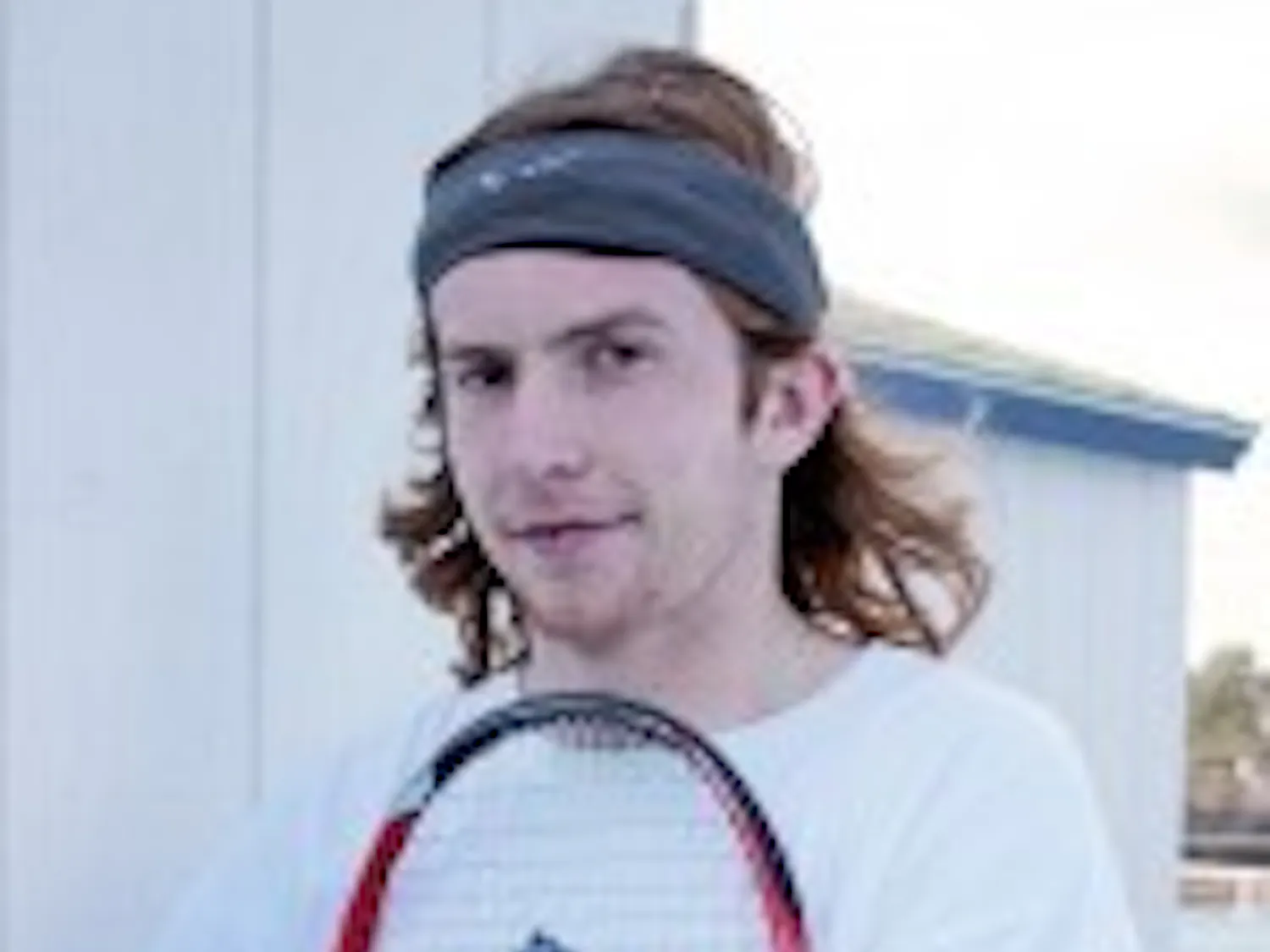
By Brian Josephs | Mar. 25, 2010In America, college sports are the subject of national attention. The National BCS Championship game is broadcasted nationwide and is viewed by millions every year, and the NCAA Basketball Championships always have followers worked up every year. In contrast, however, NCAA sports seem to be missing in Europe. Yearly college spectacles are simply non-existent. "I once saw the Leeds University [European college] men's basketball team play," said Stine Bauer Dahlberg, a writer for the GW Hatchet. "I was one of four spectators. They did actually have cheerleaders though, but the three of them were standing against one wall wearing tracksuit bottoms under their skirts, with a pom-pom in one hand and wrapping their chewing gum around the tip of their index finger with the other." Because of this lack of enthusiasm for student-athletes, many aspiring professionals travel to the United States for a better opportunity. One of these Europeans is Wojciech Starakiewicz, a sophomore tennis player at Buffalo. Starakiewicz was born in Warsaw, Poland on Oct. 11,1988. Taking after his father, Starakiewicz started playing tennis at an early age. The difference between the two, however, was how serious they took the sport. His father only played for recreational purposes while Starakiewicz had other goals set in his mind. "My dream was to become number one in the world," Starakiewicz said. "[The chance] didn't happen until now." Starakiewicz accomplished many feats as a youth in Europe. In July 2006, he won the Under-18 Polish Championships in both singles and doubles. He also played as a junior in the International Tennis Federation (ITF), recording a record of 13-11. However, there were not many resources for Starakiewicz to improve his tennis abilities. Since collegiate competition is not as popular in Europe as it is in the U.S., making a name for one's self is harder. "In Europe, college sports aren't really good," Starakiewicz said. "If I wanted to continue playing tennis plus get an education, I had to come to the U.S." Starakiewicz originally enrolled at the University of Tulsa and he recorded a 5-4 singles record there, but was dissatisfied with the school's program. To him, the dedication to the sport of tennis just wasn't there. The situation seemed similar to that of his homeland until he met Lee Nickel, the men's tennis coach. "He looked so committed," Starakiewicz said. "He made me feel that [Buffalo] would be [the right] place for me." Starakiewicz joined the Bulls' tennis team as a transfer this year and has enjoyed his new home as can be seen through his performance. Starakiewicz holds a 5-1 record in singles, and a 3-2 record in doubles. He also became the No. 5 seed in the Intercollegiate Tennis Association, the highest seed in Bulls history. As seen by his immediate success, Starakiewicz wants to do big things for Buffalo. "In college, I would probably like to be top 20 in the NCAA," Starakiewicz said. "And maybe fight for the MAC championships for the first time for UB." The NCAA has given Starakiewicz the opportunity to pursue both education and a successful tennis career. He is currently a communication major and hopes to go professional on the tennis circuit. Starakiewicz considers the sport of tennis as a way for him to express himself being that there are many different playing styles one can compete with. "Complexity is a good word [for the sport]," Starakiewicz said. "Different people can be the best players in the world. Federer and Nadal are two completely different players and they still compete at the highest level." Starakiewicz is enthusiastic about his future in tennis because of the opportunities that playing in America presents. His success is now not determined by circumstance but rather will be decided by his skills. E-mail: sports@ubspectrum.com
NEWS
Student fees proposed to increase by fall semester
By Jessica Bennett | Mar. 23, 2010Students should be prepared to give UB even more of their money. If a proposal by Dennis Black, vice president for student affairs, and Satish K. Tripathi, provost and executive vice president for academic affairs is approved, student fees will be increased by two percent. "It starts in fall semester of 2010," said Carol Adler, resource analyst for the office of academic planning and budget. "Summer session 2010 will be on this current year rate, the new rate would go fall 2010 to summer 2011." Black and Tripathi noted that the total proposed increase of two percent is in accordance with the Higher Education Price Index (HEPI). The increase is necessary so that UB and SUNY can continue to offer programs and services that students need and expect. "They're pretty much increased every year," said Laura Barnum, senior assistant vice president for the office of academic planning and budget. "It's just the rate at which they increase has been differentiated." Barnum added that the student fee increase is still in the proposed stage and has not been finalized by SUNY. "There's always the opportunity that things may be adjusted or looked at differently," Barnum said. The comprehensive student fee would increase by $20.50 a semester for full-time undergraduates, rising to $947.25. For full time Graduate and Professional students, the fee would be an extra $16, bring it to $719.25 for the semester. So far the proposed per-semester increases include a campus life increase of $3.50 to support a portion of state-mandated negotiated salary-and-benefit increases, a health services increase of $2.50, an intercollegiate athletics increase of $4.50 (undergraduates only) to support required operating contractual increases, a transportation increase of $3 to support state-mandated negotiated salary and benefits, and a technology increase of $7 to address some of the increased costs. Technology is a good example because of how much it has grown in just a few short years, and how expensive it is becoming to keep everything updated. "The cost of the electronic databases are growing at a rate of nine percent," said Barnum. The fee increases in the last few years do not cover the mandated increases. Costs continue to rise and adjustments have to be made in order to keep balance. The economy also plays a role in the budget, including state cuts for SUNY. "We're now facing a third year of cuts from the state," Barnum said. "We're looking at $40 million that's been cut, state tax support, and we're looking at another $15 million to $20 million." The increase in fees will help keep a variety of services running; some of the student services range from the bus system and printouts at the library, to the student Health Services in Michael Hall on South Campus. The student consultation process has shown that students are in support of the services that are being provided and that the students want to have those services available to them. "We want to provide the services our students need to be successful, we want them to be able to focus on their academic pursuits and also have an enjoyable experience here at the University at Buffalo," Barnum said. "We want to know we are providing a valuable experience for them, a lot of these fees help accomplish that." Barnum also added that Student Affairs does an excellent job with the whole student consultation process and all of their work to ensure that this information is provided to the students. "[Dennis Black] and his area do a good job of representing the students," Barnum said. "He believes in what he does and that shows." E-mail: news@ubspectrum.com

NEWS
Fairness of university calendar questioned
By Caitlin Tremblay | Mar. 23, 2010With Easter and other holy days fast approaching, Christian students at UB are questioning the university's decision not to include Good Friday as a holiday on the academic calendar. Some students feel that the university's calendar heavily favors the Jewish faith in that during the fall semester. Days off are granted for both Yom Kippur and Rosh Hashanah, but during the spring, the university does not grant a day off for one of the holiest days in the Christian faith. "As a school which encompasses so much diversity, we know that it is very hard for all religious groups to be allowed to have all our special religious holidays off, and while we are much appreciative that Christmas is during our winter break, Christmas is not the pinnacle holiday for our faith," said Ashley Wiehl, a senior biological sciences major. Wiehl feels that Christian students need Good Friday off, because it is one of the most defining holy days in the religion — Good Friday is what the Christian faith is about. "On Christmas, we celebrate the birth of Christ, which is of course crucial for our faith. However, Christ simply living doesn't scratch the surface about what being a Christian is all about," Wiehl said. "Only through the death of Christ and his resurrection do we believe we can have eternal salvation through him. Good Friday, being the day that we celebrate Christ's death, … is an essential day in which we reminisce, mourn, praise and remember all that Christ did for us." Other students, however, feel that despite the religious meaning of Good Friday, the day should be considered a holiday just to be fair to everyone. "As a public university, we should get every religious holiday off or none at all," said Nathan Tuccio, a junior political science major. "The school should be completely secular and stay out of recognizing religious holidays." Senior political science major Kinsey Davidson agrees. "The appropriate solution seems to be, while unpopular with students, no promotion. No religious holidays off. Everyone should have to follow the same procedure of talking with their professors and arranging to take a religious holiday," Davidson said. "What I really think is appalling is that students and staff at a state university have to report on federal holidays. If the post office and banks are closed, UB should be too." Tuccio says that he will be e-mailing his professors on Good Friday explaining that he is taking the day to observe his faith. As this is a public university, professors must grant exceptions in attendance policies for students who miss class because of a legitimate religious reason. Wiehl, however, had to miss Good Friday church service for a test one year and is disappointed that the university fails to recognize important days of all faiths. "This being said, it is personally frustrating to see that Christians are not allowed to have this holiday off, while many of the Jewish holidays are recognized by the administration as valid enough to receive a school closing," Wiehl said. "One year I actually had a test at 7 p.m. on Good Friday and couldn't even attend the Good Friday church service." Michael Ryan, vice provost for undergraduate education, said that the university's academic calendar is as secular as possible and that the decision not to have Good Friday as a day off was not a slight to the Christian faith. "The university calendar is made to comply with different regulations from the [State Education Department] and is as secular as possible," Ryan said. Ryan points out that Yom Kippur and Rosh Hashanah are granted as holidays because the Jewish faith prohibits believers from attending work and school on the holiday, while the Christian faith only requires followers to attend mass. "Believers are not prohibited from attending work or school on Good Friday, but that is a stipulation within the Jewish faith. This is why Good Friday is not a UB holiday," Ryan said. "However, as per state and federal laws, instructors must make accommodations for students who miss class for legitimate religious reasons." Even so, some students still feel that in neglecting to recognize Good Friday as a holiday on the academic calendar, the school is slighting their religious beliefs. "I feel that this is a silent slap in the face to my faith," Wiehl said. "Why is it that the one religious holiday not coinciding with a weekend or winter recess cannot be equally respected and observed?" E-mail: news@ubspectrum.com

NEWS
Accident destroys vehicles on Sweet Home Road
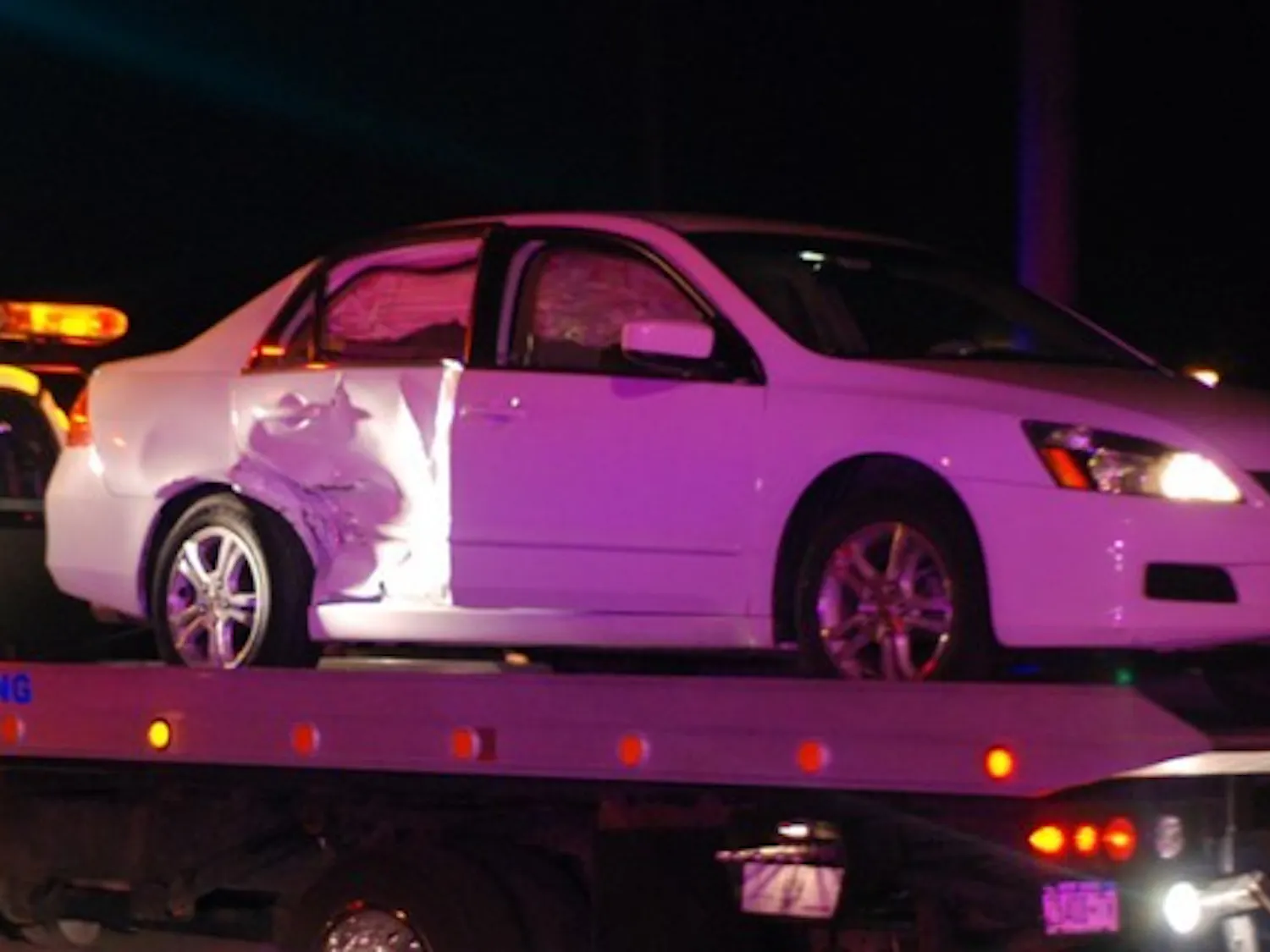
By JENNIFER LOMBARDO | Mar. 21, 2010A two-car accident took place between 10 p.m. and 10:15 p.m. Sunday evening on Sweet Home Road and Chestnut Ridge Road. According to Amherst Police Officer Dean Swoger, one car was making a left-hand turn onto Chestnut Ridge Road when it was struck by the other car, which was on Sweet Home Road. National Grid was called because one car hit a telephone junction box, which was at first taken to be a National Grid transformer, according to a National Grid worker who was present at the scene. According to Swoger, there were no fatalities or serious injuries. It is unknown whether or not anyone involved is a UB student. E-mail: news@ubspectrum.com

NEWS
Editorial board announces endorsements
By STEPHEN MARTH | Mar. 21, 2010Curious about what those running for office at the Student Association are all about? Join us in our live feed of the endorsement process from 132 Student Union!We will be asking the tough questions, which most will be submitted by you!
NEWS
Crash sends student to hospital
By JENNIFER LOMBARDO | Mar. 19, 2010A two-car crash occurred at the corner of Audubon Parkway and St. Rita's Lane late Thursday evening which sent a female student to the hospital.According to University Police Department Lieutenant Urbanek, the accident occurred when one car cut in front of the other to turn left from the Audubon onto St.
NEWS
The new UBSpectrum.com
By STEPHEN MARTH | Mar. 19, 2010Following months of research and preperation by myself and my staff, I
NEWS
UB School of Nursing opens new building
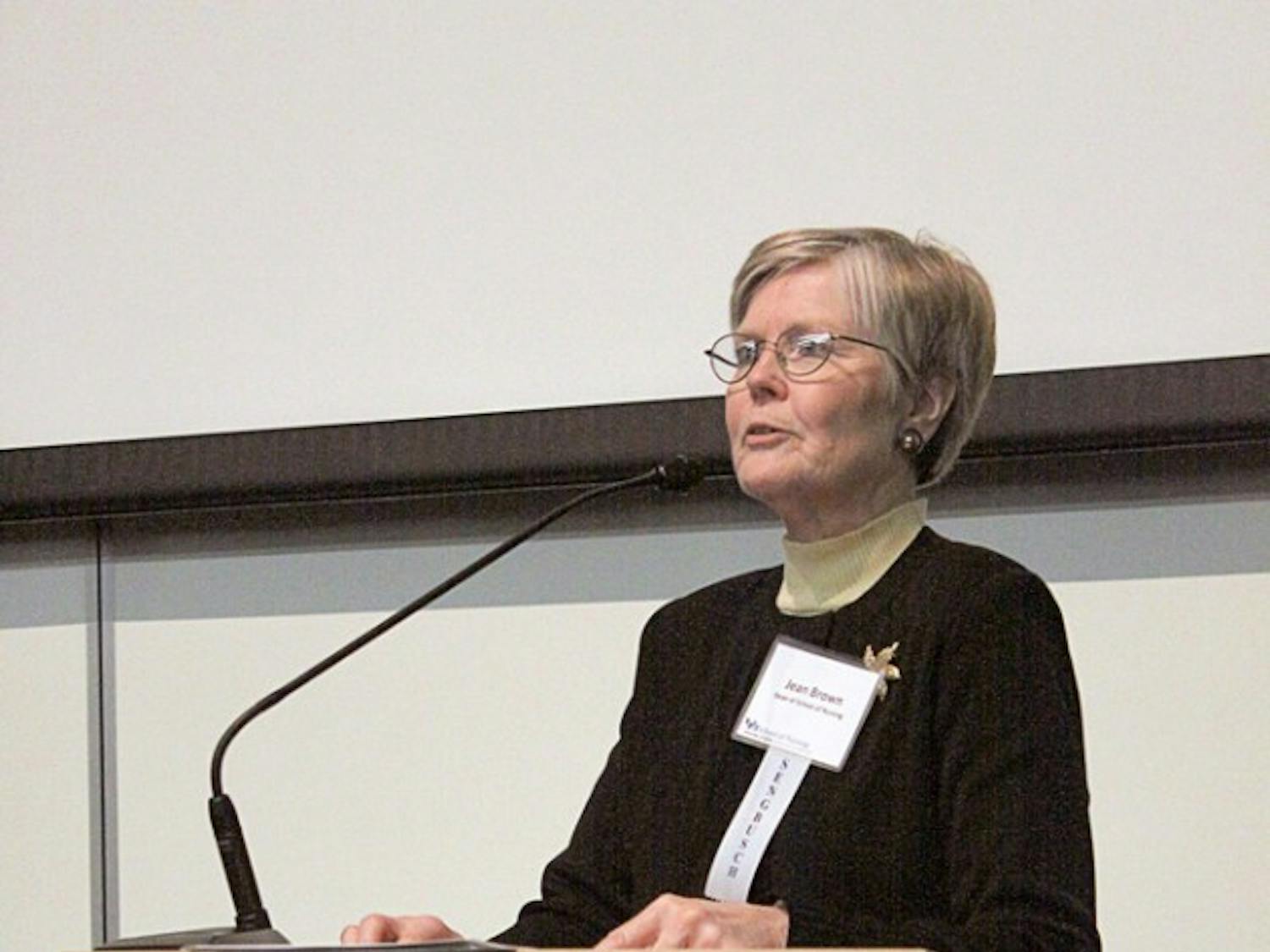
By Jeff Pelzek | Mar. 19, 2010The University at Buffalo's School of Nursing has found a new home on South Campus. The historic Wende Hall has seen $7.1 million in renovations in an effort to re-create a handsome relic of the old, while providing UB's nursing program with a brand new state-of-the-art facility. "This is a very exciting time for the school of nursing," said Jean K Brown, Dean of the UB School of Nursing. "This new facility has provided us with more tools to support our vision." Wende Hall, named after alumnus Grover William Wende, was built in 1885 and expanded in 1955. It was originally home to the university's Department of Physics, and until 2008, the building was a classroom and satellite office building. The improvements have turned Wende Hall into the energy-efficient pulse of the nursing program. The nursing school's groundbreaking move from Kimball Tower, where it had operated for more than 30 years, to its own technologically advanced building matches its spirit for independence, Brown said. At Wende Hall's grand opening on March 16, faculty, staff and students in the nursing program presented the renovations to the public and led tours of the new facility, presenting their audience with the school's plan for the future. The problems it faces as the high demand for quality nursing heightens the bar for academic excellence. "With the well documented shortage of nurses, education preparation becomes even more important to the health and well-being of our community," said David L. Dunn, vice president for health sciences at UB. "These women and men are the backbone of the healthcare system." UB's School of Nursing aims to be among the top 25 nursing schools in the country, and it dedicates this new building project to its commitment to leadership and quality. "A world-class nursing program requires dedicated staff, faculty and students, but it also requires a state-of-the-art facility," Dunn said. The new space includes 4,000 square feet for the Center for Nursing Research (CNR), a manifestation of the School of Nursing's emphasis on research. According to Brown, research for health care is an essential skill for new nurses to meet the requirements of a rapidly expanding field of medicine. The clinical laboratories are well equipped to handle the university's new standards for patient simulation. Their talking patient mannequins, nicknamed Homer and Samson, can be controlled by an instructor who watches in the adjacent room through a video feed. "The new clinical ‘open-labs' are available to any upperclassman, for four hours a day, three days a week, to come in and try their practical skills," said Janel Yacovoni, a junior nursing student at UB. "The new space is really nice." As part of UB 2020's plan to group all of the university's health science schools to one campus, Wende Hall is only one of several expected building and program renovations. The nearby Acheson Hall is projected to become the new School of Pharmacy and Pharmaceutical Sciences. The School of Nursing hopes that the new facility will encourage students to consider nursing as a profession, to help to build a strong foundation against the nationwide shortage of nurses in health care. "The high morbidity rates that have been linked to nursing shortages mean nothing less than saving lives is at stake," Brown said. But the improvements to the program go far beyond new bricks and mortar. The nursing program has also launched an accelerated Bachelor of Science program, which efficiently produces new graduates in 12 months. Other program innovations include a number of graduate-level programs for nurse practitioners, clinical nurse specialists, and an innovative nurse anesthesia program. The new building is hardly the full result of the nursing program's dedication. Dean Brown and the School of Nursing's administration are confident that it is only a start to an improvement in health care, which goes far beyond a little fresh paint. Email: news@ubspectrum.com
NEWS
Samantha Hicks
By Staff | Mar. 17, 2010Samantha Hicks came to The Spectrum in her freshman year as a sports staff writer. Now in her junior year, she is currently a Photo Desk editor. Samantha is a communication and English major. After graduation, Samantha plans to either find a job in athletic communications or go on to graduate school to get her MBA. This past summer Samantha interned at Ziff Davis Media, owner of PC Magazine. She has been a lifeguard and a swim instructor for the past six summers for the Westchester County Parks Department. As far as this summer goes, she is waiting to hear back from a few companies.

NEWS
Matthew Parrino
By Staff | Mar. 17, 2010Matthew Parrino is in his fourth semester with The Spectrum. He started off as a staff writer and has worked his way up to sports editor. He has wanted to be a journalist ever since he can remember. Currently a communication major, Parrino hopes to eventually graduate from UB and attend graduate school somewhere yet to be determined in order to obtain a master's degree in journalism. Parrino has had an obsession with sports since his youth and counts himself lucky that he may one day be able to write about what he is passionate about. He looks to the future every day and one day aspires to be an NBA beat writer or a columnist for a big city newspaper. In the meantime, he is enjoying his time at UB and the interesting athletes and teams he has had a chance to cover.

NEWS
Jessica DiGennaro
By Staff | Mar. 17, 2010Jessica DiGennaro found a talent for journalism late in her undergraduate career when she enrolled in a feature writing class as a junior. She became a news intern at WGRZ – Channel 2 the following summer and relished her time there, learning the ins and outs of the business and meeting wonderful people along the way.

NEWS
Changing role
By AMANDA WOODS | Mar. 17, 2010After five years of serving as the vice provost and dean of undergraduate education at UB, Michael E.

NEWS
UB establishing environmental geosciences major
By Jessica Tufte | Mar. 17, 2010For students looking for the more environmental side of science, UB will be offering a new major in the fall.After student demand for a more scientific-driven environmental studies program, Dr. Mary Alice Coffroth, a professor of ecology in the Geology Department at UB, realized the need at UB for an Environmental Sciences major and answered the call."Several faculty decided that there was a need for environmental sciences rather than environmental studies at UB," Coffroth said.

NEWS
Brendon Bochacki
By Staff | Mar. 17, 2010Brendon Bochacki is a Western New York native, born in Buffalo and raised in Orchard Park. He attended Nativity of Our Lord grade school and Canisius High School. Brendon's foremost passion has always been music; he has played the guitar since the age of eight. Brendon started his college career at SUNY Geneseo, majoring in biology his freshman year and psychology his sophomore year. Upon transferring to UB his junior year, Brendon changed his concentration for the third, and hopefully final, time to philosophy, and joined The Spectrum as a staff writer for the News Desk, thus beginning his venture into journalism. After one semester as a staff writer, he took up his current position as an assistant campus editor. Following graduation, Brendon plans to work on getting his J.D. and Ph.D. in philosophy, jointly, at the most affordable school that accepts him.

NEWS
James Twigg
By Staff | Mar. 17, 2010The Spectrum is the first newspaper James Twigg has written for. He started in the spring semester of his sophomore year and has since become an assistant arts editor. His current major is media studies, however, he plans on switching majors so that he can pursue a certificate in journalism. Though he writes about the arts in general, James's main focus is on the music scene. He enjoys listening to new music and increasingly expanding his interests. Concerts, new albums and bands on the rise are James's favorite topics to write about. After graduating, James plans on continuing his career in journalism and hopefully trying his hand at writing for AP Magazine.

NEWS
Nearly 30 rooms burglarized on South Campus
By Caitlin Tremblay | Mar. 17, 2010Kevin Sattler returned back to Buffalo from a relaxing spring break to find his Goodyear Hall dorm room destroyed.

NEWS
Rob Schulz
By Staff | Mar. 17, 2010Rob Schulz joined The Spectrum in spring 2009 as a photographer. After two semesters as a staff photographer, he was bumped up to assistant photo editor in the spring of 2010. Rob has always enjoyed photography as a hobby. He was a writer/photographer for his high school newspaper as well as a contributing photographer for his high school yearbook.
