
My first article for The Spectrum was published Oct. 6, 1978. It was a review of a band that played at Clark Gym and bared so little resemblance to the original type-written copy I had submitted that I double-checked it line-by-line to see if someone else had covered the same concert.
I was almost embarrassed to walk into The Spectrum office the next day, but my student editors took my grammar and writing style—or lack thereof—in stride and handed another assignment to me, then another, and slowly, very slowly, my copy began to bleed less ink.
As a reporter for The Prodigal Sun, I was appalled at the disco craze inexplicably sweeping the world at the time, was less interested in new wave acts like Blondie and Devo, and kept my focus on heavy rock music in all its illustrious forms: fusion, southern, metal, progressive. This not only earned me a niche on the paper, but the fond sobriquet, "acid queen," from my brilliant editor, Tim Switala.
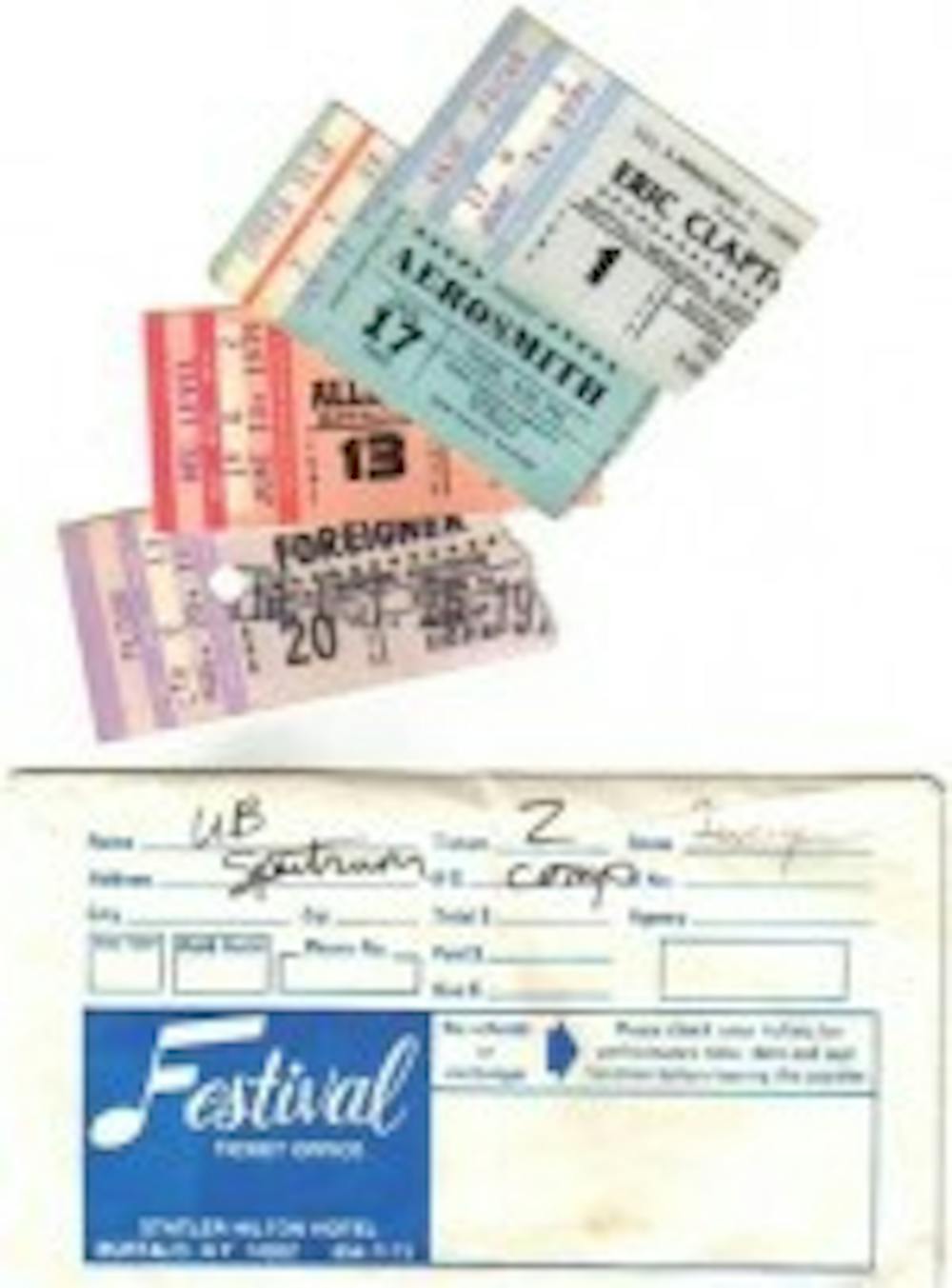
With the perk of comp tickets, I saw and reviewed The Allman Brothers, Eric Clapton, and Van Halen, to name a few. And when Led Zeppelin's drummer, John Bonham, died in September 1980, I wrote the centerfold expose for The Sun: "Confused and Dazed," compiling the storied band's checkered history and speculating on its future. (I did not have the prescience to foresee Robert Plant's solo Grammy in 2010.)
My student editors urged me on to harder news like the Love Canal debacle and I spoke with Lois Gibbs and then-medical school dean John Naughton about the medical school's planned study on the effects of toxic waste on local residents. But I kept my hand in The Sun's pages interviewing Joe Perry in person when he broke with Aerosmith in 1982 to start the short-lived Joe Perry Project.
No matter the topic or my proficiency, I felt welcome in the Spectrum offices on the second floor of Squire Hall, where there was always someone skipping class, a vacant typewriter and an Ivy-League view of Abbott Library, Harriman, and Foster Hall. Our windows overlooked "the courtyard" where Spring and Fall Fests of the day raged and I can remember leaning out of them to guesstimate the crowd watching Southside Johnny and the Asbury Jukes on the steps of Harriman Library – 5,000 – at Fall Fest 1979.
Looking back, I don't think I could have written another word after that first heavy rewrite at the dawn of my career without the encouragement of The Spectrum's student editors, handing new assignments to me even as their ink on my previous ones had barely dried. In fact, I felt so at home at The Spectrum offices that I often was late for classes, because I knew the real lessons in writing and life were taking place on the second floor of Squire Hall.
I think it shaped many of us, no less me, an undecided major in 1978 who struggled to narrow down my choice of study to just five majors: math, economics, music, English, or communication. In the end it was my Spectrum days that shaped my future most. I can't tell you where most of my fellow writers are, if they ever wrote another word after they left Squire Hall, but I have—millions of them, both for a daily city newspaper and features for a nationally published magazine—and I am often reminded that I owe part of who I am today to my Spectrum editors and their helping hands—dripping as they may have been in corrective ink.
Email: alumni@ubspectrum.com



