
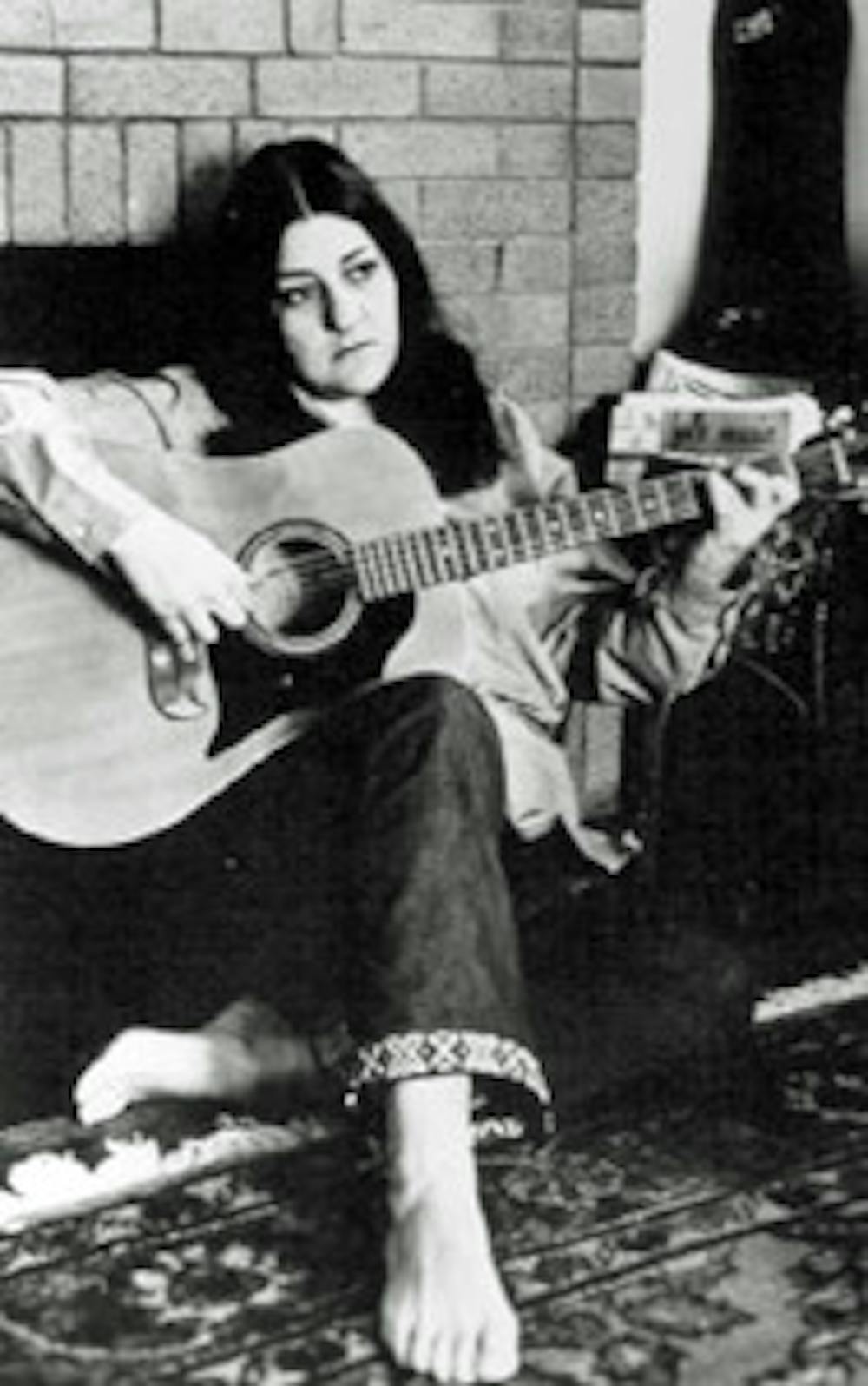
At the 1972 Democratic National Convention, the first ever gay rights resolution was introduced at a major party convention.
One of the two delegates who spoke on the resolution was a lesbian from Buffalo: her name was Madeline Davis.
Davis lived a long and fulfilling life as an activist and as a librarian. She served as the president of the Mattachine Society of the Niagara Frontier, a local chapter of one of the first gay rights organizations. As a professor at UB, she taught the first academic course in the country to deal with female homosexuality: Lesbianism 101.
Madeline Davis was born July 7, 1940, to a working-class family. Her father was an autoworker who worked at the assembly line at a Ford plant in Lackawanna. Her mother Harriet was an aspiring nurse who dropped out. Davis was the loving older sister of two younger siblings, a sister Sheila, and a brother, Mark.
After high school, she would go on to earn her bachelor’s from UB in English, and subsequently a master’s in library science.
Her introduction, however, to Buffalo’s queer community came rather as a result of her involvement in Buffalo’s beatnik scene. On the corner of Franklin and Tupper was Laughlin’s, the home for Buffalo’s counterculture.
“Laughlin’s was the center of my Beat world… Laughlin’s was a fairly accepting place for those who were different. Although it was not a gay gathering place, the few gay people found there on any evening seemed to find acceptance in this ‘alternative’ crowd.”
For much of her young life, she was unaware of her attraction to women. Through the Laughlin’s crowd, she would meet her future husband Allen. Around this same time, however, she would develop romantic feelings for her friend Dawn.
After spending the night together, while Davis was driving in the car with her mother the next day, she felt the urge to ask: “What would you say if I told you my latest lover was a woman?” Her mother’s response was nothing short of indifferent: “Oh Madeline, you’ve done everything else.”
She realized, however, that living a straight life would be much safer than living a gay life. “I chose Allen and marriage.”
They would get married in Reno and move to San Francisco like so many others in the counterculture. She continued to have sexual relationships with women with Allen being supportive; however, after a year of living together, he wanted a divorce.
Upon moving back to live with her mother in Kenmore, she began her first real lesbian relationship with a woman named Shane. This would be when she officially began living an openly gay life.
Shane was a member of the Mattachine Society. Consistent with her Beat roots, Davis didn’t believe in politics. “I thought politics was just silly.”
That changed, however, after attending a meeting with Shane. “I was hooked.” She would subsequently become an active member of the organization, organizing a small library for the chapter.
After organizing a small protest organized by the Mattachine in Buffalo, because of her job at the Reinstein branch of the Cheektowaga library system, she decided to stay home. After seeing the photos, she instantly became regretful and agreed to attend a protest in Albany. She would speak at the Albany protest, which became significant because Jim Zais, the political director of the Mattachine Society, was impressed.
Late one night, he called abruptly, asking her to register as a Democrat. “We’re running you to delegate to the Democratic National Convention for McGovern.”
After organizing signatures, largely in her community of Allentown, she would surprisingly beat well-known political figures in the Buffalo area who were also running as delegates. Reinstein would inform her that she too was a lesbian. After avoiding politics her entire life, she would be speaking at a national convention.
1972 was an important election. America has changed so profoundly over the past four years. With the protests in Chicago four years prior, a commission was created called the McGovern-Fraser Commission to open the party up for activists. The nominee in 1972 was none other than George McGovern, who had embraced young voters with stride due to his opposition to the war in Vietnam. Davis arrived in Miami Beach, where she wrote her speech in the hotel room. Alongside Jim Foster, a delegate from San Francisco, she would speak on behalf of millions of Americans. It was past midnight when she would address the country:
“My name is Madeline Davis… I am a woman. I am a lesbian… We have suffered the gamut of oppression from being totally ignored or ridiculed, to having our heads smashed and our blood spilled in the streets… Our fears that people will know us for who we are, that they will shun and revile us, fire us from our jobs, reject us from our families, evict us from our homes, beat us and jail us.” She closed her speech by emphasizing discrimination could affect straight people too, and that if delegates didn’t have a gay loved one, they one day would: “I wish to remind you that a vote for this plank may now, or some day, be a vote for your neighbor, your sister or brother, your daughter or your son. We ask for your vote because we have suffered long and hard. We ask you now to help us end that suffering and re-affirm for every human being, the right to love.”
After returning home, her star power would increase. In 1973, she would appear in a Playboy panel about the "New Sexual Life Styles". In the interview she stated: “My ideal lifestyle, which will surprise nobody by now, is unadulterated Lesbianism. If I could have my way, I would espouse total homosexuality for at least the next 200 years. The Playboy interview led her to begin being recognized at work at the Cheektowaga library.
One friend, Carol Speser, met her on a field trip for librarians. Speser already knew who she was, with Davis being referred to as the “Queen of the Lesbians.” Speser, who officiated the first same-sex wedding after New York enacted marriage equality, became a close friend.
Speser understood that there was duality to her: “She had a great stage persona… but she was really pretty much an introvert and an academic… The worst thing you could do is make her go to a dinner party.” Speser and her used to call their group the “lesbrarians.” According to Speser, at a time when very few people were out, Davis was amazing at outreach.
In the 1970s, she and Liz Kennedy, a professor in the American Studies Department at UB, would begin a passion project where they interviewed 45 lesbians in the Buffalo community detailing queer life in midcentury America.
In 1974, Davis would go on her first date with the person who she spent the rest of her life with: Wendy Smiley. They would not go on another date until 1994 because Davis felt that there was too much of an age difference. Smiley, who worked for Bell Atlantic (now Verizon), was President of Gays and Lesbians of Bell Atlantic. According to Davis, “She was instrumental in securing domestic partner benefits for LGBT workers.”
In the 1990s, despite same-sex marriage not being legalized, some religious denominations would hold weddings for same-sex couples. In 1995, they would get married, followed by four subsequent ceremonies in Vermont and Ontario. After same-sex marriage became legal in New York state, they would get married at Temple Beth Zion.
In a 2004 interview Davis was very prescient about the future: “Now, I think that the focus of the most hatred is [against] the trans community.”
In 2004 as the Bush administration was pursuing an amendment to ban gay marriage, she was candid about her views on the Bush administration, and the right-wing political infrastructure. “It’s almost like a conspiracy of evil that has grabbed this country… These are people that have known each other for generations… they all belong to the same mission which is fundamentalism and power and keeping quiet any kind of dissident voices.”
In her final years, she remained an archivist until the very end. Today at Buffalo State is the Dr. Madeline Davis LGBTQ Archive of Western New York. Speser remembers how prior to the acquisition, Davis and Smiley had a whole room in their home dedicated to archives.
Towards the end of her life, she would begin an unpublished autobiography Femme Finale. Reflecting on her life, she said: “I have told friends that if I die tomorrow I will have accomplished most of the tasks I have set out to do… I am lucky. We have a warm home, beautiful animals that are terribly spoiled, cars that run and plenty to eat. I am also the most fortunate of women to be married to the love of my life.”
Davis would pass away on April 28, 2021. Those who knew her remember the power that she had of healing others, such as Speser, who laments:
“There was this fellow Vern Bodkin, who was a trans man… Vern had an asthma attack at home, and they found Vern dead… Vern should have gotten up and went to the hospital… [but because he] didn’t want to risk being treated like a freak… Vern died from transphobia… Madeline helped put that funeral together, and sang a song for Vern, and everybody was there… Madeline was a great healer in that way… she had a sense of what we needed collectively as a community.”
Nadia Brach contributed to the reporting of this article.
Jacob Wojtowicz is the assistant features editor and can be reached at jacob.wojtowicz@ubspectrum.com


 Photo: Courtesy of Wikimedia Commons
