
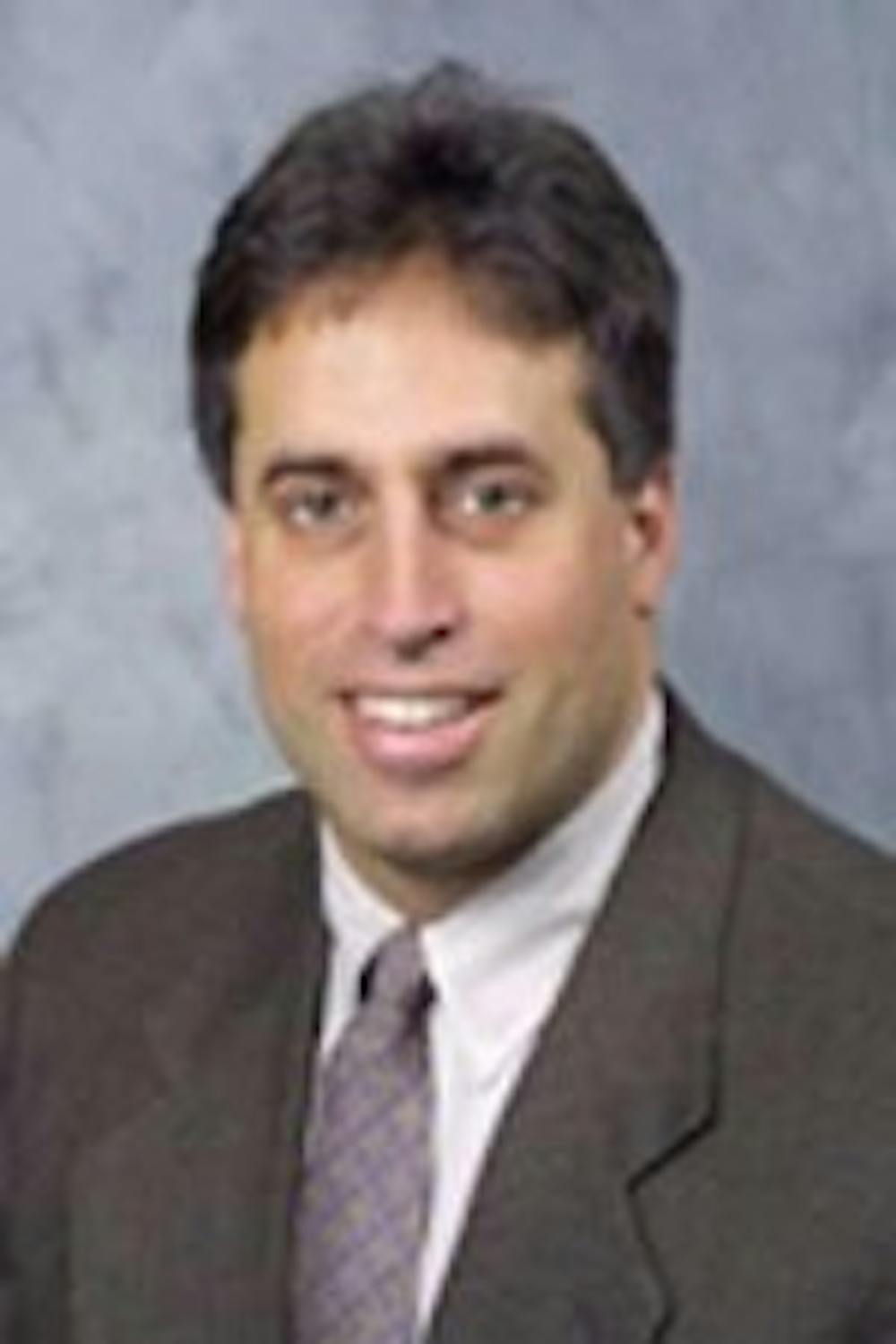
During the past five years under the guidance of Athletic Director Robert J. Arkeilpane, UB has seen the athletic program graduate to Division 1-A competition and join the Mid-American Conference, while also reforming its baseball, softball and crew programs.
In May of 2003, with these and other accomplishments under his belt, Arkeilpane resigned his position to take a position as associate vice president for development in the University of Cincinnati Foundation.
Some of his biggest reasons for stepping down as UB's athletic director, Arkeilpane said, were family considerations, notably support for his daughter and two sons.
"I've loved every minute of this, but for the last four or five years I've watched other people's children grow and achieve success," said Arkeilpane. "I felt like I needed to devote more time to my family."
Arkeilpane said his position at the University of Cincinnati makes this easier for himself and his wife, who is originally from Cincinnati and still has family in the city.
"I miss Buffalo. I miss my friends in the Division of Athletics, and I miss not having the chance to work with (President) Bill Greiner and (Senior Counselor to the President) Bob Wagner - two people who were wonderfully instrumental in my career," said Arkeilpane.
Though he no longer lives in Buffalo, Arkeilpane said he intends to support the program both as a friend and as a fan.
With the position vacated, many speculate who will fill the shoes of the man who many say has changed the face of UB athletics.
According to Vecchio, the search for the next athletic director has been put on hold until UB finds a new president.
Curerntly, Bill Maher, hired by Arkeilpane as senior associate athletic director in 1998, is serving as interim athletic director.
Maher will remain the interim at least until the next president is in office.
"The athletic director will be hired by the new president; that's the right way to do it," said Paul Vecchio, assistant athletic director for communications. "In a Division I program, the president should have a say."
Vecchio also speculated on the possibility of Bill Maher filling the position permanently.
"He has to make a decision over the following months if this job's a fit for him," said Vecchio.
However, a search procedure must be performed, as opposed to Maher simply inheriting the seat.
"It will be his choice to pursue the position, and the president's choice to keep him," Vecchio said.
Arkeilpane, a Buffalo native, began his career with UB in 1995 as associate athletic director for development and was promoted to interim athletic director when former Athletic Director Nelson Townsend fell ill in 1998.
"When Bob was forced to take over, Townsend had had a very serious heart attack," said Vecchio. "He took over in the midst of many uncertainties."
UB had just begun its campaign to reclassify its athletics program as Division I-A and become a member of the Mid-American Conference when Arkeilpane took over. In order to move up from Division 1-AA, UB needed to average 17,000 paid tickets per football game, as well as increase stadium capacity to 30,000.
"In May (of 1998), we were only four or five months from the football season," said Vecchio. "All that was on the line when Bob was thrust into the position, and he came through with flying colors."
According to Vecchio, Arkeilpane was instrumental in the public education and fundraising that was necessary to produce a successful program.
"The cost of Division I athletics is pretty high," said Vecchio. "It can't be paid for on state budgets and student fees."
With Arkeilpane at the wheel, UB was able to get the support it needed quickly, he said.
"The athletic department took on a telethon mentality that summer," said Vecchio, in which it surpassed its 17,000 paid attendance goal for 1998, with an average of 19,400 pre-purchased seats per game. The Bulls stadium was rebuilt the following fall to seat 31,000.
Besides success in football, Arkeilpane was able to restart UB's baseball and softball teams and bring them to Division I-A and MAC standing for the 2001-02 school year, Vecchio said.
"It was no small feat bringing two programs back in this economic climate, and they've had some good success for four-year programs," said Vecchio.
According to Jon Fuller, assistant director of Athletic Communications, Arkeilpane has done more than just help UB become a Division 1-A athletics program.
"UB has turned out 57 All-MAC selections, 17 individual MAC champions, two conference players of the year, one conference freshman of the year, one conference defensive player of the year and one conference coach of the year," said Fuller. "All under Arkeilpane's watch."
The aspect of the job Arkeilpane said he enjoyed most was interaction with his staff and student-athletes.
"The staff in the division of athletics is one of the finest groups of people I've ever had the chance of working with," said Arkeilpane.
Arkeilpane said the developing strengths of athletes in the program also motivated him.
"I loved watching student-athletes come in as starry-eyed freshmen and seeing them make tremendous strides," said Arkeilpane.
Vecchio attributes part of UB's continued success to Arkeilpane's choice of capable coaches for the university's three highest profile sports, football and women's and men's basketball.
"We've struggled in terms of being competitive," said Vecchio. "We wish we could say, 'well, we won nine team championships,' but we have made good strides. UB is at the highest level of college sports you could be at. I'm not sure without Bob's leadership that we could have made it."



