
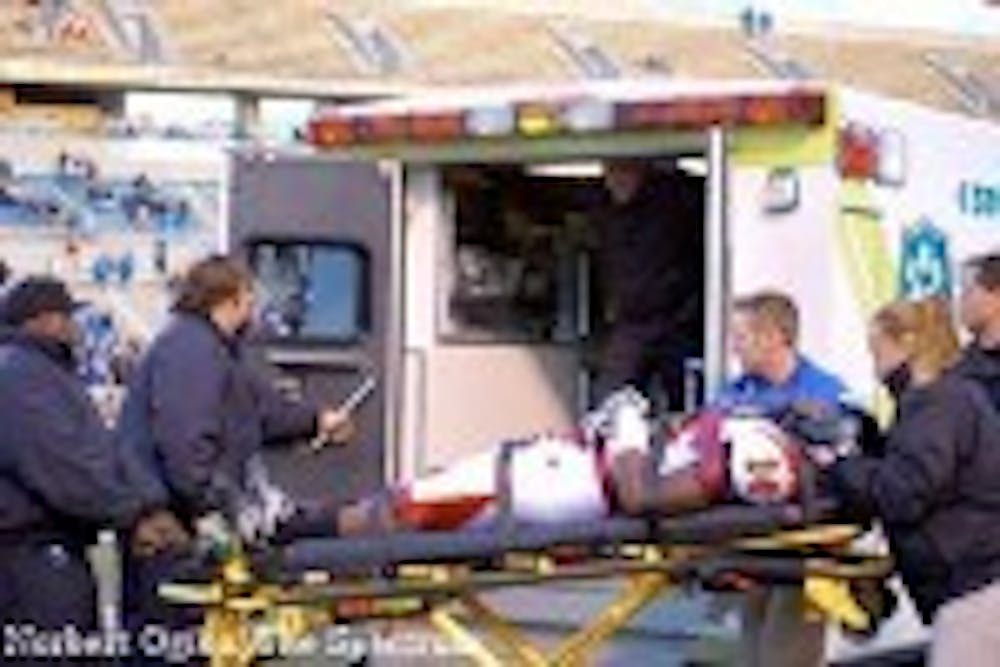
Post-concussion syndrome may now be a thing of the past. UB researchers have found a way to help treat athletes with prolonged head injuries.
Researchers found that allowing three weeks of rest after the initial concussion and then implementing an individualized exercise routine significantly reduces and even eliminates the symptoms of post-concussion syndrome.
For most people, concussions may affect them for one to two weeks before symptoms diminish. Treatment would be to simply rest and take painkillers or anti-depressants if necessary.
But for roughly 10 percent of those suffering with a concussion, symptoms may last longer than three weeks and may even become permanent, leading to a diagnosis of post-concussion syndrome.
UB researchers have published a report in the January issue of Clinical Journal of Sport Medicine that sheds light on both the diagnosis and treatment of concussions, specifically relating to post-concussion syndrome. By testing subjects through a standardized exercise regime on a treadmill, it was possible to see what level of activity heightened concussion symptoms in those with post-concussion syndrome.
'We have developed a stress test for the brain. If there is evidence a concussion has changed the physiology of the brain, treatment is needed,' said John J. Leddy, associate professor of orthopedics, co-director of UB's Sports Medicine Institute and an author of the study.
This stress test also allows for a diagnosis to be made if the symptoms are not caused by post-concussion syndrome.
'Fatigue and headaches may be caused by other injuries. One participant in the study ended up having a neck injury that mimicked a concussion,' said Barry Willer, professor of psychiatry and rehabilitation sciences and senior author on the study.
This allows for doctors to proceed with either treatment for concussions or any other injury.
'Our participants would be tested and continue their specialized exercise routine at about 80 percent intensity for several weeks,' Leddy said.
Symptoms were then reported to have decreased and, in some cases, even vanished.
Researchers believe the exercise improved the auto regulation of cerebral blood flow, which is affected by post-concussion syndrome.
'The exercise treatment works better for athletes but benefits non-athletes as well,' Willer said. 'Non-athletes seem to have a harder time adjusting and sticking with an exercise program, but their symptoms improved eight to 10 weeks later, compared to four [weeks] for athletes.'
Athletes often have a desire to return to their sport as soon as they feel better, even when more rest or even the exercise program is needed, which can lead to long-term problems. Sports organizations and players alike have become more aware of the dangers associated with concussions and have begun to act more responsibly in treating them.
'Hopefully someday, our technique for diagnosing and treating post-concussion syndrome will be the standard throughout sports and for non-athletes as well,' Willer said.
E-mail: news@ubspectrum.com



