
While women in the U.S. were still fighting for the right to vote, those in Berlin were taking the city by storm, literally building it from the ground up.
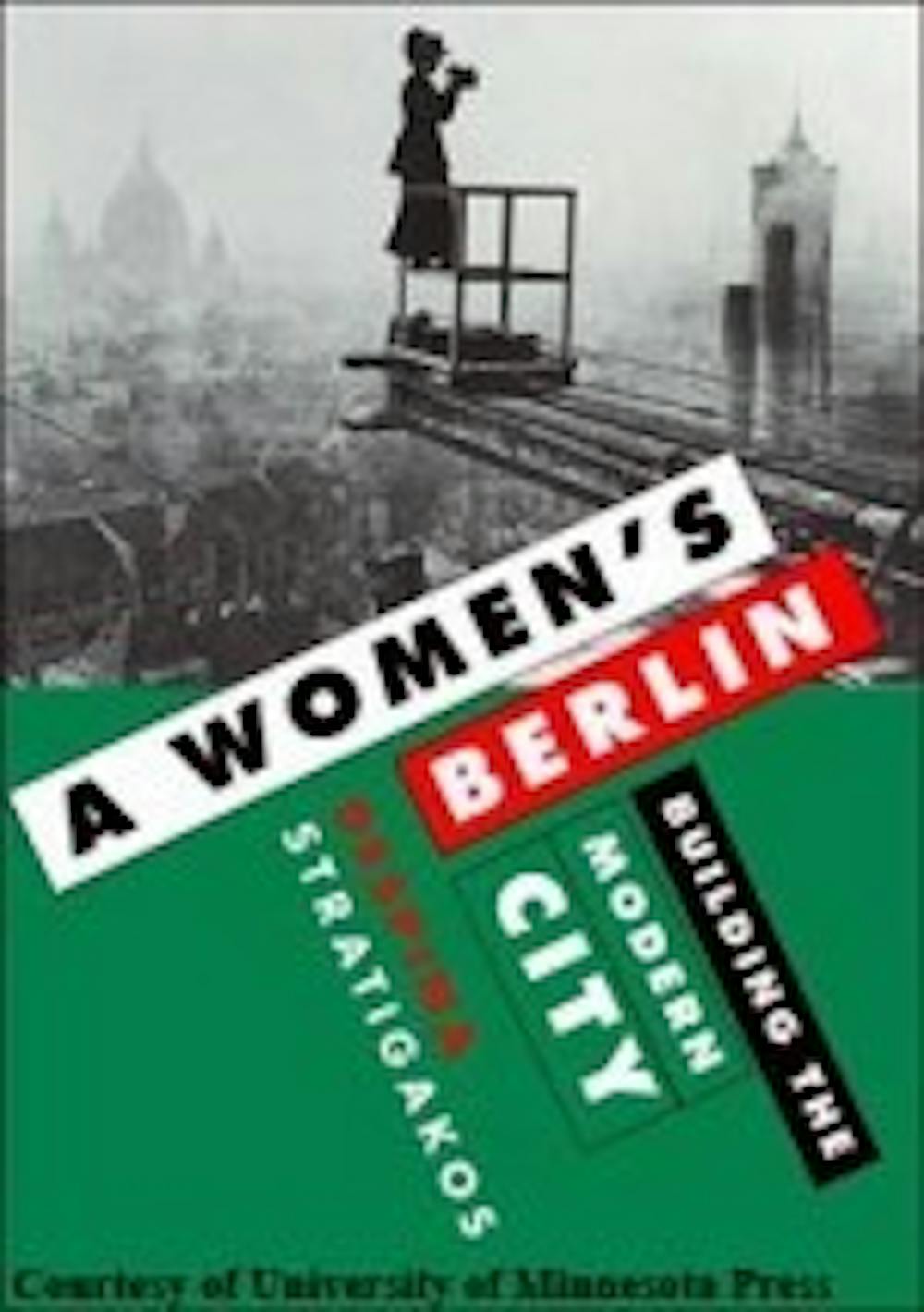
On Sept. 12, the paperback version of A Woman's Berlin: Building the Modern City by Despina Stratigakos, an assistant professor in the Department of Architecture, is available on sale.
In the book, Stratigakos reveals the aesthetic workings of women in Berlin.
The author examines projects created by female architects and designers between 1871 and 1918. During the rise of the 20th century, females claimed Berlin as their own by contributing newly erected restaurants, schools and exhibition halls to the city.
"They made themselves present and visible on the streets," Stratigakos said. "Not like the respectable woman as a mother in a home. They refused to be invisible."
Stratigakos spent 10 years gathering material for her book. She found most of her content through discussions with relatives of the women she mentions in her book as past and current literature focused on male achievements. Material in the archives downplayed the feminine achievements in the city.
"Archives focus more on official history, which tends to be on the history of man," Stratigakos said.
Women played a major role putting together the city of Berlin, despite the hindering propaganda at work during the 20th century. Women were told they would lose their femininity because of the work they were doing.
"They were told if they went into architecture they would become hermaphrodites or lesbians," Stratigakos said.
Trying to counter these warnings, women worked together to establish their own funds and resources.
"Women were forced to be creative in finding solutions," Stratigakos said. "When it was clear that no one was going to help them, they helped themselves. They got help from other professional women in architectural design."
Women's clubs were built for meeting clients, exhibiting work and used as professional centers. They established banks especially for women because the public banks did not allow them to open an account without a male sponsor.
A 100-room campus, established in 1908, is an exemplary structure built by the women of that time who paved their own path to a career.
"Women were able to start studying but had nowhere to live," Stratigakos said. "The amazing part is each room was designed differently. The importance of the difference in each room was to allow women to feel like their campus was not just another institution."
As women gave up families for careers and to better the future of other women, a retirement center was built to counter loneliness.
"Having careers and getting educated meant many women had to forego enjoying the traditional life of having a family and raising kids," Stratigakos said. "They built a retirement community just for women on the outskirts of Berlin. They made their friends their family."
Historical records of the women's design plans and sister projects are sparse at the beginning of World War II, when male-oriented projects became dominant.
Stratigakos explains she wrote her book so females can reclaim their contributions in history. The future of architecture should not be limited by cultural standards.
"I'd like people to become aware that women were building and have been active," Stratigakos said. "One size doesn't fit all and we have to be attentive to the fact that architecture can shape possibilities in our lives."



