
The pentagram that hangs from a chain around Kate Dunning's neck elicits raised eyebrows from many people who catch a glimpse of it. The emblem of a star enclosed in a circle symbolizes that she practices witchcraft.
Don't expect to find any pointy witch hats or steaming cauldrons tucked away in her dorm room closet, however. Dunning, a junior English and French major, is like any other UB student, she just happens to be Wiccan.
Through distortions from the media and a few bad apples, the Wiccan religion has come to face a long line of misconceptions. For many people the term "devil worship" immediately comes to mind, but Wiccans don't even believe in the devil, let alone promote evil practices.
In fact, a prominent aspect of the faith is karma and the Rule of Three. Wiccans believe that any action, be it good or bad, will come back to them three fold. So for those who are afraid that a Wiccan, some of whom call themselves witches, will practice a little black magic on you, rest easy. Most Wiccans steer clear of curses, afraid of dealing with the consequences of bad karma.
"For me, it's important to be aware of the energy you're sending out," Dunning said.
The concept of energy is central to Wicca. Energy within the body, energy between people, and the energy that flows through nature can all be channeled into a greater good.
Magic is simply using that energy to cause change, and it's not far from the use of prayer in monotheistic religions like Christianity, according to Dunning.
For instance, a Christian student might pray on their knees asking God to help them pass their Chemistry test. A Wiccan student on the other hand, prays in a different way. He or she might cast a circle around their body to free the air of negative energy, placing candles at the north, south, east and west points in representation of the natural elements of earth, air, fire and water. A God or Goddess deity is then called into the circle to help give the individual mental energy for his or her exam.
Wicca falls under the category of Paganism, any religion that is polytheistic. Some choose to worship gods from Greek or Native American mythology. Others follow the Norse deities that originated in a pre-Christian, Scandinavian religion. There are countless branches of Wicca, and although core beliefs exist among the followers, there is no set guideline or text on how to practice the religion.
"That's the beautiful thing about (Wicca), it's whatever works for you," Dunning said.
David Schwartz is president of the Pagan group on campus currently in the process of becoming a part of the Campus Ministries. A former student at UB, he practices Draconian Wicca, which means he incorporates dragons and other mythological creatures into his faith.
According to Schwartz, the Pagan group consists of 15 members, some of whom belong to monotheistic religions. Their main purpose is to educate students about Pagan religions, as well as provide support and a sense of community, not to cause confrontation.
"Wiccans don't force their religion on others," Schwartz said. "There is room for many different beliefs."
Members use the group as a place to practice rituals, since candles and incense aren't allowed in the residence halls. The students also come together to celebrate the eight Sabbats, which are Wiccan holidays, and the 13 Esbats that occur on each full moon during the year.
Samhain is a Wiccan holiday that is familiar to almost everyone. All Hallows' Eve, or Halloween, corresponds to the Celtic New Year. Wiccans believe that on this day, the veil between the living and the dead is at its thinnest, thus allowing easier communication between humans and spirits.
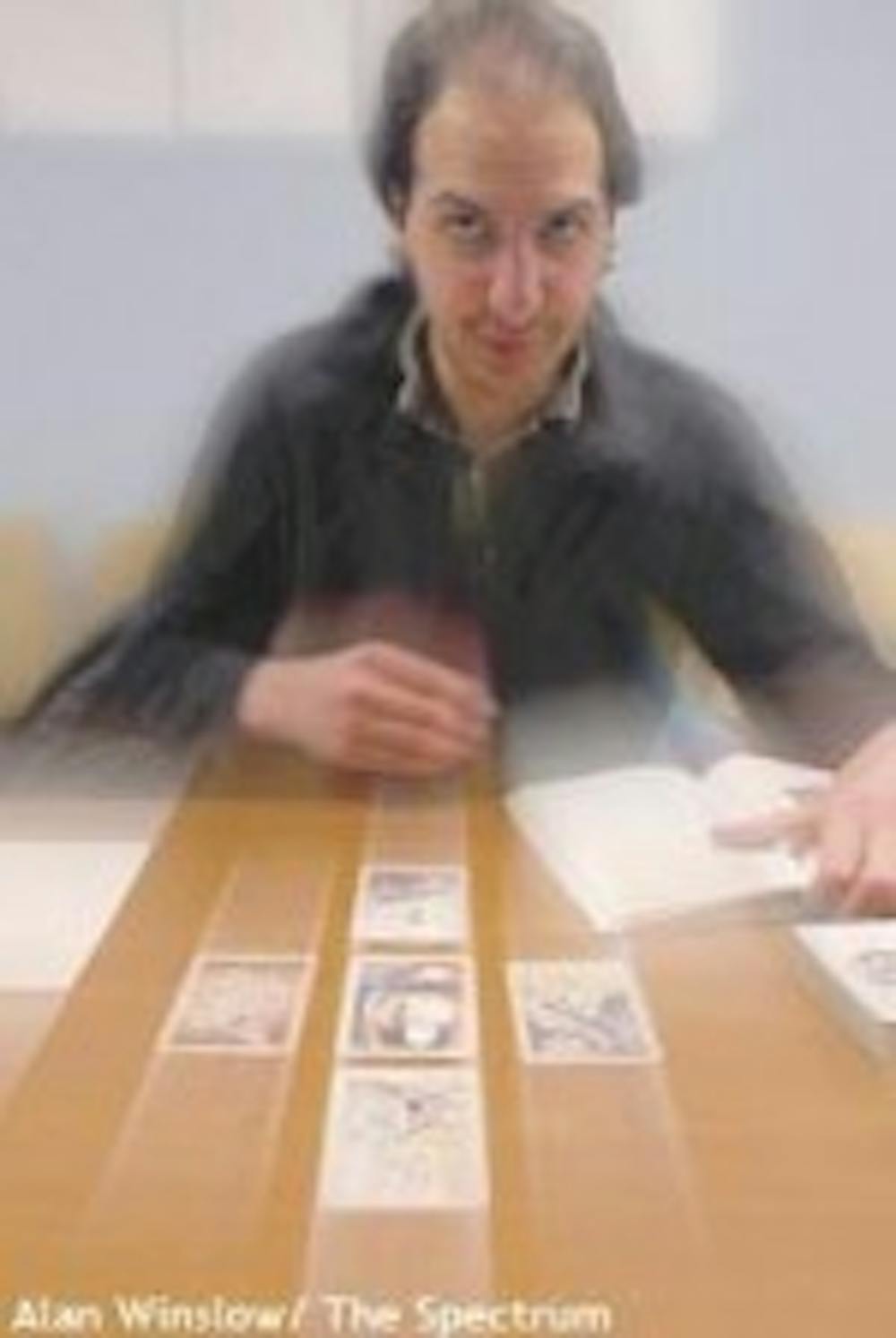
The Pagan group holds information sessions on subjects such as the witch trials, mythology and controlling energy. They've provided activities, like Tarot card reading, at Halloween events on campus.
Schwartz has been practicing Tarot for 11 years and says he has yet to be wrong about a person's fortune. Instead of predicting future events however, Schwartz reads the cards as problems facing the person presently, and helps them determine the course of action they should take.
"The future is always changing, it's not set," Schwartz said. "You can't say exactly what will happen."
He believes that every deck has a soul. The magic comes when he asks the person to shuffle the deck, giving the cards a chance to read and understand the person.
Members of the group know that not everyone can take seriously the magic of Tarot or palm reading and other psychic abilities. Casting spells and talking to fairies and dragons may label one as a lunatic in today's society, but just as Christians don't doubt that Jesus performed miracles, Wiccans hold fast to their faith that magic is real.
"We have become a society that believes what it sees and not what it feels," Schwartz said.



