
While the current semester presents students with the option of eleven undergraduate Judaic studies classes, including Hebrew, anyone currently wishing to major or minor in the field has to first refer to UB's special majors program.
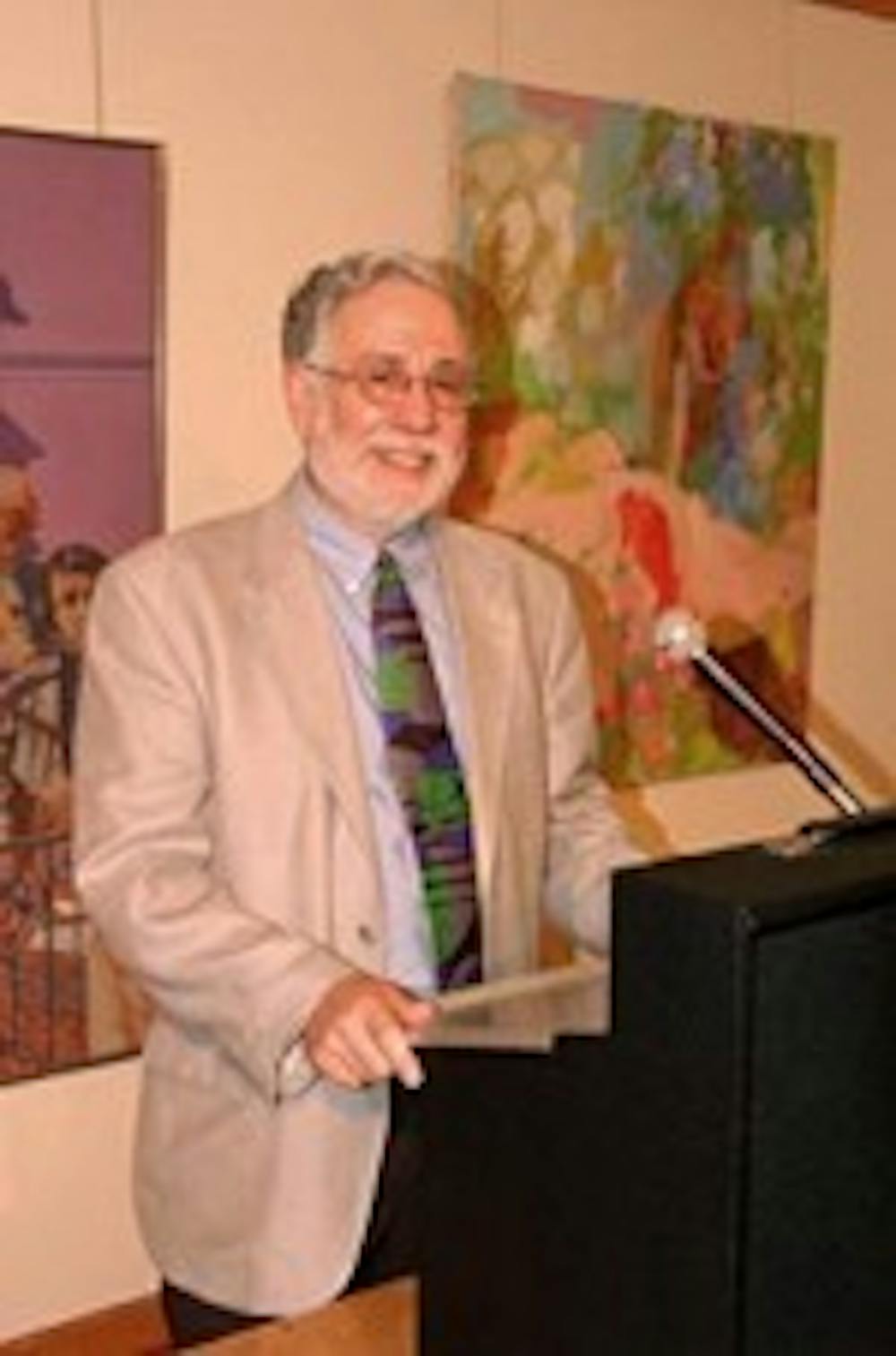
Michael Shapiro, Ph.D. and director of the Program in Jewish Culture and Society at the University of Illinois at Urbana-Champaign gave a presentation on campus Thursday night and took questions on how to create a collegiate Jewish studies program. Shapiro is currently the director of the Dornby Program at the University of Illinois, and helped to establish their school's program in Jewish Culture and Society during the 1980's.
Shapiro discussed the two main models in which a program can take shape, describing an East Coast model that emphasizes Jewish Language and the Jewish texts, such as Yiddish and the Talmud.
The program Shapiro had helped to create geared more towards a West Coast model, emphasizing Jewish culture studies, literature and history. He said that hybrids are always an option and often occur, integrating the best of both worlds.
"Jewish culture's not a vacuum. It's always been a two-way street," Shapiro said, noting that such a 'two-way street' may be one reason why Judaic studies have enjoyed national success recently.
"The Jewish community in America has flourished," Shapiro said.
During such an expansion, he explained, more programs are being established, and more professors are being fully trained in the field.
Previously, those who taught classes of a Judaic nature were professors borrowed from various backgrounds. In the future, however, those who teach the program will possibly have emerged from such a program, therefore opening up doors to a more focused major.
While the obvious and not-so-obvious advantages to having a Judaic program here at UB may be numerous, several audience members questioned the negative repercussions.
"Is it right to have a proliferation of 'studies' programs of every ethnicity?" questioned Ernie Sternberg, an urban planning professor. "Don't they sometimes obscure the civic identity we share? Maybe we should cut back or get rid of them."
According to Shapiro, these programs, open to all students, may offer to those unfamiliar with certain cultures an insight into their workings, producing a greater understanding of a variety of people and in turn create unity.
Sternberg also asked how any ethnical programs would help to unify a nation, a nation that, according to him, tends to be divided by its ethnical dilemmas.
Shapiro is a Columbia Graduate with a Ph.D. in English and an alumnus to Bennett High School in Buffalo. He also taught several courses, including Shakespeare, for over thirty-five years at the University of Illinois.



