
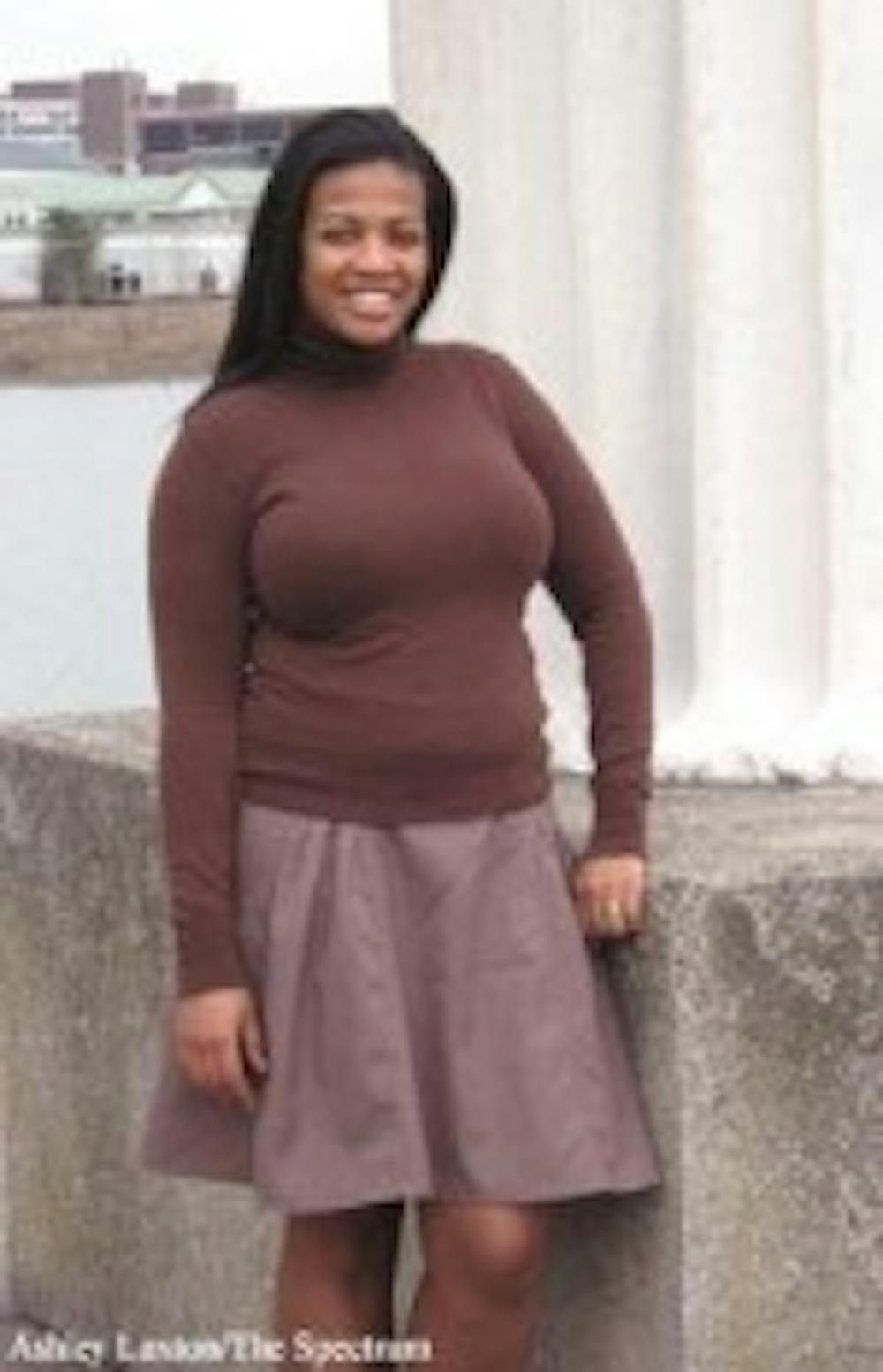
Jenna Chrisphonte, a graduate law student, captured almost 51 percent of the vote in this week's UB Council election, winning in a landslide over junior Peter Rizzo and fellow law student Todd Chard.
Starting next semester, Chrisphonte will join some of Buffalo's most prominent community members on the high-profile advisory board as its lone student representative. The UB Council, which reports to the university president, meets throughout the year to discuss policy and make recommendations regarding budgets, academics, admissions, safety, and student life.
Chrisphonte could not be reached for comment, but Rizzo, who held about 14 percent of the vote, said the loss would not keep him from being involved.
"I saw this as an opportunity to further get involved in the university community," he said. "Something I'm certainly well aware of, is that you do not need to hold a position in student government, or elsewhere to make a difference at UB."
Chard, who won 35 percent, said he praises both his opponents' efforts, but added he believes the online process held many students back.
"The cumbersome voting process is just way too difficult," Chard said. "Sometimes some of the buttons appear when they're supposed to - that's the luck of the draw."
This year there was a 9.8 percent increase in voter turnout, but there were still less than 1,000 students who participated in the three-day online elections, according to Jennifer Wantz, assistant director of student activities for Student Life. Voting opened on Monday and closed Wednesday at midnight.
Greg Rhoads, a senior finance and marketing major and treasurer of Sub-Board I, Inc., said he didn't find the online voting process difficult but saw how many students would.
"It's a little more difficult than walking into a voting booth, flipping a couple switches and calling it a day," Rhoads said. "If it were automatically added, and you could click on it the next time you checked your classes, that would probably work out better."
Michael Cacchione, a freshman mechanical engineering major, said that he didn't vote because the process seemed too long.
"I was going to later on, but then I lost track of time," Cacchione said.
To vote meant logging in to UBLearns, registering for the election as a "course," and then selecting a candidate and submitting the vote. Wantz acknowledged the somewhat awkward process as the election's "biggest downfall," but said that work was being done to improve it.
"It's pretty complicated to actually vote," Wantz said. "We're working on in it next year to make it easier for students."
She also said there were plans to change the process for this year's elections, but there wasn't enough time.
"We need approval from the council of presidents before we can make any changes like that," she said. "We're only approved for UBLearns, not anything else."
Some students, like Rhoads, said other factors also lead to the annually low turnout.
"It ties in to the voter apathy that we're looking at for the SA elections," he said. "It definitely exists, but there's no good reason for it to exist."
Undergraduates and graduate students together elect the student council member to a one-year term, whereas the governor appoints the other nine members.
"Nobody knows what university council is and does, it's not something that is highly publicized," Wantz said. "The only thing that you hear about is the president, you don't hear about the people behind him."
Wantz defended using UBLearns by saying it was the best way to keep the process protected, and said that election problems were universal at UB.
"People can't break into UBLearns, it's never been done," she said. "It would be great if we could have a better system, but every election on this campus has a problem. It's like forcing students to go to the election booths for SA elections. Students don't necessarily know why they're voting, or who they're voting for. The student body is not as informed as it should be."
Another problem, Rizzo said is that in the anonymity of picking a candidate on UBLearns, many of the ballots consist of the candidates' friends.
"When you submit a quiz on UBLearns, for a class, they sure know what you're grade is, just like they can find out who's voting for whom," he said.
Rizzo also said, before the results were released, that he would be satisfied losing the position and working with whoever won.
"I think that all three of us are highly committed individuals, and I'm sure that all three of us would do an excellent job in the position," he said.
Jonathan Yedin, the current student member of the UB Council, had some advice for the winning candidate.
"Keep your ears open and listen to what's going on. Don't be scared to interject your thoughts. You are the only student on the council, everyone else is 30 to 40 years out of college," he said. "Also, don't be intimidated, because it can be (intimidating). These are very wealthy and powerful people."



