
The summer of 2003 was a busy one for the gay rights movement in North America. From the overturning of anti-sodomy laws to the Canadian ruling that said Ontario's recognition of heterosexual marriage was illegally discriminatory, the issue of same-sex marriage was at the forefront of public debate.
Democratic presidential candidates, including former Vermont governor Howard B. Dean, whose state is the only in the U.S. to recognize same-sex "civil unions," advocated gay rights during several public appearances during the summer.
"I'd nominate any gay to the Supreme Court, or lesbian or bisexual or transgendered person to the Supreme Court as long as they were ready to uphold Roe v. Wade," said democratic presidential candidate Dennis Kucinich.
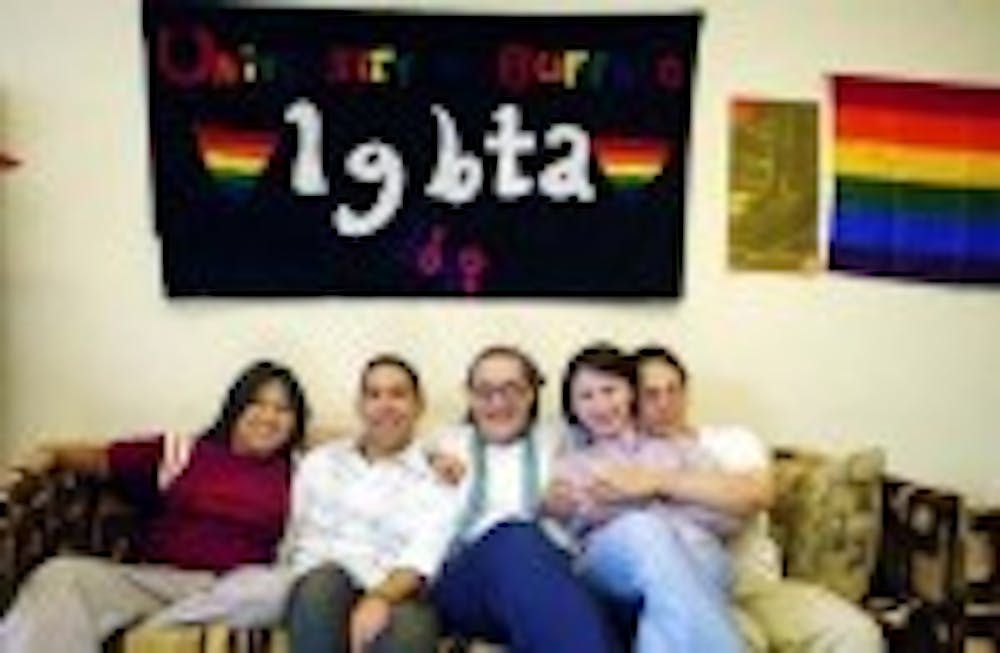
Now, amid political and social debate, members of The University at Buffalo Lesbian Gay Bisexual Transgender Alliance are sounding off about these advances, which many say are merely modest ones.
"Seeing the passing of new legislation in Canada is encouraging," said LGBTA Vice President Rachel Parrino, a junior psychology major. "It will be interesting to see if we'll follow. The Texas sodomy decision is big too, but it's really only a small step."
"I think it's encouraging what's going on in the churches, like the Episcopalians," said Treasurer Shaun Hoppel, a sophomore Spanish and history double major. "Having meetings to see if gay unions are good or bad - that they're even having discussions is good."
Hoppel said he finds it encouraging that some states such as Massachusetts are petitioning to redefine marriage from just being between a man and a woman.
Civil unions, a legal recognition of same-sex partnerships which allows for tax benefits and other rights afforded married couples, are not recognized in other states, something LGBTA member Tim Kelly, a sophomore accounting major, said he finds unacceptable.
"They already tried separate but equal once, in the South, but it didn't work," said Kelly.
Some LGBTA members view powerful opposition to issues like same-sex marriage as a positive thing.
Parrino said that seeing President George W. Bush say things that seem "so far behind the times," is actually a positive development. "Other people are coming to a tolerance," she said. "We're not looking for everyone to accept it, just to be tolerant."
LGBTA is planning continued work this semester with Marriage Equality New York, whose four-part mission includes education, political advocacy, media campaigns and partnerships with groups like LGBTA.
"Seeing it on a local level is good, but obviously we want it national," said Parrino.
"We want to keep the information flowing between organizations within our community," she said. "We need to keep people aware, and get other people's views on hot-button topics."
LGBTA members also say there are misconceptions about those working for gay rights.
Kelly said he believes the largest misconception is the idea that there is some "gay agenda," quoting U.S. Supreme Court Associate Justice Antonin Scalia.
"It's hard to accept something you can't understand," Hoppel said.
"Out of ignorance they react to anything with 'gay' attached," Parrino said.



