Barbie is having a mid-life crisis. At the ripe old age of 51, Barbie is looking for something more in her life. However, instead of buying a Porsche, going back to school, chopping off her hair or finding a replacement for Ken, Barbie is pimping herself out to the American public in search of a new career.
Mattel, the company that produces Barbie dolls, held the Barbie "I Can Be..." contest in February.
The competition spurred an entirely unexpected online debate, comprised mostly of grown-ups, who wanted a say in how the plastic cultural icon would pay the rent. By the end of the contest, about a half a million people voted on one of five choices: news anchor, computer engineer, environmentalist, surgeon or architect.
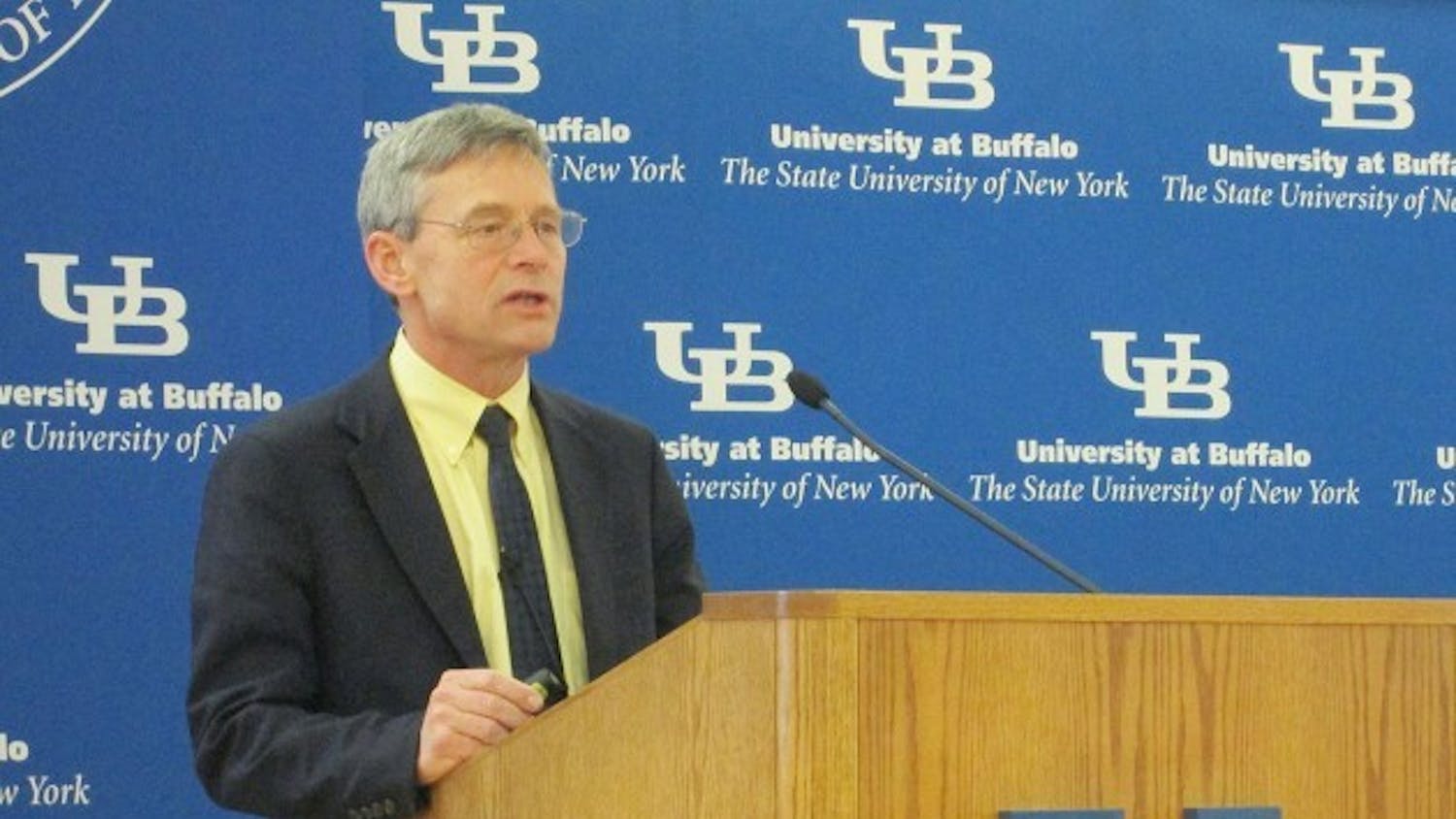
Despina Stratigakos, assistant professor of architecture at UB, argued for Barbie to become an architect. For her, the contest was a forum to debate underrepresentation of women in various fields.
"It might seem silly to debate careers for a doll, but I was encouraged to see serious discussions about gender and professions in the online blogs. The competition served as a vehicle for conversations we need to have," Stratigakos said.
Stratigakos finished playing with dolls long before she started teaching at UB, but she never forgot the role that child's play has in the development of goals and role models.
"I thought I had left Barbie behind," Stratigakos said. "But Barbie, it seems, was not finished with me."
This is not the first time that the toy has been the subject of contentious debate. Barbie's viability as a role model has been called into question in the past, mainly because of her unrealistic physical proportions. Some think that exposure to the doll may encourage an impossible – and harmful – image of an ideal body.
"They're certainly not realistic, but I think that we have to give young girls some credit for seeing that. She's an icon, one that's been around for fifty years," Stratigakos said. "She's a part of our childhoods; it's hard to boil her down to just one dimension, however distorted."
In many ways, Stratigakos viewed her campaign to support the architect Barbie as homage to that tradition. As a woman in a typically male field of study, she followed a unique path in realizing her academic interests.
"I'm fascinated by the stories buildings have to tell us, the way those stories grow over time as tenants occupy the building from generation to generation. They're living history that we can inhabit," she said.
This is a sentiment that Stratigakos hoped an architect Barbie would encourage. Architecture is just one of many fields where females are typically underrepresented, and Stratigakos endeavored to present her chosen field of study as an attractive profession for young girls trying to find their place in the world.
In the past, Barbie's career choices have been assorted and, at times, fanciful. Other accepted careers for the "I Can Be" Barbie are rock star, veterinarian, pediatrician, babysitter and ballerina. Stratigakos was excited to have new and different choices in the 2010 contest.
Unfortunately, the architect Barbie was not to be. The popular vote went to computer engineer Barbie, while the ambiguously named "Girl's Vote" went to news anchor Barbie. Stratigakos, however, is hardly discouraged.
"Rather than wait for the next competition, I hope to talk with Mattel about the possibility of developing an architect for the I Can Be series in the near future," Stratigakos said. "Competitions are helpful for fostering discussion, but Architect Barbie's time has come."
E-mail: news@ubspectrum.com