
Traditional song and dance, a free buffet of customary Native American cuisine and crafts reflecting the culture of area Seneca tribes transformed the Student Union into a place of celebration this past Wednesday.
The 10th annual Native American Bazaar, hosted by the Intercultural Diversity Center, allowed students and faculty to experience a culture that holds a significant place in the history of Western New York.
"Some bazaars and activities are educational and others are more celebratory," said Karen King, instructional support assistant for student life and event organizer. "This event was a combination of both."
The bazaar was not directly connected to International Education Week, King said, but the goals of both events are the same.
"Events like this give an opportunity to share culture by letting people participate in crafts and sample food," King said.
The most popular feature of the event was the Alleghany River Indian Dancers' performance.
"It's a presentation of traditional Iroquois-style dancing that's prominent in our culture," said Tianna Borter, president of the Native American People's Alliance (NAPA), which provided volunteers for the event.
Bill Crouse, the leader of the dance group, also emphasized the significance of singing and dancing to Native American culture.
"Singing and dancing has a three-fold significance in our culture; healing, prayer, and socializing," he said.
The group performed several traditional dances, including the "smoke dance," one that challenged dancers to keep up with the beat of a drum at an increasing tempo.
During the "hoop dance," Crouse was joined by his three-year-old grandson, who he said is learning dances early on through the observation of family members.
"People learn these dances by watching and joining in," Crouse said.
Women in the crowd felt free to join in on the "women's dance," which honored Mother Earth. Members of the crowd also gathered to perform the corn dance.
"If you have corns, this dance will help get rid of them," Crouse joked while introducing the dance.
People also had a chance to try traditional Native American cuisine such as fry bread, corn soup and mashed beans.
"The food is really good, I could eat this every day," said Jasmin McComber, sophomore biochemical pharmacology major.
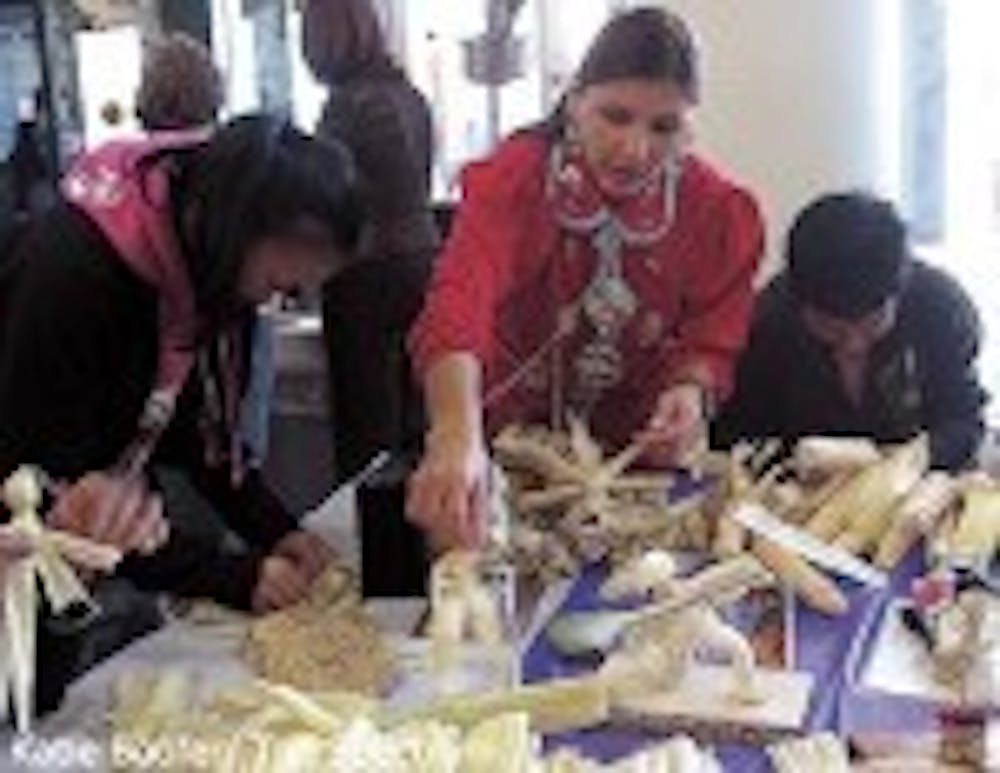
As emphasized by the dance and meal, corn is an important element of the culture and "sustainer of life" to the Iroquois, Crouse said. To emphasize the importance of corn as a subject of tribute and food source, and also as a representation of the values of Iroquois culture, students could participate in cornhusk doll making.
"The dolls don't have faces, which symbolizes how beauty isn't always on the outside, and expresses the fact that we're all equal," said Antoinette Scott, a local doll-making teacher who assisted people in creating their own cornhusk dolls.
Hands-on activities such as beading necklaces, dream-catchers and making pillows with a tribal print allowed passerby to connect with Native American culture.
"I was able to learn about their culture because they had so many activities they were willing to share with us," said Patricia Coleman, a junior community mental health major. "It allows us to get rid of the stereotypes and know more about each other."
Several students in attendance believed that the exposure events such as the bazaar and International Education Week gives to world cultures is a big part of the college experience at UB.
"You can't be stuck in your own culture all the time," said Herlynne Pierre, a sophomore business major. "You have to be exposed to other cultures too. That's what college is for."



