
“Why Can’t Americans Sleep?” was the headline of an article published in The Atlantic this summer, with the subhead: “Insomnia has become a public health emergency.” The article goes on to cite data such as the fact that 35 percent of Americans reported insufficient sleep.
The article goes on to say that at least 12 percent of the U.S. population suffers from insomnia, while 30 to 35 percent suffer from insomnia-related symptoms such as trouble falling and staying asleep or waking up earlier than expected.
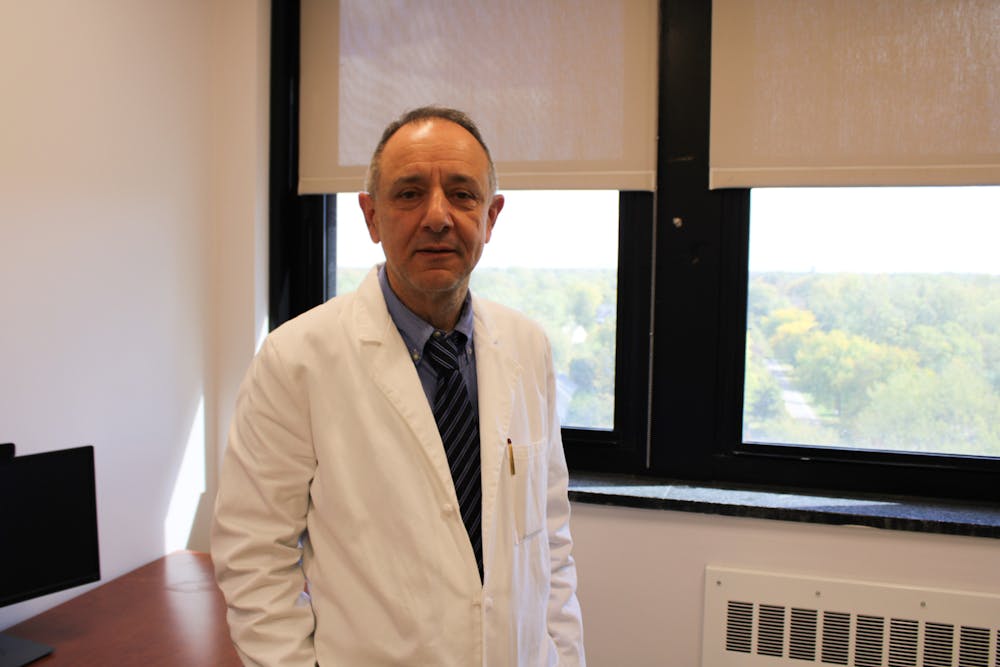
Located in the Veterans Affairs (VA) hospital by South Campus, the Center for Sleep Disorders Research is UB’s official institute for studying all things related to sleep. It is one of the 2,500 sleep disorder centers in the U.S. According to the director of the center, Dr. Ali El Solh, the center treats roughly 1,500 to 1,600 patients in a given year.
When asked why nobody in America seems to sleep these days, Solh said the number one culprit are cellphones, “you can walk on the street, go to any school, and everybody has their cell phones.”
“Social media is a major part of students’ lives these days. It’s not surprising that they are lacking sleep,” he said. “This will have significant impacts on daily function, whether in terms of their performance at school or their social interactions.”
Solh stated that the way college students’ lives are structured makes them more prone to developing sleep disorders.
“The majority of undergrads are under a lot of stress to complete their homework or to finish their curriculum. If you take a cross-sectional group of students and look at how many hours they sleep at night, across the board you will find out that they are not getting the recommended amount of sleep.”
Solh said that not sleeping at this age can have many adverse long-term effects, both direct and indirect, on things such as school performance and social interactions, which can cause difficulty securing a job down the road. It can also lead to physical ailments such as high blood pressure, heart disease and obesity.
It’s not just young people who struggle with sleep; all age groups are susceptible to developing sleep disorders. “It’s a whole gamut of factors — from work, from responsibilities, from medication,” he said.
Sleep patterns differ among people, and everybody has their own preference as to whether one is a “night owl” or an “early bird.” While commenting on the varying sleep patterns in the population, Solh says that some are wired to be “night owls” while others are predisposed to becoming “early risers.”
As a result of the center being located at the VA, veterans are an easy sample to recruit for the studies, with around 120 patients participating in a given year. Currently, the center is studying a link between Post-Traumatic Stress Disorder (PTSD) and sleep apnea, a disorder where a person’s sleeping patterns are disrupted throughout the night. As a result of frequently waking up in the middle of the night, individuals with PTSD are more prone to developing a type of sleep apnea called a “low arousal threshold.”
Because many veterans have PTSD, treating other disorders like insomnia and sleep apnea proves difficult.
“It’s challenging really to treat both of these sleep disorders unless you are able to control their PTSD. Because if you cannot control their PTSD, you’ll have great difficulty in treating any of the sleep disorders — whether complying with CPAP or treating that insomnia.”
Many veterans with PTSD find the Continuous Positive Airway Pressure (CPAP) machine claustrophobic, which can interfere with the ability to treat apnea. One breakthrough in the coming years for sleep apnea treatment is weight loss drugs like Ozempic and Wegovy. Because sleep apnea is often exacerbated by weight, these drugs could help reduce sleep apnea symptoms.
Solh believes Artificial Intelligence (AI) has a place in the future of research, as it has been shown to be efficient at detecting sleep apnea in patients.
“Close to 70 percent of the population may have sleep apnea, but they’re not aware of it.”
Sleep debt refers to the deficit between how much sleep one gets and how much sleep one requires due to temperament. Solh believes it’s important to emphasize the importance of sleep to college students.
“Sleep is not a secondary function. It’s one of the very vital functions we usually ignore, and it has significant repercussions if you end up in sleep debt.”
Jacob Wojtowicz is an assistant features editor and can be reached at jacob.wojtowicz@ubspectrum.com.
 Photo: Credit: Kishaun Proctor


