
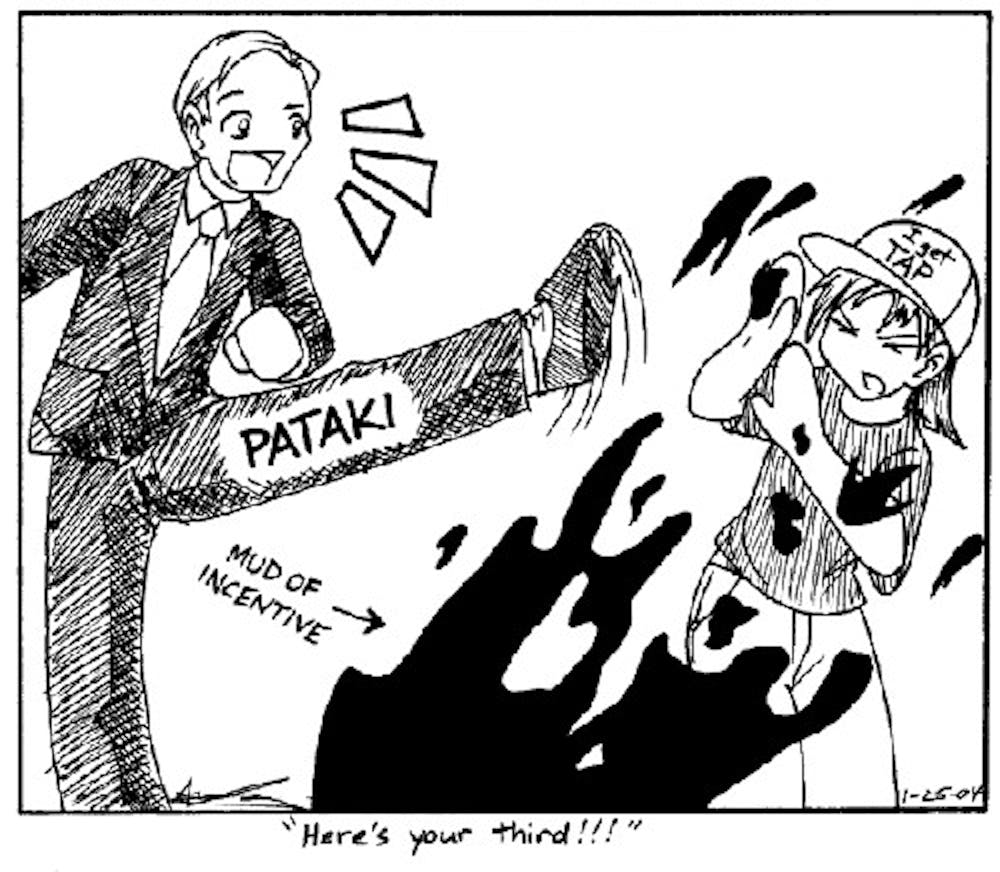
Gov. George E. Pataki unveiled his plan for education spending last week, and it continues his trend of not looking toward the future and hurting those in need of the most help. The 2004 budget does not call for a SUNY tuition increase next year and proposes a 5 percent increase in state spending on the SUNY system, but other major provisions include cutting community college funding by 5 percent and holding back one-third of Tuition Assistance Program funds until a student graduates.
Pataki proposed holding back one-third of TAP funding until graduation each of the last three years, and so far the previous two have been shot down. Legislators correctly argued that not every student is in college to get a degree, and students who do drop out should not be forced to pay even more money. By penalizing non-traditional students, Pataki is doing a disservice to those who want to improve in a few areas in order to get better jobs.
The attack on the poor continues with the cut to community college spending. The budget cuts directly influence the lower classes, and the debt is being pushed onto the shoulders of the poor who want and need to be educated.
The tuition holder is slightly more interesting, because some groups - including The Spectrum - favor a set, small tuition increase to prevent large jumps in the future. Not only does Pataki's plan fail to deal with rising costs of state universities, but it also provides no timeline for the future. While the 5 percent overall increase will clearly benefit the SUNY system, some of the individual students will most likely suffer as a result of the other cuts to community college funding.
There have been calls to link the cost of tuition to rising costs so that universities can stay afloat, but Pataki is not showing any plan for the future of the system, refusing to provide a path for manageable tuition or taxation to cover costs. Passing the system on in order to be reconsidered by the next governor is a shoddy excuse for leadership. The system needs clear direction, and Pataki failing to provide it.
Educational success is directly linked to the creation of high-paying jobs. A stronger economy and greater tax revenue to improve schools even more seems like incentive enough to want to fund educational programs for those in need. A sensible policy would make the most of that connection, but these plans are far from that.
All of these measures are carefully crafted to continually shift the fiscal burden onto the needy while keeping taxes low for the higher brackets. Pataki is not willing to take blame or step in to actually reform the nation's most expensive system. His claim that "every child (will be) given the opportunity for a quality education" rings hollow with his cuts and mismanagement.
Cutting TAP and community college funding is a shortsighted slap in the face to the poorer students of New York State. Pataki's budget plan is ambitious and has some quality points, but it fails to plan for the future in several regards. Increased state funding for schools will spur the economy, and there is no better way to create jobs in the long run than to educate students.



