
The sequel syndrome is a disease originating from Hollywood that consists of a group of actors, producers and corporate execs that attempt to cash in on the monetary successes of the first movie by creating a clone of the original, though void of its predecessor's creativity and integrity.
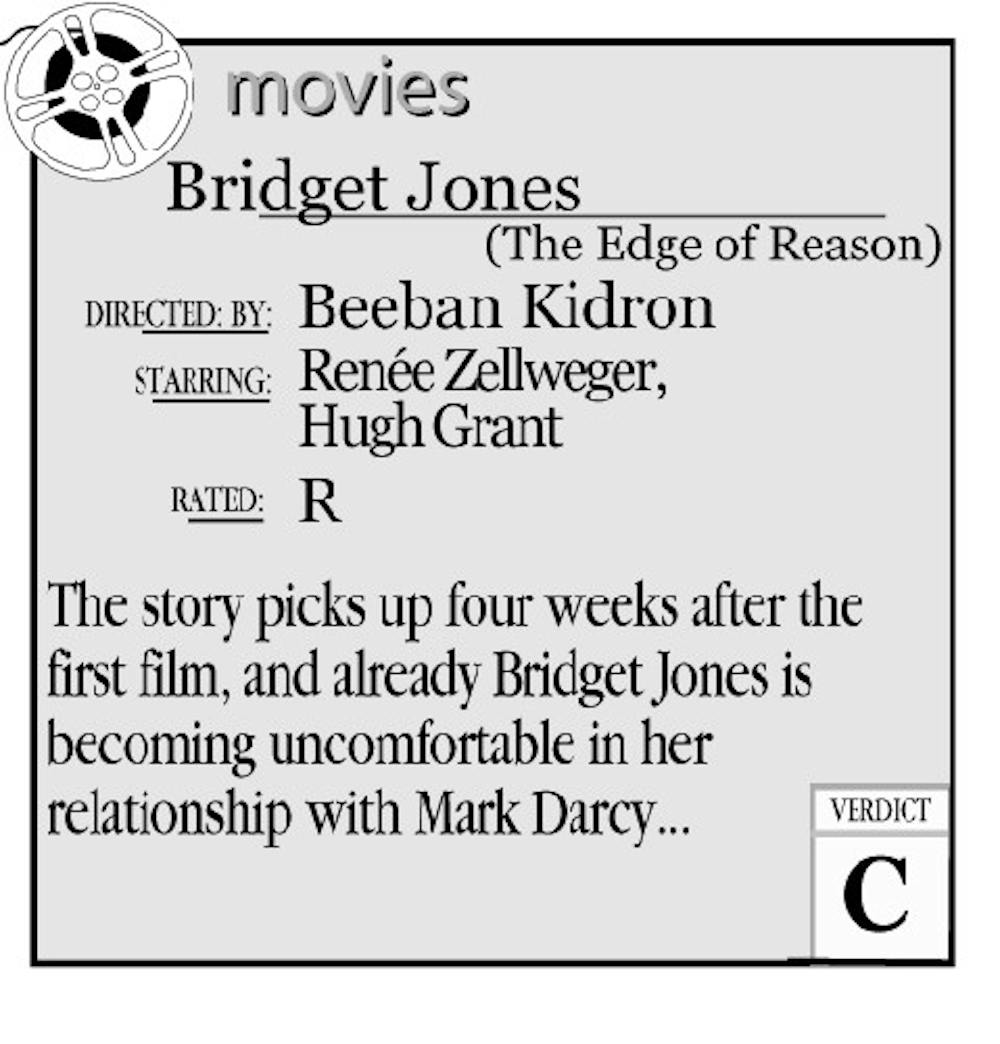
The epidemic takes good movies and gives them bad names. From "Dumb and Dumberer," to the latest "Star Wars: ROTS," to "The Godfather III" - sequels and prequels have plagued the moviemaking industry with atrociously repulsive films for years. "Bridget Jones: The Edge of Reason" is the latest flick infected with sequel syndrome.
"Bridget Jones's Diary," the 2001 precursor to "Edge of Reason," was an anomaly in the romantic-comedy genre. It was one of those rare cinematic occasions when both men and women sat together harmoniously in their theater chairs with mutual satisfaction.
It was a "chick flick" that could be relished by both the "chick" and her grumbling date. Men didn't have to suffer from the constant palpitation of their gag reflex and women got to root for a female who didn't look like a hunger-stricken stick figure on the cover of Cosmopolitan. It was smart, funny, sweet and even a bit raunchy.
Its 2004 successor is everything but.
Renee Zellweger replaced the hip, emaciated look that she bared in "Chicago" with a set of healthy curves by packing on, reportedly, more than 20 lbs for her starring role in the sequel. If it weren't so taboo in Hollywood, the added pounds would be better left on, for Zellweger looks healthier, sexier and just plain hotter with a little padding.
The director of the first "Bridget Jones," Sharon Maguire, was replaced with Brit director Beeban Kidron ("To Wong Foo, Thanks for Everything! Julie Newmar") who does an exemplary job of smudging the plot with a series of dry patches in which the audience doesn't know whether to laugh, think or feel.
In one scene, Bridget accidentally gets high on some magic mushrooms and undergoes a psychedelic hallucination while in the Indian Ocean. The scene is neither funny nor does it have any relevance to the plot.
As with Zellweger, big players Colin Firth and Hugh Grant rejoin the cast from 2001. Firth plays Mark Darcy, a human rights lawyer and Bridget's loving boyfriend, while Grant plays Daniel Cleaver, a sex-obsessed reptile who claims to have been receiving group therapy for his sexual addiction.
Bridget and Mark have been together for six weeks and have had "71 ecstatic shags" since the end of the first film. Bridget's relationship with Mark has been utterly perfect in every which way; she's even hearing wedding bells in the not-too-distant future.
But all good things must come to an end. Bridget becomes conscious of her class difference with Mark, and grows suspicious of his hottie little intern.
"Saw (Mark) just an hour ago, going into his house with little Rebecca Gillies. Only 22, legs up to there, and Daddy owns half of Scotland," says Bridget.
They eventually separate and part their own ways. Bridget goes to Thailand with newfound travel journalist and co-host Cleaver. She gets high, evades Daniel's advances, is arrested for drug trafficking, and performs a makeshift rendition of "Like a Virgin" with her fellow inmates in a Bangkok prison, contributing to the nonsense.
At this point Bridget is consumed with doubts and insecurities about being good enough for Mark, while she's tempted by Daniel's allure. She constantly embarrasses herself by walking into Mark's important business meetings, making impromptu speeches, and clumsily falling every other scene. Moreover, Mark and Daniel once again girlishly battle it out with raised fists over Bridget.
It's the same movie, people! She even falls can-first into the camera again!
Everything that was good in the first movie has been sucked out, regurgitated and spewed upon film stock for the sequel. The result is another romantic comedy that doesn't meet the standards of neither women nor men.
The movie and its endless cycle of clich?(c) and monotony tacks itself to the end of a growing list of shameless films made for nothing more than box office success; a process that has contributed to the romantic comedy genre's bad name.



