
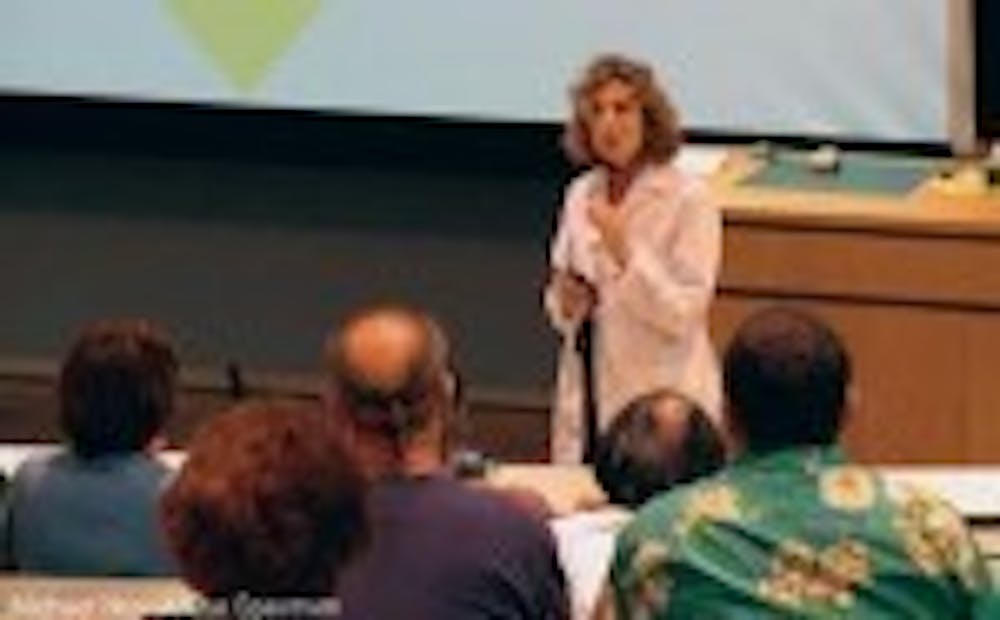
For a lot of people medical school is just a dream. Requiring top grades, a healthy bank balance and dedication to studying hard for many years, only a lucky few see their dream realized. The University at Buffalo's School of Medicine offers an alternative to a full medical degree, in the form of the Mini Medical School.
The Mini Medical School runs three to four programs a year. Each program consists of four lectures and is open to anyone, from students to members of the local community.
"Classes attract a mixture of students-from high school kids to those toying with the notion of applying to medical school, to senior citizens," said Roseanne Berger, M.D. and director of the mini-medical school.
Berger stated that the original aim of the Mini Medical School was to demonstrate the value of a medical education.
Universities across the country run similar programs.
"They each have a unique flavor but share a commitment to teaching about health and medical science. The Buffalo program was launched in 1997 with the motto 'Where People and Science Meet.'"
The program was created and funded by a generous $600,000 donation by Don and Esther Davis, a local couple who were, according to Berger, energized by a visit to the medical school's anatomy lab, and believed in the importance and value of the university to the local community.
The Davis wanted to give something back to the local community and did so in the form of a grant benefiting future students of the Mini Medical School.
The weekly classes take place on South campus and correspond with the courses that make up the medical degree. Faculty members of the original medical school volunteer to lecture, including distinguished professors and clinicians.
However, Berger states that as most participants in the program have a limited background in science, the emphasis is on the lectures being interesting, engaging and understandable. Topics covered during the current session included the "Anatomy and Physiology of the Heart and Lungs" and "Avian Flu: An Exercise in Preventing Medical Disasters."
Jane Brown is one of the students enrolled in the current program. She is retired, lives in the local area and satisfies her constant search for knowledge by attending the classes.
"I find the lectures so interesting," she said. "I always want to learn and find there is no better place to do this than the Mini Medical School. I cannot praise it enough."
Students take notes during lectures and reading materials are also available. Students say that taking the courses spark other interests in research.
"After listening to the lectures, there are always opportunities to ask questions," said Brown. "Ideas blossom from the classes and I often find myself doing further research on what I have learned."
Each year the program accepts between 200 and 240 students on a first-come first-serve basis. There are no academic entry requirements to enroll but Berger says students must posses a healthy curiosity and a willingness to ask questions.
Mechelle Lumpkin is the Program Coordinator for the course and deals with enrollment. She stated that age differences in students vary because this program interests all generations.
"Our youngest student at the moment is eleven, our oldest is in their mid-eighties," said Lumpkin. "Enrollment into the program costs $30 and we offer discount packages to students and couples."
The Mini Medical School, along with the Niagara Frontier Veterinary Service, also offers a Mini Veterinary School. This is aimed at pet owners who want to learn more about the diseases and afflictions their pets might suffer from, and latest advancements in veterinary medicine.
There is also a "High School Enrichment Program"¸ aimed at teaching local students about the application of medicine and biological sciences in real life situations.
According to Berger, participants in UB's Mini Medical School do not gain a license to practice medicine, though some may go on to do so later in life.
The program provides an opportunity for people who otherwise may not have had the chance to learn about this subject, to satisfy their curiosity and broaden their knowledge from some of the leading experts at UB.



