
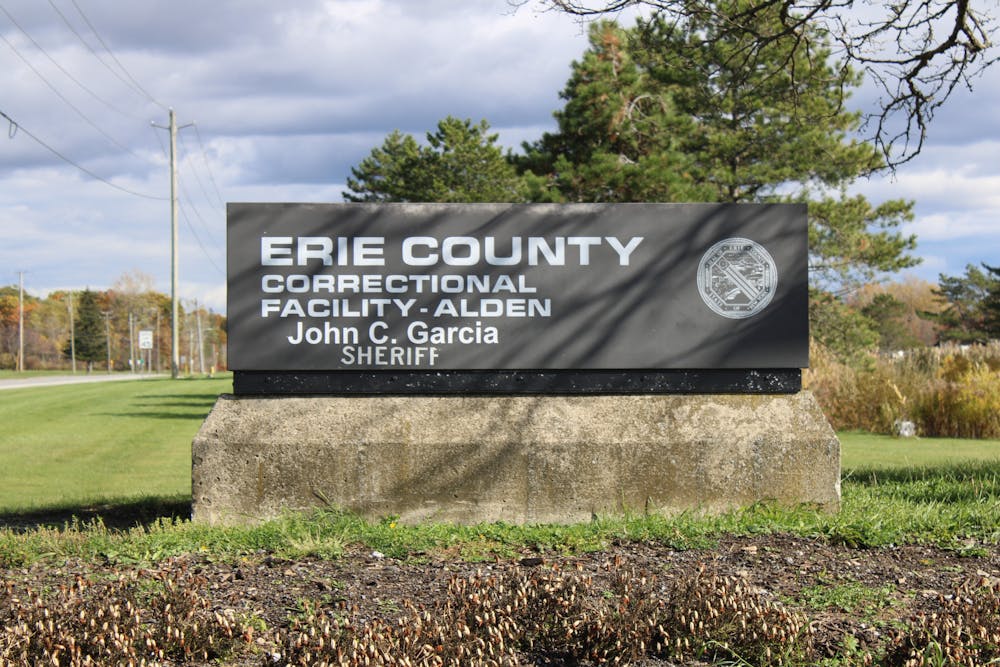
In a hidden but transformative corner of New York State’s prison system, professors from UB are helping incarcerated individuals discover something often denied to them — an education that empowers, enlightens and is meant to change lives.
Among the educators at the forefront of this initiative is Professor Susan Weeber from UB’s English department. This semester, she’s teaching one class behind bars: English 105 at Wende Correctional Facility located in Alden, NY. Even that single course is leaving a lasting impact.
“In some ways, it’s not really all that different,” Weeber says of teaching in prison. “We’re building trust and community just like we do in our English classes at UB. There’s a lot of discussion, and students have to feel free to share what they’re reading. Not only are they sharing their reading, they’re also peer reviewing. It’s very collaborative.”
Programs like this are part of a growing national movement to bring a college-level education into correctional facilities. UB’s involvement reflects its broader commitment to community engagement and educational equity. The faculty offers courses in a variety of disciplines, allowing incarcerated students to earn real college credits and, in some cases, complete full degrees.
The results speak for themselves. Research consistently shows that college-in-prison programs significantly reduce recidivism rates.
“College programs in prisons are hugely successful in dramatically changing recidivism rates,” Weeber notes. Studies back that up: according to the RAND Corporation, inmates who participate in educational programs while incarcerated are 43 percent less likely to return to prison.
The success of the program is about more than statistics. For Weeber, it's about human connection and genuine curiosity.
“I’ve really just been enjoying teaching these students,” she says. “They’ve been a delight to teach so far. They’re really motivated, really eager. I had a student tell me they were mad the reading ended, they wanted it to keep going.”
From analyzing literature to watching docuseries together, the class blends academic rigor with an openness that allows students to express themselves freely in what, for many, is their first time in an educational setting.
“We’re showing them that their thoughts and opinions are respected and valued,” she says. “We’re testing things out. We’re building up our ideas collaboratively.”
Programs like “College Behind Bars,” a well known docuseries about the Bard Prison Initiative, have brought national attention to this type of work. UB’s participation in similar efforts underscores the university’s growing role in transforming higher education access for all, even those behind bars.
As for Professor Weeber, whether she’s teaching in a North Campus seminar room or a prison classroom, the mission remains the same: to create a space where students feel seen, heard and intellectually challenged.
The features desk can be reached at features@ubspectrum.com
 Photo: Credit: Kishaun Proctor


