
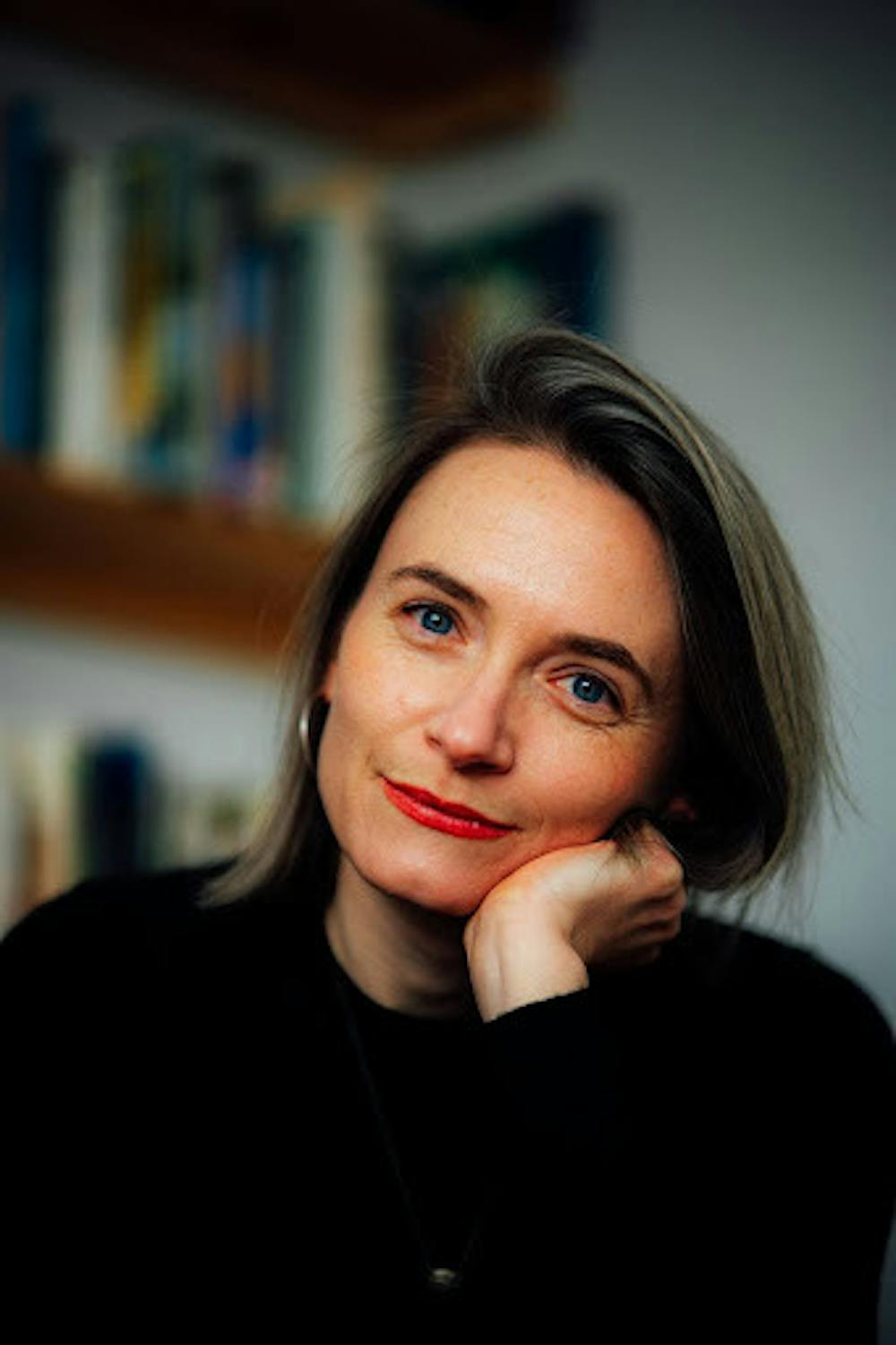
For every author — aspiring, seasoned or in between — there is one moment that defines their career and cements them into place amongst other creatives. For most authors, this moment is when you finally make it into the publishing world. For some it’s the first book you publish, the first offer, the first time you win an award — whatever it may be. Years of blood, sweat and rejections go into that moment. But before you can get to that moment, you have to start with the question: where do I begin?
For Laura Marris, a visiting assistant professor and author here at UB, helping to guide students and future writers to their futures is a well nurtured passion. Professor Marris, a two time published author, very graciously offered to give an interview about the process of writing her book, as well as give advice for anyone trying to break into the realm of writing.
Marris recently published a new book called “The Age of Loneliness: Essays”, a collection of nine essays she wrote that “braid personal and environmental history.”
During her creative process she “focused on creating portraits of places I’ve encountered over the years, both as a way of exploring ecological loneliness and as a way of celebrating the community of scientists who help keep track of what’s happening in their local ecosystems.”
Marris tracked the inspiration for the book, which “began with finding my dad’s old bird lists in the back of a folder… He was a birdwatcher, and [she] spent a lot of time outdoors with him before he died. When I found his lists of birds, I realized they held both personal memory and an important record of the health of his local landscape.”
Some of the best writing comes from personal experiences. Unfortunately, not all those experiences are good ones, writing about loss can be really difficult which is why it was important for her to “look outside myself for companions in that process. I think the landscapes in the book kept me company as I worked.”
When it comes to finding things to write about, there isn’t always an obvious story waiting on a silver platter for you, which is why it’s important to have some kind of process for inspiration.
“[I] love to collect things, to go down rabbit holes in the research, to explore tangents. I try to let myself make intuitive connections, and I don't force the essay to move forward until I’m excited about the next section. 80-90 percent of the work is revision,” Marris explains.
Inspiration can come from anywhere and everywhere, but honing it and turning an idea into a full fledged story is a different matter, that’s where revisions come in. One of the most annoying parts of writing, but unfortunately, one of the most necessary.
Revise, revise, revise and one day a story might just crawl its way into existence, and once it does that’s the next hardest part comes—submitting your work to publishers.
“When you’re just beginning to submit poems for publication, it’s easy to get caught up in feelings of judgement, or rejection — which happens to everyone! But the best advice is to use the publication process to find your people, to be part of a community,” as Marris said.
Being a writer means having thick skin, knowing a thousand rejections are coming before someone who sees the value of your work is willing to take a chance on it. That’s why it's so important to have a strong support system around you not just to build connections but to help keep morale up until, to keep believing in you when you struggle to believe in yourself.
The final and most poignant piece of advice Marris had for beginner writers was this:
“Protect your curiosity, and try to befriend it. The part of you that wants to look closely at the world, that wonders, that asks big questions, that keeps turning things over in your mind when you’re washing dishes or walking the dog. The more closely you can listen to that voice, the better.”
A good writer is adventurous, creative; a writer is spontaneous, sometimes hopelessly optimistic, and other times dreadfully cynical. But most of all, a good writer is curious, for whom could create their own worlds that weren't willing to explore the one they live in?
If you’re interested in reading “The Age of Loneliness: Essays” it can be found here.
Marina Noack is the senior arts editor and can be reached at marina.noack@ubspectrum.com
 Photo: Courtesy of SUNY
 Photo: The Spectrum Archives
