
For more than two decades, the anime and manga “One Piece” has captivated audiences with its story of pirates chasing freedom and adventure. Created by manga artist Eiichiro Oda, “One Piece” revolves around a young boy named Luffy and his band of quirky pirates on a quest for a legendary treasure called the One Piece.
Central to the series is the iconic flag of the Straw Hat Pirates, a bold symbol of unity and the dream of living without chains. To fans around the globe, that flag isn’t just about a fictional crew; it’s a reminder that the fight for freedom is universal.
The “One Piece” flag, also known as the Straw Hat Pirates' Jolly Roger, is a black pirate flag with a skull wearing a straw hat, symbolizing resistance against oppression. The skull on the flag represents the Straw Hat Pirates' journey to achieve their dreams in a world where corrupt officials rule.
This flag has become a symbol of protest and liberation in several countries, including Indonesia and Nepal and has become a staple in voicing dissatisfaction among citizens. Currently, Nepal is undergoing a series of violent protests, and throughout their fight for justice, the Straw Hat Pirates' flag has been seen waving in the air, motivating citizens to keep fighting and advocating for change.
The Straw Hat Pirate flag was first seen in Indonesian protests. The flag was initially waved by truckers resisting overloaded-vehicle rules, as well as in community protests. Indonesian citizens recognized its significance and decided to hoist it alongside the national flag.
By September, the flag had made its way to other nations, ultimately being adopted by protesters in Nepal.
Nepali citizens, primarily the Gen Z population, have been frustrated with the government's decades-long corruption. This struggle finally reached a breaking point when the government blocked social media platforms, including Instagram, Facebook, YouTube and others.
Additionally, activists were angered by the lavish lifestyles of politicians' children, emphasizing the disparity between the rich and poor. Nepal's youth unemployment rate has reached 20%, which showcases the government's inability to provide opportunities for the youth.
To voice their concerns, Nepali citizens gathered at Maitighar Mandala and around the federal parliament building on Sept. 8, hoping for a conflict-free, peaceful protest.
The protests started peacefully, but quickly escalated when protesters attempted to enter the Federal Parliament of Nepal, leading security personnel to respond with live bullets, tear gas and water cannons.
Despite the intimidation expressed by security, the Nepali citizens stood their ground and hoisted the Straw Hat Pirates’ flag. During this deadly encounter, the flag uplifted citizens and encouraged protesters to keep fighting in hopes of a more democratic nation.
“This protest showed the world that Nepal can stand up for itself if the citizens want,” said Mikaj Karki, a junior information technology management major and President of the UB Nepali Student Association.
On Sept. 9, protesters set the Singha Durbar Palace — Nepal’s main administrative building — on fire. The protests continued, resulting in the deaths of 72 people and more than 2,113 injuries.
On Sept. 11, former Chief Justice Sushila Karki was appointed as the country’s first female head of government. Karki, a fierce and progressive figure, is renowned for her strict stance against corruption, which ultimately gained support from the Gen Z population.
“I hope to see a more transparent, inclusive and accountable government that truly reflects the will and aspirations of Nepali citizens,” said Abhi Ramtel, a junior computer science major and a member of the Nepali Student Association.
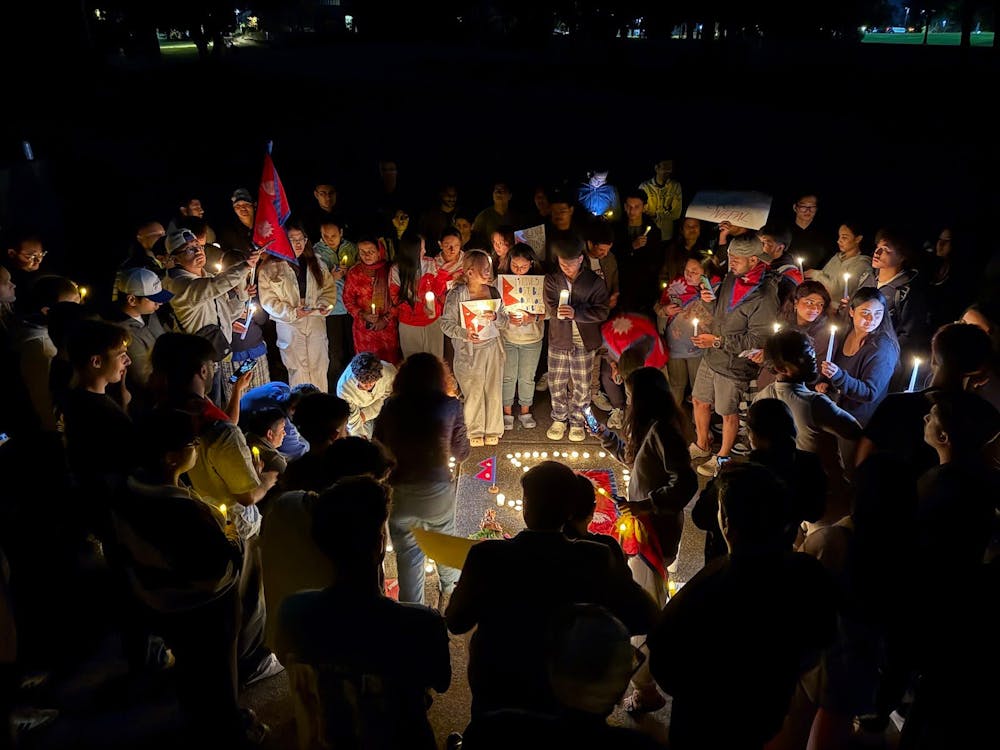
The Nepali Student Association has been a powerful voice on campus, providing a safe space for Nepali students and educating many on the tense situation unfolding in Nepal. They recently held a candlelight vigil for the families affected by these protests and continue to spread awareness.
Many members of the Nepali Student Association have family and friends in Nepal, proudly standing in solidarity with them.
“I try to celebrate all the festivals from back home and make sure I keep up with the events happening in my country,” said Sophie Sharma, a junior chemical engineering major and the treasurer of the Nepali Student Association.
As Nepal navigates this pivotal moment in its history, the collective efforts of passionate individuals and organizations like the Nepali Student Association are crucial in shaping a more hopeful future.
With the determination of the Nepali people and the dedication of youth-led movements, there is potential to inspire lasting change.
The features desk can be reached at features@ubspectrum.com


 Photo: Paul Hokanson/UB Athletics
