
Hello. Hello...
Silence.
Hello? Is anybody there?
Still nothing.
Hello? Are you there?
Hey there. S-s-sorry about that. How's it going?
I can't tell you how many phone calls in my life have begun with this exact format.
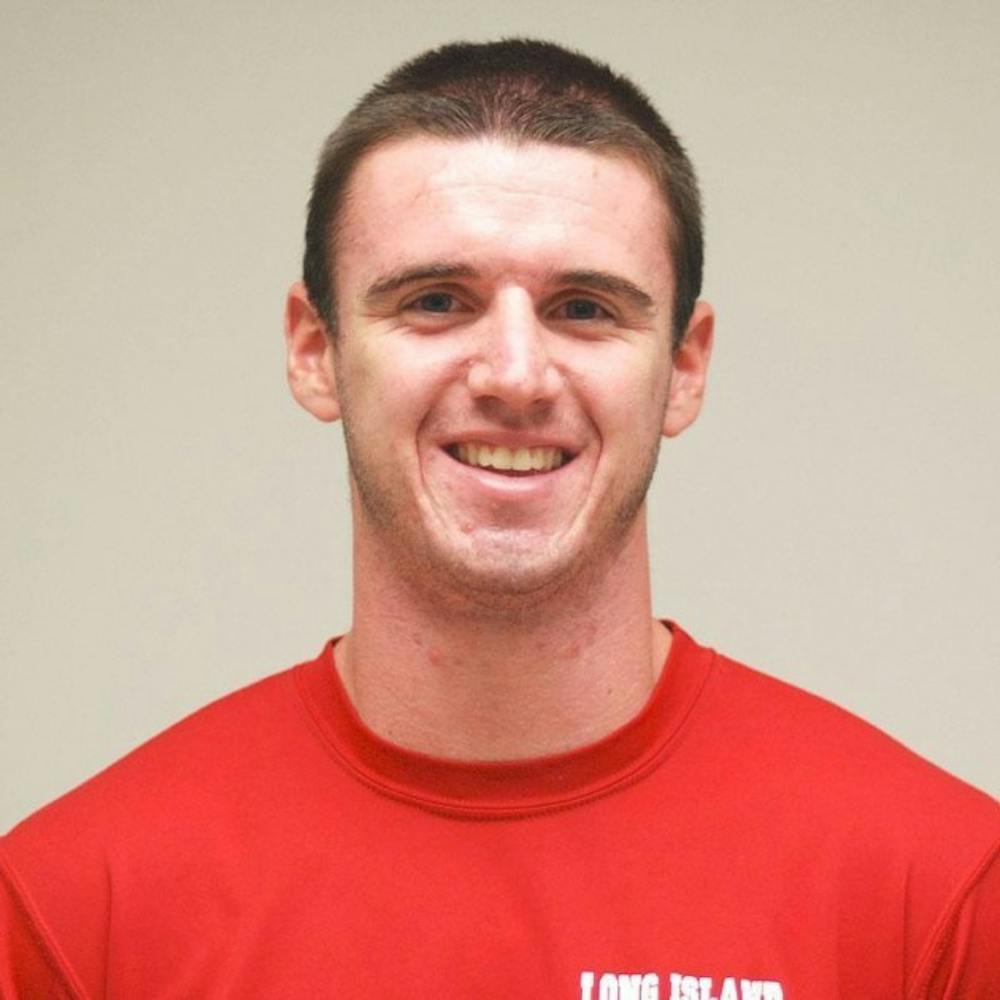
For those of you who don't know who I am, my name is Owen O'Brien. And I stutter.
I have stuttered my entire life. It's just like anything else in life. You work hard to get ahead, you feel good for a while, and then whatever you tried to escape returns. This has been my life for nearly 21 years. There are better and worse days, but it's always there.
This is not a sob story about my youth. Truth be told, I think I can count on one hand the times kids made fun of me for my stutter. I was very lucky. I know not every kid with a speech impediment can say the same.
I am not naive. Of course some made jokes behind my back. But I didn't have to hear it, so I could pretend they weren't.
I always thought I would grow out of it. I met people throughout my childhood who said they stuttered as a child but grew out of it. It made me feel comfortable. Like I wouldn't be like this forever.
Well, I still have it.
I saw a speech therapist my entire childhood. And it has helped. Tremendously. My first speech teacher, Dr. Meryl Wall, is one of my heroes. I remember my parents driving me out three days a week, then two, eventually one, until it was every other week. Forty-minute drive, each direction, over the course of eight years. My parents were there with me every step of the way.
For those of you who have seen The King's Speech, we did almost everything in that movie. If it wasn't for Dr. Wall, I would be a mess. I wouldn't be in the position I am in.
I am far from a loner, but I keep a small circle of friends. I am hesitant to talk to that cute girl next to me in class because what if the words don't come out? Now she thinks I'm dumb. And anyone who overheard the exchange thinks the same. No thank you. I will just walk into class with headphones in each ear, try to get through class as easily and quickly as possible and pop my headphones back in as I walk out.
Although my speech has increased substantially, I don't know if I would call myself "comfortable" yet. I try not to do anything in class that would call attention, for fear the teacher would ask me to speak in front of the class. I still clam up. Just the thought of public speaking causes sweaty palms, leg twitching, the whole nine yards. There is one place I am comfortable expressing myself.
Journalism.
In journalism, I have the ability to say exactly what I want. I don't have to worry about choosing words I feel easy saying or keeping the conversation at low risk. I can have my words understood in a clear and coherent matter by tens, hundreds or thousands of readers. For the first time in my life.
The first journalism course I took was in 10th grade. I liked the teacher and I needed another elective. So I figured I'd give it a shot. Less than half way through the semester, my teacher told me I should take "Journalism II," this time, as an editor.
It was a high school paper, so being a sports editor didn't entail much responsibility, but it sparked my interest. It became my favorite class of the day, even over gym.
As a senior, I was the assistant editor for our paper. This was when I realized I may have had some talent in writing. It was a thrill unlike anything I've had in my life.
That year, I won bronze for high school sports columnists in New York State. Our newspaper, The Warrior, took the silver for best overall newspaper, as voted by the Empire State Press Association.
I had fallen in love. Writing gave me power and strength I had never felt before. But when I came to college, I questioned myself.
Could I really do this as a career?
Like with everything else in my life, I hesitated. I took the easy way out. I said no, this will not work out. Who would hire a writer who struggles to put together a sentence when speaking?
Freshman year, I did not write for The Spectrum. Sophomore year came and went with the same result. It wasn't until this summer that I told myself I would no longer let my stutter define me.
If I was going to fail, it would be somebody firing me. I finally had enough of telling myself I couldn't do something because it may take an extra few seconds to complete a sentence.
In my one-plus semester writing for The Spectrum, I have done things I never imagined I would have the ability to, including face-to-face and over-the-phone interviews with Division I coaches and players.
While writing a feature story last semester, "Twinning," I communicated with one of Buffalo's soccer players face to face, while calling two of her sisters and her parents. I conducted five interviews in the process.
To say I was out of my comfort zone may be the largest understatement of my life.
But I conducted these interviews, stuttered and was very proud of the end result.
Am I completely comfortable yet? No. But I am getting there. Thanks in large part to journalism.
This platform allows me to express my true self, not the one I hide under a sweatshirt and headphones.
Can I make a career in this? I don't know.
Can someone with difficulties communicating succeed in such a people-orientated field? I'm not sure.
However, what I do know is that I am finished getting in my own way.
Email: owenobri@buffalo.edu
 Photo: The Spectrum Archives


