
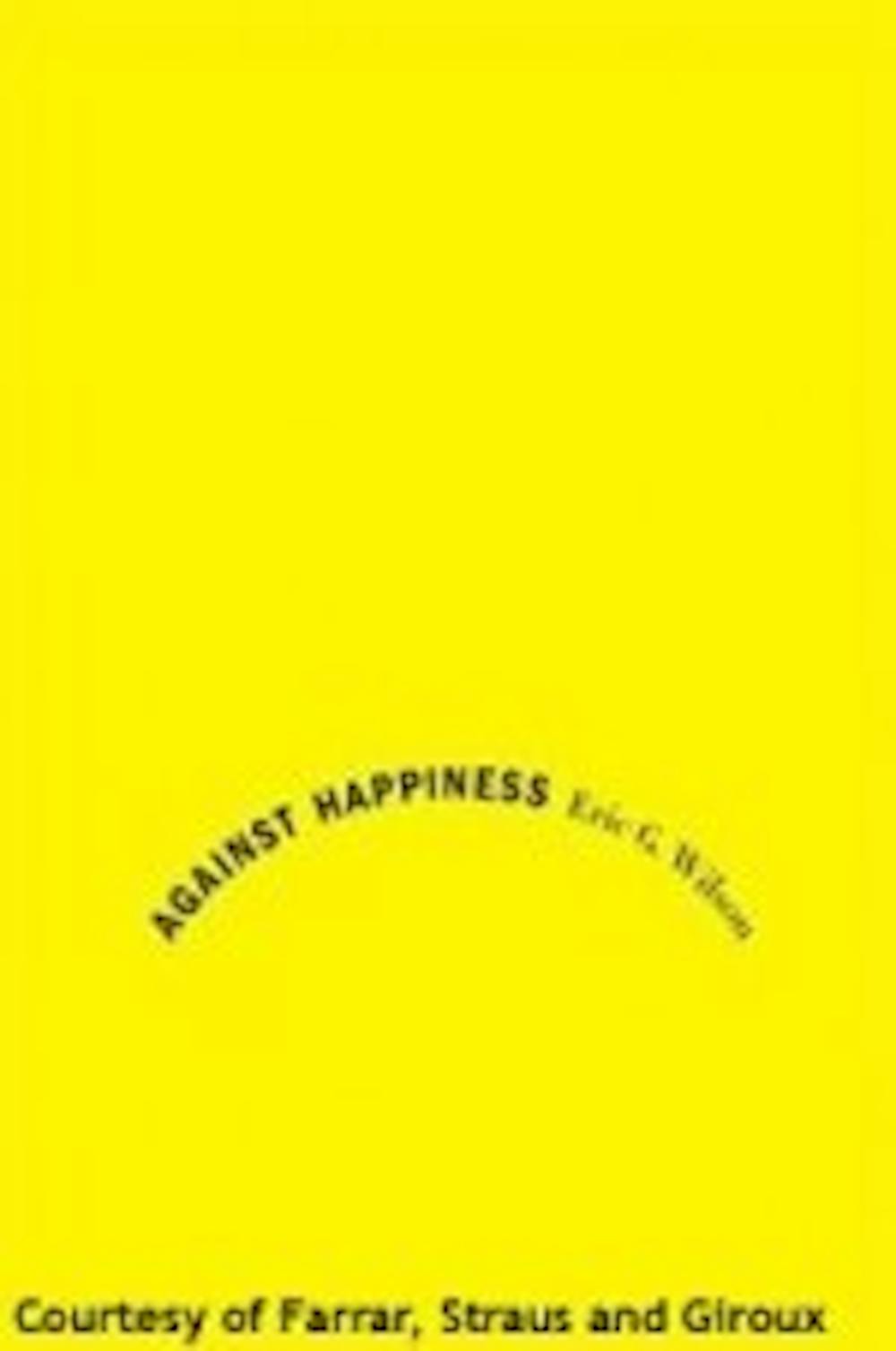
Americans over-medicate depression and fear sadness, not realizing that in ending melancholia they stunt their own ability to feel. This is the contention of Eric G. Wilson's latest book, Against Happiness (2008, Sarah Chrichton Books).
Wilson believes that Americans as a whole are "addicted to happiness," a state characterized by our recent dependence on mood-altering medications and self-help literature. He posits that in erasing sadness from our emotional repertoire, we will lose the ability to experience happiness, and, eventually, to create.
Broken into five major chapters, each in essence a separate essay relating to melancholia, Against Happiness details what has caused the American push for bliss, who we are as individuals within such a system, and why it is important to experience sadness from time to time.
In his introduction, Wilson explains what he means by melancholia, initially defining what it is not. "I realize that there are many lost souls out there who require medication to keep from killing themselves or harming their friends and families. I don't want to question the pharmaceutical therapies of the seriously depressed."
Happiness is not Wilson's target. Joy is fine. In fact, joy is the goal of Wilson's melancholic, who experiences joy after a long period of bleak sadness. What Wilson finds so destructive is the happiness espoused by the American Dream, a hollow mindset wherein the very existence of sadness is denied.
Wilson's indictment is reserved for the people who pop a pill the minute they start to feel a little down. Melancholia, he says, is the depression that doesn't need medication, one that can be ridden out like any other mood. Far from the crippling apathy of a clinical depression, melancholia is a simple sadness. It is a justifiable emotion, not a disease.
The realization that follows the intense introspection of the melancholic soul is of its place in the universe. Wilson's book is not meant for those with the wool of religion pulled over their eyes - it will invalidate everything they believe in.
The anxiety and depression that plague the melancholic relate to death. Whatever form anxiety takes in one's mind, it is all related in some way to a fear of pain, and the final pain to be feared is death. What Wilson contends is that an epiphany follows prolonged meditation on one's depression, when a person suddenly sees that their position in the universe is fleeting and temporary, and that each instant is precious.
Wilson's fears that the death of melancholia, egged on by those in charge of our status quo, will bring about the death of innovation. In the final chapters of his book, Generative Melancholia and Terrible Beauty, Wilson explains the practical importance of melancholia as a creative force. If Beethoven had been on Zoloft, he wouldn't have written the Fifth.
The essence of importance in melancholia is almost laughable. Who is more capable of understanding joy, the joyous, or the people that yearn for joy with every fiber of their being? A fish doesn't understand water; a man doesn't truly appreciate air until he is drowning. If we all live as fish, no one will ever be able to capture the beauty of the sea.
Wilson is aware of the destructive nature of melancholia, however. Melancholic artists of every kind are found throughout history as suicides, drug addicts, and horribly emotionally damaging forces on the people around them. It is possible to believe that the price of understanding that point between the polarities of blank happiness and blank depression is to forfeit one's ability to live easily in human society.
The price of removing melancholia from the range of human experience is the loss of introspection, of epiphany, romanticism and all that is bittersweet. The message of Wilson's book is that there are no absolutes in life, no truly happy moments and no complete tragedies. There will always be a dark side to happiness, and there is always beauty in sadness. The melancholic and the romantics are the people that see this dichotomy in all things, and accept it. These people, however sad, are truly happy.



