
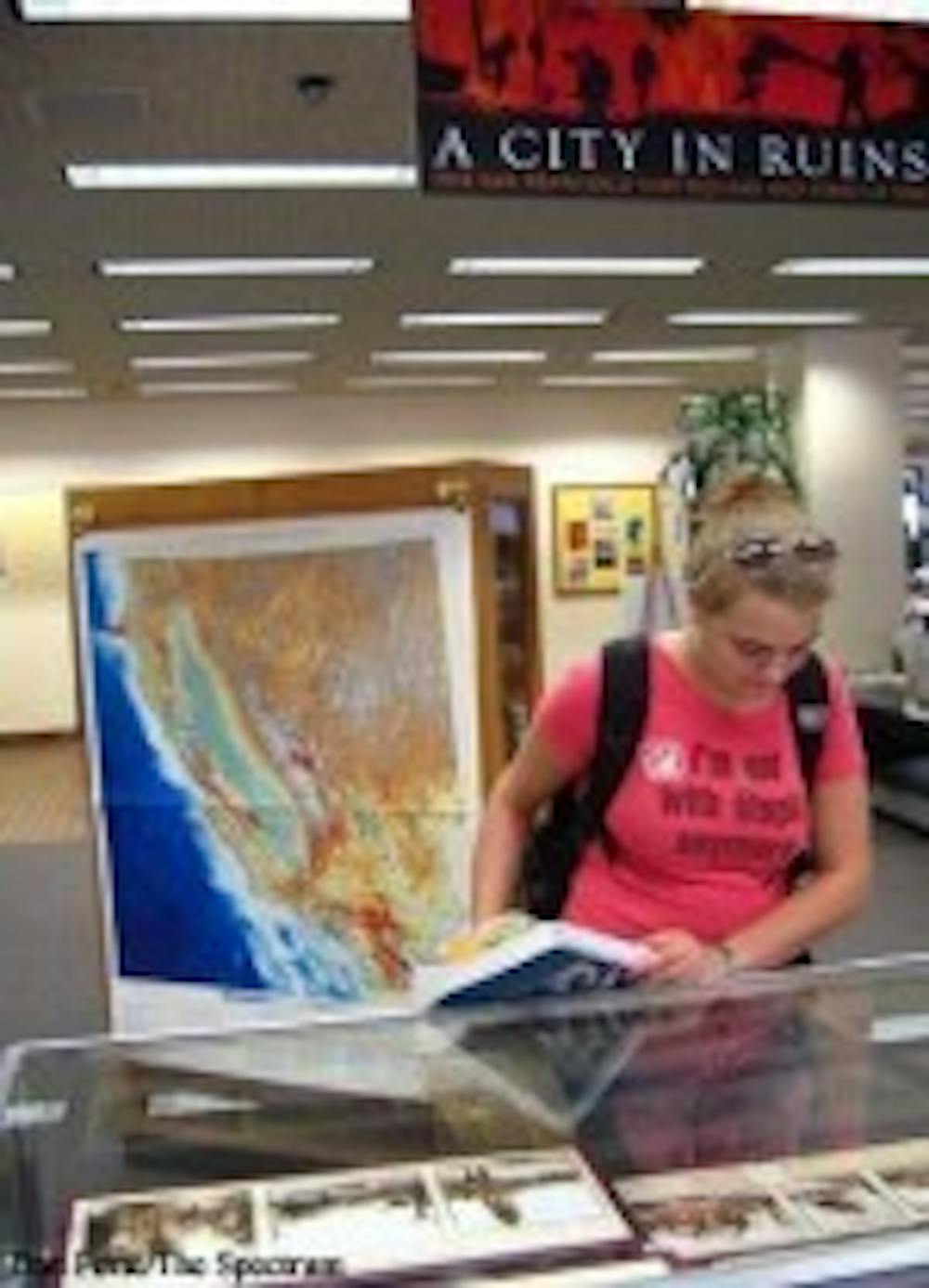
An exhibit commemorating the great earthquake that shook San Francisco 100 years ago this week has been setup on the first floor of the Undergraduate Library by the Multidisciplinary Center for Earthquake Engineering Research.
The display, "A City in Ruins: The San Francisco Earthquake and Fires of 1906," will be up until the end of May in UGL, and then throughout the summer in Lockwood.
Photos in the exhibit document the destruction of the notorious earthquake that ruptured 296 miles of the San Andreas Fault from northwest of San Juan Bautista all the way to Cape Mendocino.
"The images selected will give anybody the perspective of what occurred 100 years ago," said Jill Tarabula, an information specialist at the UB Multidisciplinary Center for Earthquake Engineering Research.
Beyond the damage caused in and around San Francisco, the earthquake was felt as far away as Southern Oregon and Central Nevada. For people living on the West Coast at the time, the results were devastating.
"These images bring some horrible memories about similar events that (have) occurred in today's society, such as September 11 and Hurricane Katrina," said Dasha Jackson, a freshman early childhood education major, as she explored the display.
In addition to the photos, the exhibit includes cases of material from the earthquake - each case approaches the earthquake from a different perspective and its impact on San Francisco. Also included are eight biographies from people that lived through the earthquake and share their experiences from the disaster.
"It's very explanatory how they have different survivors explain their stories," said exhibit observer Peter Pennyfeather, a freshman electrical engineering major.
The first case in the display shows the cost of damages from the destruction of the earthquake. In 1906 the damages totaled somewhere between $235 and $500 million. Adjusting for inflation, the amount falls between $4.8 and $10 billion.
The second case goes into the fires that sprang during and after the earthquake. The three days of fires caused a majority of the damage done by the disaster, as opposed to the earthquake itself.
"I found this exhibit particularly interesting and I think UB should publicize it more so more people can see and learn from it," Pennyfeather said.
The third case showed images of the people on the street because they lost their homes in the earthquake. Living and sleeping in tents and waiting on line together for food, the pictures show rich and poor San Franciscans socially leveled by the devastation.
From the destruction of the legendary 1906 earthquake, researchers have been able to learn how to better prepare for earthquakes in the future.
The fourth and fifth cases provide more detail on the destruction of San Francisco's Chinatown, one of the hardest-hit parts of the city, along with more information on citywide structural damage.
"I think it's great that UB is having this exhibit because a lot people forget their history," said Bukky Okulate, a freshman exercise major. "This is a reminder to let them know their past and apply it to their future."



