
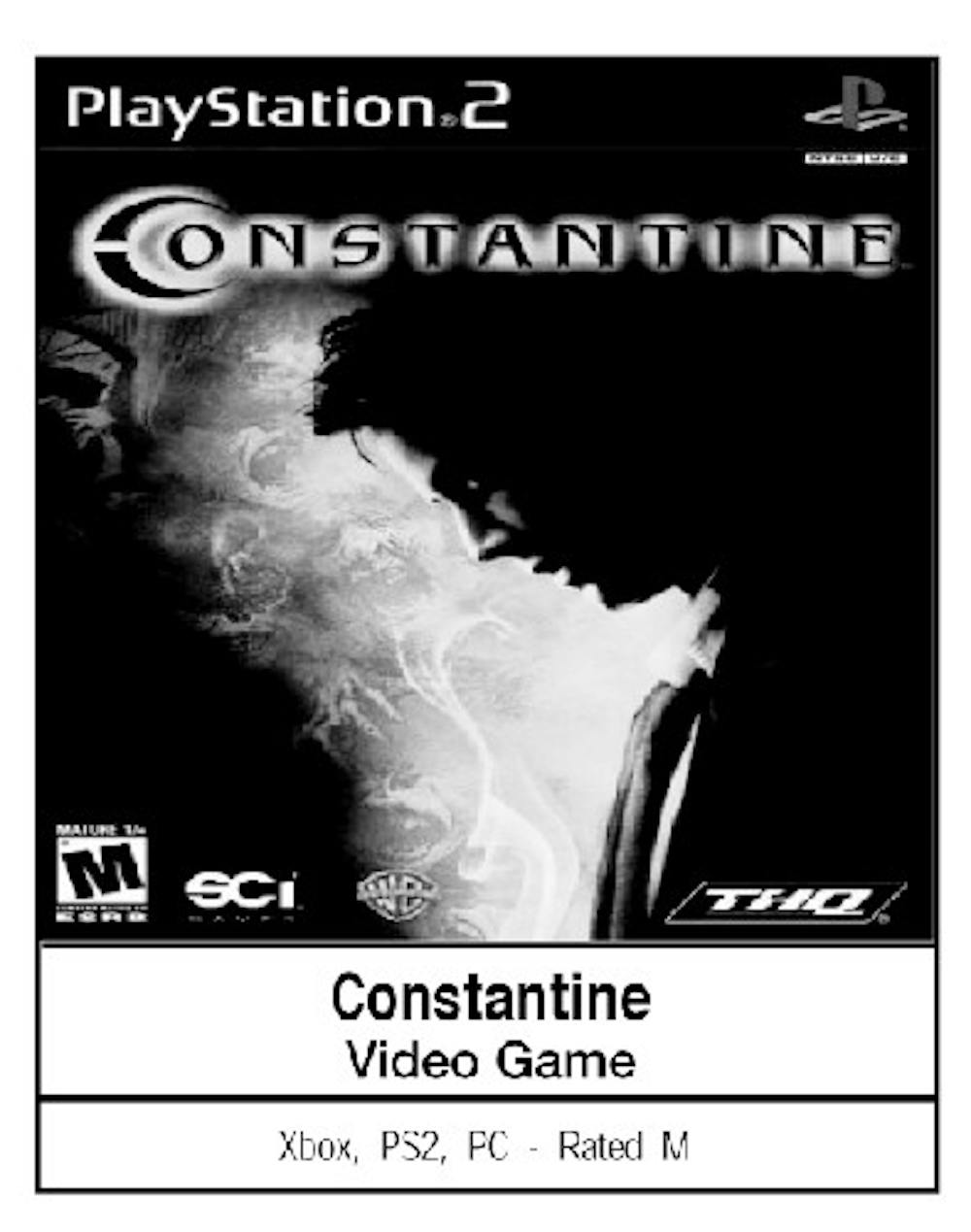
"Spider-Man 2" reversed all the negative stereotypes associated with movie-based videogames. Just as quickly, "Constantine" has brought them all back in a spectacular, flaming pile of disappointment.
The game, published by THQ and recently released for Playstation 2 and Xbox, gives new meanings to the phrase "Hell on Earth."
The first major problem gamers will notice is the extremely sparse polygon count, which results in low-grade graphics. This game looks like it's using the original "Tomb Raider" graphics engine that gave Laura Croft her famously pointed breasts.
The developer, Bits Studios, attempts to balance out the inadequate in-game appearance with extravagantly detailed cut scenes. A cut scene is a video clip used to advance the storyline of a game, temporarily suspending the player's interaction. This, too, is reminiscent of "Tomb Raider."
To a certain extent, they succeed. The cut scenes are well done, and even start out with a beautifully rendered CG scene straight from the opening sequence of the movie. The voice and image of Keanu Reeves is done nicely and work well to move along the story.
However, the in-game graphics problem is highlighted even further by the low frame rates on the PS2 version of the game.
In an era of gaming in which flawless graphics are expected, "Constantine" starts off with a strike against it.
The progression of the game play also leaves something to be desired. The environment is extremely linear. The classic "rat in a maze"-type setup is taken to its limits.
In addition to being herded along on one set path, the gamer is limited in other ways. Players cannot jump, climb, crawl or duck without the pre-programmed consent of the game. All vertical movement is automatic and coded only to work in specific places.
The ability to make a character 'jump' is basic; "Super Mario Brothers" for the original Nintendo Entertainment System had that. Why do game developers all of a sudden think the basics are no longer important?
Additionally, this system makes progression frustrating because the player must find the 'correct' fence to jump and the 'pre-set' window through which to climb.
"Constantine" is not a total waste, however. The correlation between the game and movie is remarkable.
For instance, the in-game vermin monster must be killed by repeatedly tossing a screaming beetle until its fragile form disintegrates, allowing the gamer to blast away at the component rats, snakes and moths that make up the demon.
Another intriguing aspect is the use of bottled water as life points. Interactive sinks, water fountains, as well as the contents of refrigerators yield health refills.
The basic action of the game is as follows: find holy weapon. Kill demons with holy weapon. Solve really simple puzzle to receive holy weapon. Kill demons, kill demons, kill demons and so on.
Another positive aspect of the game, which deserves mention, is that the environment responds to the presence of the protagonist. This is a technique horror games like "Doom 3" for the PC have perfected. There is something eerie about a bunch of empty parked cars that are perfectly still one moment, then jumping up and down with headlights blinking and car alarms going off the next.
The screams of a woman being tortured at just the right moment can also overload one's senses.
This environmental response programming really shines in the first few minutes of the game, when the player enters Hell and watches a semi-truck fly through the desolate sand and fire-blown city landscape, narrowly missing the player.
In the end however, despite some redeeming qualities, "Constantine" is a painfully average game with sub-par visuals.



