
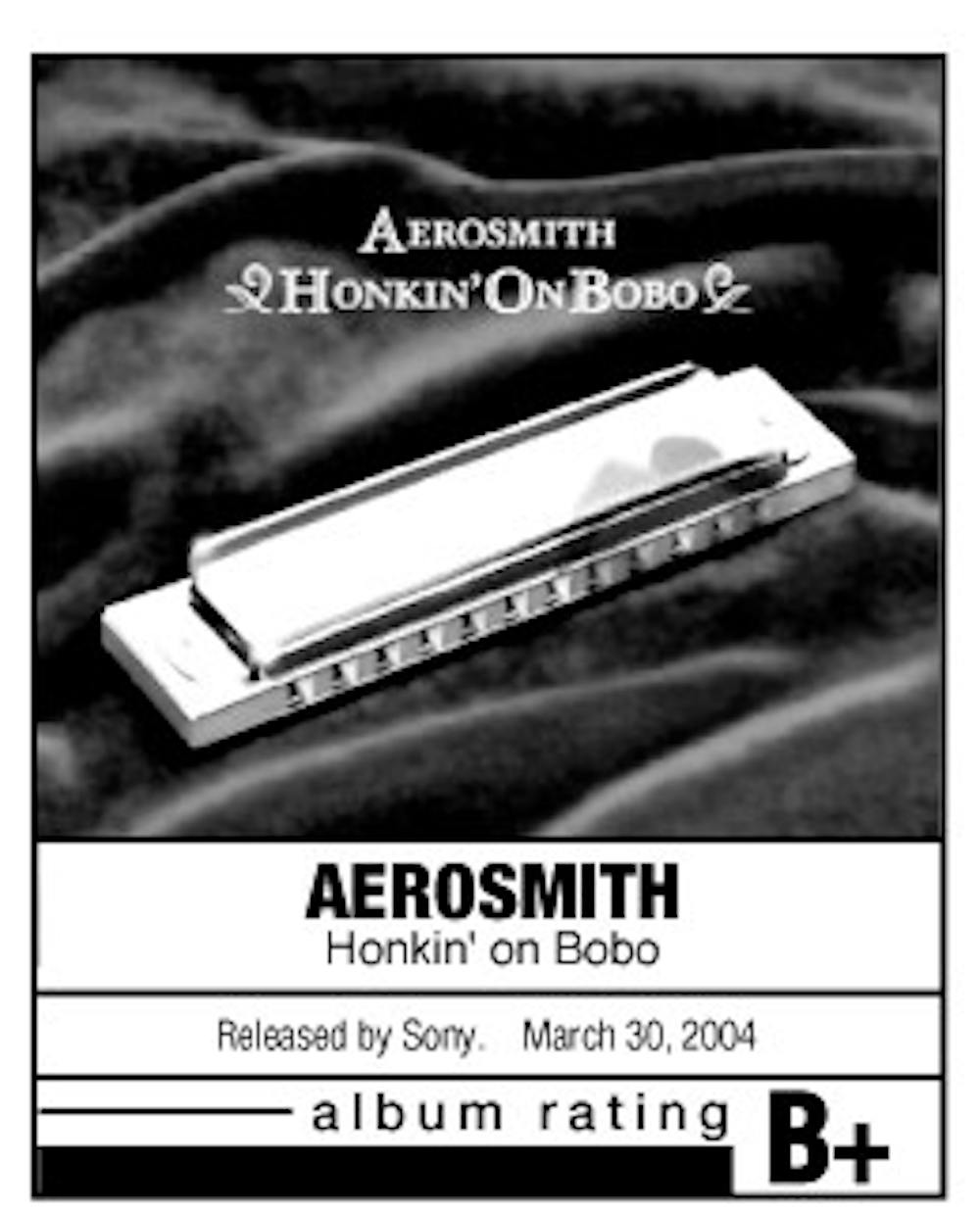
With the eye-widening success that Aerosmith has seen in their day, no one would never guess that they sing the blues.
In an effort to get in touch with their roots, the band covers classic blues artists in "Honkin' on Bobo," all of whom have influenced the band's rock and roll greatness. This tribute to the group's mentors includes covers of Muddy Waters, Fisher/Hopkins, Blind Willie McTell, Fleetwood Mac and even Aretha Franklin.
On this blues effort, the band reconnected with producer Jack Douglas, with whom the group worked on their 1977 classic, "Draw the Line."
The result is a genius collection of 12 tracks that artfully masters the blues, yet remains undoubtedly Aerosmith in style.
The album opens with a cover of Bo Diddly's "Road Runner." The track is heavy in elements of blues, with its groovy guitars and harmonious harmonica bellows. Steven Tyler's classic wail and Joe Perry's masterful guitar riffs claim the track as their own, however.
The rest of the album is just as impressive. It includes covers of Willie Dixon's "I'm Ready," Big Joe Williams' "Baby Please Don't Go," Fleetwood Mac's "Stop Messin' Around" and a cleverly re-named Aretha Franklin tune, "Never Loved a Girl." Of course, Aerosmith included an original track, "The Grind," that rocks to the woes of love.
Despite the great covers on the album, "Honkin' On Bobo" may not be well received. Although the band puts its personal touch on the tracks, they are still blues songs. In an interview with MTV, Joe Perry contemplated the possibility that the album would not be as successful as other Aerosmith efforts. The commercial success of this album, however, is not of concern to the band.
"It's kind of a response to what a lot of fans have been asking for," Perry told the MTV interviewer. "If I hear it once, I hear it a hundred times. People come up and say, 'Wow, I like your new stuff, but when are you gonna make a record that's really raw, and that sounds like the old Aerosmith?' With this one, we tried to keep the songs more immediate and not really think about what's on the charts. It was very reminiscent of the 'Rocks' era."



