
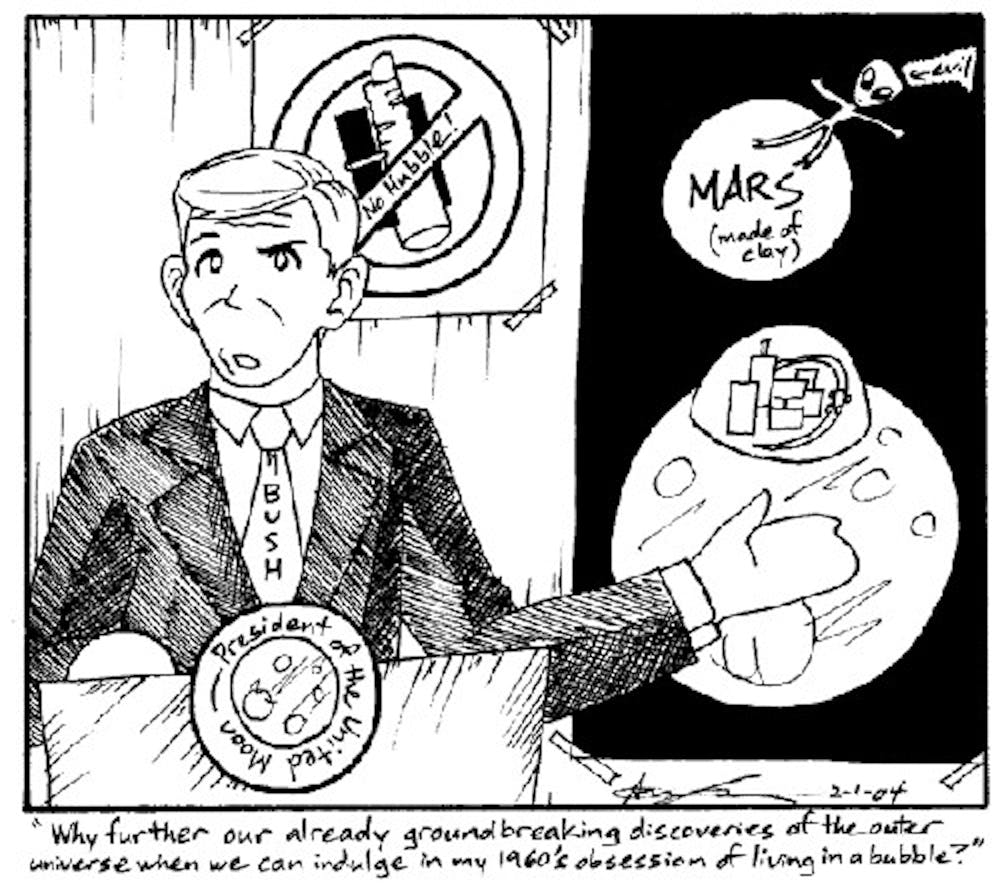
The Hubble telescope is scheduled to end operations when a new telescope will be shuttled into space in 2010, but unless it receives servicing, it will stop working around 2006. The four years of downtime are unnecessary, and NASA should resume plans for its fourth official service mission to extend Hubble's life.
Hubble's mission began in 1990, and there have been five restorative missions since the inaugural launch. The annual budget is about $250 million, and that sum has been budgeted to NASA no matter what. The mission was called off by NASA administrator Sean O'Keefe, not for monetary reasons, but because of the risk to astronauts and President George W. Bush's change of focus to exploring the moon and Mars.
Since the announcement, criticism has come from many different places, all urging O'Keefe to reconsider his mandate. Government officials, mostly centered near the home base of Hubble's operations in Maryland, have lodged formal complaints, including Sen. Barbara Mikulski, the ranking Democrat on the subcommittee that watches NASA's budget.
Scientists from across the country have also expressed outrage at the decision without review. The telescope is used for almost every picture of space, as the atmosphere of earth does not distort its photographs. Even Mikulski cites the "extraordinary contributions to science, exploration and discovery" in her urge for review.
Service Mission 4 - the official name of the proposed 2006 venture - would have installed a Cosmic Origins Spectograph and Wide Field Camera for panchromatic views. The new telescope will include all those parts, but not only will Hubble be failing to be on the cutting edge, but it will simply stop working.
It is always difficult to weigh possible human danger against the needs of the scientific community. While there are always dangers related to venturing into space, proper precautions can ensure safety and continue the necessary programs.
In terms of focus, it is a terrible mistake for Bush to put the needs of a possible mission to Mars or the moon ahead of restoring Hubble. Scientists should be allowed to focus on a 2006 restoration so that there can be clear and detailed images for the years before 2010. Hopefully, that political position will change in time to salvage the project before it becomes obsolete.
The benefits of keeping Hubble in order are very clear, even if it is going to be replaced at the end of the decade. With popular support, hopefully a safe mission will emerge.
Since the money is already in the system, there is no reason for NASA to decide to shut off the mission completely. Luckily, an independent panel has decided the review benefits of either side, so there is still a chance for Hubble to live out its days in working order. Saving Hubble is necessary for many reasons, and the decision to abandon it must be reconsidered.



