
Relationships between students and faculty members have a certain stigma. It is supposedly kept out of the spotlight and certainly frowned upon, but rarely explicitly regulated. Several schools, most recently the entire University of California system, are instituting policies deeming all such relationships as inappropriate and a violation of the code of conduct.
UB must adopt a formal policy, similar to those schools.
Currently, the rules governing romance between faculty and students at UB are very vague. The policy only alerts the staff that "any romantic involvement with their students may lead to formal action against them if a complaint is registered by a student." Romantic involvement with a student definitely should lead to administrative action, regardless of whether that student complains.
The California schools define the basis of the debate as "academic responsibility," where a teacher or dean has impact over a student's grades. The policy makes sense, because if anyone is in a position to alter grading, the opportunity to be swayed by romantic interludes should not be allowed to arise.
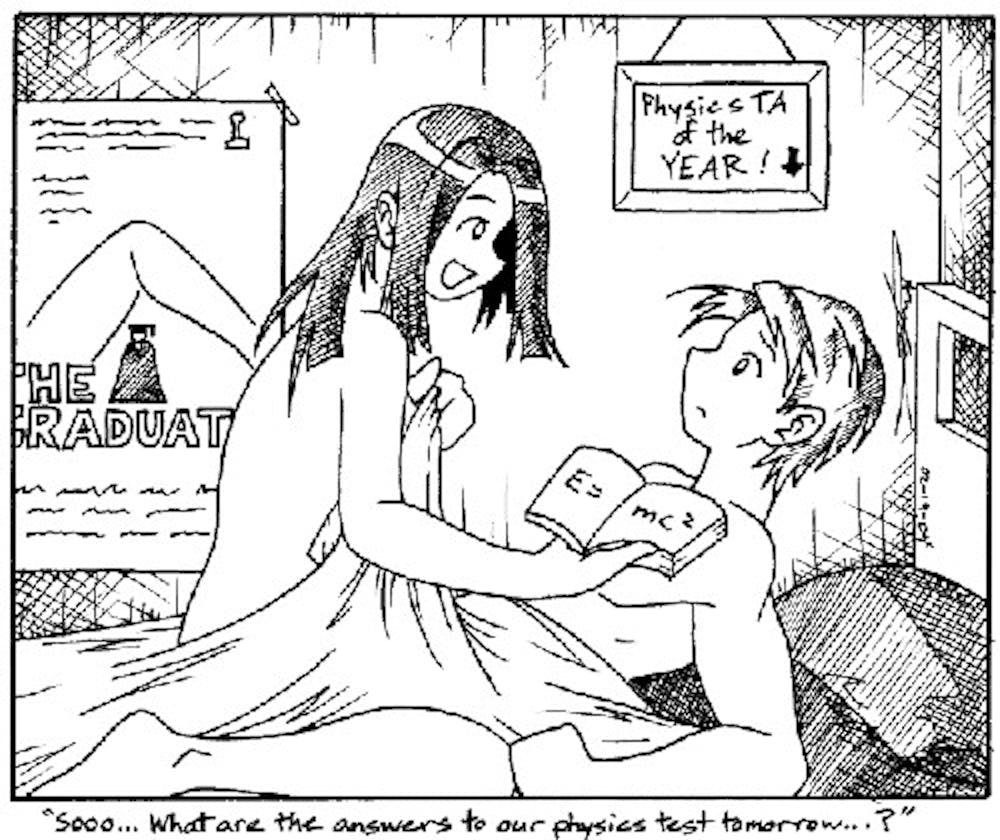
Aside from teachers and deans, there are also many teaching assistants who must be regulated. Teaching assistants are in a strange middle position, simultaneously being students and sometimes responsible for grading. Since the ages are closer, dating could be a more natural occurrence, and steps should be taken to deal with it.
Sometimes, a TA will help with a class being taken by someone who they are already dating. In that case, arrangements should be made with the professor or the other TAs so that there is no direct responsibility for grading.
If a TA - or anyone, for that matter - is worried they cannot stay impartial while dating a student who is in their class, then these individuals should not be in the teaching role in the first place. Many TAs are required to sign an agreement forbidding them from relationships with students. They should know what their responsibilities are, and thus should be held accountable the same way as teachers when involved in such relationships.
However, the anxiety of a student getting together with a teacher, or vice versa, can be easily avoided. College years are very short and intimate relationships can be waited out. Meaningful nonsexual bonds can form, and those are sometimes more meaningful and important during a college career. Students and teachers should not be forbidden from socializing, as those interactions can be beneficial. A romance, however, is going too far.
Recent events have blurred the line of relationships between members of the faculty and students. Impropriety is always a question, and stronger rules should be in place. Questions of integrity should not hang over any student or teacher.
New laws are clearly laid out at several other universities and should be easy for UB to integrate into the Faculty/Staff Handbook. These guidelines are overdue and will help the university. The vague rules currently in place at UB regarding student-teacher relationships leave the door wide open for conflict, and concrete rules are the most effective way to prevent teachers and students stepping over the line of propriety.



