
Six years ago, in the midst of the COVID-19 pandemic, I found myself listening to the discographies of some of my many favorite artists. When I got around to Elton John’s catalog, I discovered what would become one of my favorite songs, “Someone Saved My Life Tonight” from his 1975 album, “Captain Fantastic and the Brown Dirt Cowboy.”
I loved everything about the song, from the piano and drums to the lyrics and backing vocals — it was perfect.
It also reminded me of another song, one that was released in a completely different generation, from a completely different artist.
Found in the album’s credits on Genius — the largest crowdsourced platform for music information — Kayne West sampled John’s 1975 single. West had taken the original vocals and increased the pitch and speed to create “Good Morning” for his 2007 album, “Graduation.”
Sampling is when an artist takes an existing recorded sound and adds it to a new recording. The original sound is oftentimes altered by pitch-shifting, looping, or chopping.
The process dates back to the 1970s, when DJs looped the sounds of songs on vinyl, said UB associate professor in the department of music, Brian Moseley.
“People raided record stores just to buy the vinyl to hear a specific part of a song,” Moseley said.”
Moseley, who teaches classes on the history of hip-hop, said that the process of sampling has roots in African American culture.
“This idea of taking something and repeating it, looping it over and over and over again is very much part of the cultural and artistic things in Africa,” Moseley said. “They made their way into hip-hop and became the aesthetic of hip-hop.”
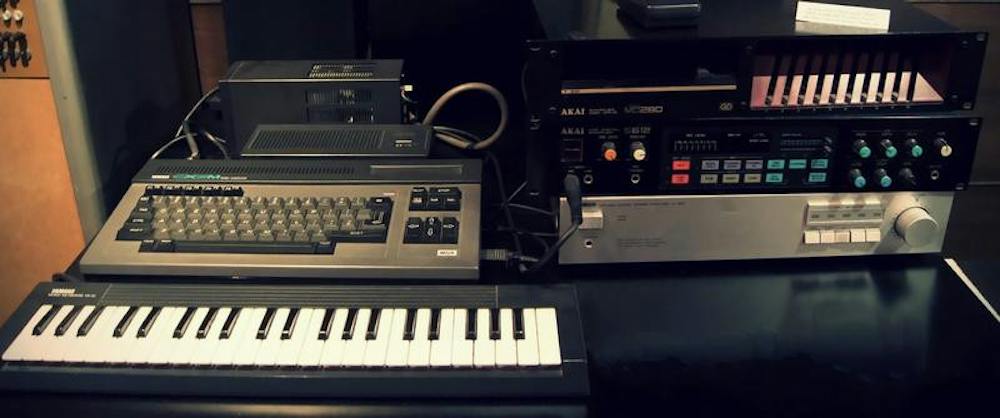
By the ‘80s, artists and producers found a more advanced way to create samples for songs — the TR808. This type of drum machine is used to create and synthesize the sound of percussion. During this time, other sampling machines like synthesizers were frequently used to alter existing sounds or create new, unique ones.
While many ‘80s and ‘90s hip-hop artists like Public Enemy and P.M. Dawn utilized these technologies to make successful recordings lawfully, others faced major legal issues.
Many artists whose original recordings were being sampled oftentimes got upset when their recordings were used as a sample. The pop-punk band Yellowcard sued Juice WRLD over sampling in Juice WRLD’s 2017 song, “Lucid Dreams.” Even West himself eventually got sued by Hungarian singer Gabor Presser along with soul singer Ricky Spicer for sampling their songs for his 2013 album, “Yeezus.”
UB associate teaching professor Derek Strykowski said that to use and create samples, artists must ask the original artist for permission beforehand.
However, in many cases, artists weren’t being asked.
In 1991, a landmark case, “Grand Upright Music, Ltd v. Warner Bros. Records Inc.,” set the precedent that musicians must obtain permission from the copyright owners before sampling.
In the case, rapper Biz Markie had previously sampled Irish singer-songwriter Gilbert O’Sullivan’s “Alone Again (Naturally)” song for his own track, also named “Alone Again.” In Markie’s song, he used the piano from O’Sullivan’s and rapped over it, without O’Sullivan’s approval.
While Markie’s team argued that “this is how hip-hop has always been,” O’Sullivan’s team countered by proving that Biz Markie had previously asked for permission, was not granted it and used the sample regardless.
The court's decision to rule Biz Markie guilty of copyright infringement ultimately “changed everything” for hip-hop, said Strykowski.
Since the 1991 case, artists who sample songs must first request clearance from the owners — who are typically the original artist, songwriter and record label. To obtain permission, artists must often pay an upfront fee and a percentage of royalties to these rights holders.
Strykowski said that the ruling of this case didn’t impact smaller or larger artists, but rather the “middle group of people.” Those who were trying to “break into the mainstream market for hip-hop” were unable to sample many songs because of the costly price, and oftentimes resorted to sampling lesser-known songs because they were cheaper.
Kanye West, who has built an extensive catalogue of song sampling, didn’t make his breakthrough with “Good Morning”, but rather with “Through the Wire,” a song he sampled from Chaka Khan’s “Through the Fire.” In both songs, West has credited the respected songwriters, giving them a percentage of royalties from each track.
While West’s hip-hop genre and songs seem to differ greatly from the rock, pop, and r&b songs he has famously sampled, Strykowski said that “you can't have hip-hop without sampling.”
Kelly McKiernan is the assistant arts desk editor and can be reached at kelly.mckiernan@ubspectrum.com.


