
It’s been three weeks since the federal government has reopened after a 43-day shutdown, but communities across the country — including here in Buffalo — are still feeling the repercussions. The shutdown, which ended on Nov. 13, 2025, left federal employees working without pay and temporarily stopped federal programs such as healthcare services and the Supplemental Nutrition Assistance Program (SNAP).
It was reported that in 2024, 41.7 million people relied on, and benefitted from, the SNAP program. During the shutdown, the Trump administration agreed to comply with two court rulings that required partial SNAP funding. When the case reached the Supreme Court, the order was paused since the shutdown was predicted to end soon. As a result, some states have now restored full SNAP benefits, while others continue to distribute only partial payments — or none at all.
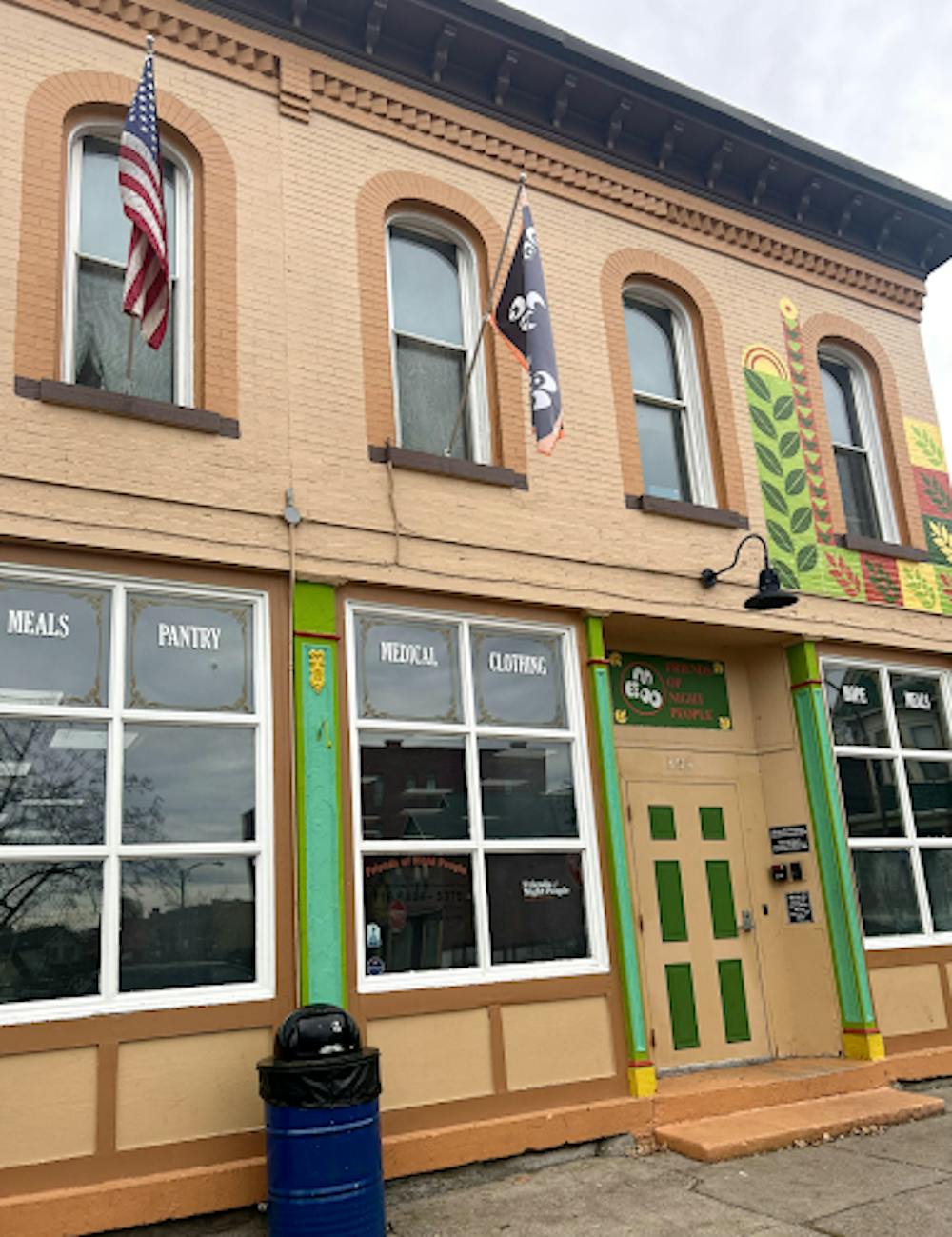
Holidays are approaching, the economy is still recovering and wallets are tightening. Many families have turned to local food banks and shelters for support. Friends of Night People, a nonprofit on Hudson Street that has been serving Buffalo since the 1970s, has seen that need firsthand.
“The numbers that we have typically been seeing are anywhere from 100-150 [people], so we have gone up from that just slightly due to this impending government shutdown,” said Stacy Arlin, Director of Operations at Friends of Night People.
Open 365 days a year, the organization provides home-cooked meals, hygiene supplies, medical care and housing outreach programs.
“If you need it, and you show up, and you’re hungry, I’m going to feed you,” said Patricia Krehbiel, the organization’s relationship manager. “Because every now and again, everyone needs a hand, or some folks are just lonely.”
Friends of Night People serves more than 100,000 meals a year, not including deliveries made through their 716 remote sites. During the shutdown, staff saw more families and teenagers coming in after losing or receiving reduced SNAP benefits. Many were also worried about lapsing healthcare coverage, such as Medicaid.
Housing programs have been hit just as hard. Funding cuts to the HousingFirst initiative—which provides homes regardless of income, mental health status or addiction—have introduced new barriers, including sobriety and income requirements.
“The current administration has taken 7 to 10 million dollars from this area alone for housing,” Arlin said.
“They’re putting more money into treatment programs and less into getting people off the streets,” Krehbiel added. “But it’s kind of hard to treat somebody if they don’t have a safe space.”
These financial setbacks threaten long-term consequences for organizations like Friends of Night People. Reduced grants could lead to staff layoffs, cutting services and an increased risk of generational homelessness. Local shelters are already overflowing.
“People are going to lose jobs, companies are going to lay off, I mean, we are all closer to being out on those streets than we are closer to being billionaires,” said Arlin.
As homelessness grows, so do “crimes of survival”— offenses committed simply because people have nowhere else to turn. Even those with housing during the shutdown struggled to afford basics like food, clothing and toiletries. Federal employees who no longer had an income or citizens on SNAP were still expected to provide for themselves and their families. This has forced many to rely on services like food banks and pantries.
“A couple more families here and there, definitely getting a lot more phone calls about pantries, we don’t have a pantry, but we do help work with some other pantries,” said Krehbiel.
Friends of Night People feeds roughly 300 people each day, supported by volunteers and donations that keep the organization running, especially during times of crisis. While the government has reopened, the instability and financial burden it caused for so many remain. “Just be kind, and just understand that just because it’s not directly affecting you doesn’t mean you’re not going to be affected by it, and it doesn't mean you can’t care,” said Arlin.
The features desk can be reached at features@ubspectrum.com
 Photo: Credit: Kishaun Proctor


