
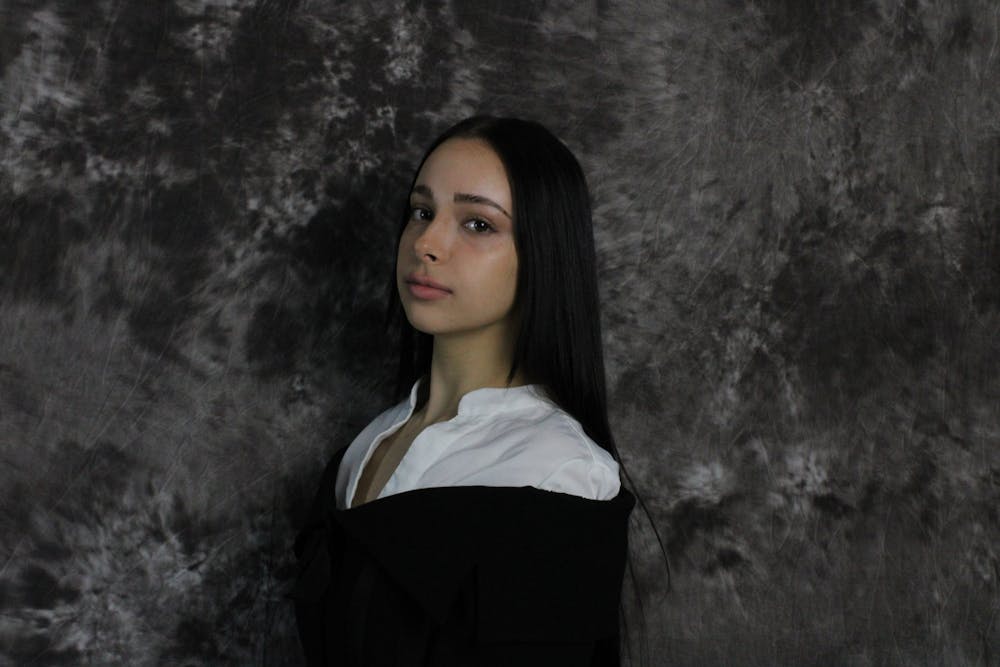
We are judged — and judge others — by what we see. Much of communication is nonverbal, and beauty plays directly into that as we make quick, snap judgments based on a person’s appearance. But beauty is not just self-expression. It’s a social standard — one shaped by power, culture and history — that we hold ourselves and others to.
For as long as history can show, appearance has carried meaning. In ancient Egypt, some of the earliest uses of cosmetics emerged. In Mesopotamia, perfumes were first developed. The Greeks focused on facial harmony and explored physiognomy—the idea that a person’s character could be read through their appearance. In the first century, Roman poet Ovid wrote one of the earliest guides to beauty. By the Middle Ages, beauty had become closely tied to social status.
That connection has not disappeared. There’s a popular saying: “You’re not ugly, you’re just poor.” While blunt, it reflects how beauty often signals status. In Western cultures, tanned skin is associated with leisure — the ability to vacation or spend time in the sun. In many Eastern cultures, pale skin is valued because it suggests freedom from outdoor labor. Exposing the same underlying logic: appearance reflects social class.
This helps explain why beauty and fashion trends constantly shift. Lower classes adopt the styles of higher classes, and in response, higher classes adjust their appearance to maintain distinction. This pattern — often referred to as the trickle-down theory — shows that beauty is not fixed but reactive.
Today, that process is no longer gradual, it’s immediate. Social media and globalization have reshaped how beauty standards shift and spread. Instead of expanding them across cultures, they are merging them into a more concentrated ideal. People, especially women, are no longer only compared to those around them, but to a global reference point. The result is an ideal that looks almost inhuman.
Men and children are increasingly feeling this pressure as well, with the rise of “looksmaxxing” — a new subculture where a person does everything possible to enhance one's appearance. Younger audiences are being exposed earlier to content centered on appearance — from diets and workouts to fashion and cosmetic procedures. While insecurity has always existed, the scale and consistency of these influences are new.
So why do people continue to follow these standards?
It primarily comes from the fact that resisting them comes with social costs. Appearance can influence real outcomes, from visibility online to opportunities in work and relationships. Beauty is not just aesthetic; it functions as social currency. It’s essentially “pretty privilege” — where conventionally attractive individuals reap better benefits, opportunities and treatment from society. Access to that currency is often tied to financial means, making it easier for those with resources to keep up with and benefit from evolving standards.
But there are consequences to a standard that becomes too narrow. As trends converge, individuality can fade. Features tied to heritage and identity have become minimized in favor of what is currently valued. Over time, this produces a kind of uniformity — one that can feel less like self-expression and more like replication. And like any trends, this standard will change as well. The difference is that some changes are not easily undone. Unlike clothing or styles that come and go, certain beauty choices are permanent, carrying long-term consequences.
This is not a rejection of self-improvement or cosmetic changes. For many, these choices build confidence. But it’s worth examining the motivation behind them. Improve what you genuinely want to improve and experiment where change is flexible. But before making lasting decisions, ask yourself a simple question: Is this a personal choice, or is it a choice shaped by the standards around you?
Belle Clark is a copy editor and can be reached at belle.clark@ubspectrum.com


 Photo: Paul Hokanson/UB Athletics
