Racism, sexism, homophobia, low wages, random firing of employees, sexual harassment, physical and verbal abuse, forced overtime, child labor - these are the conditions in sweatshops around the world.
UB students are trying to change them.
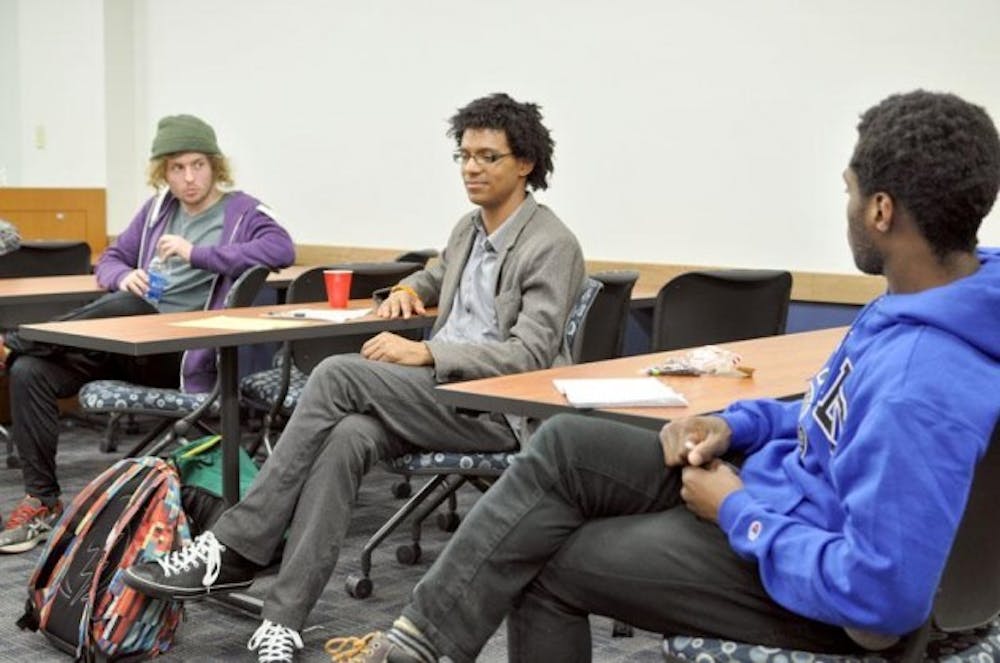
After two years of not meeting, UB Students Against Sweatshops (UBSAS) got together to discuss these conditions and what the club can do to change them.
Michael Alexander, a fifth-year electrical engineering major, said sweatshops are loosely defined as any workplace with abusive conditions. This includes forcing employees to work overtime, child labor, the absence of living wage policies and employee harassment.
"In a way, we kind of won the lottery, just being born in America and not having to work in sweatshops," said George Mitchell, a freshman computer science major and member of UBSAS. "Just having the opportunity to come to UB even, we're blessed. It's just because of the circumstances we were born in that we have these opportunities. People who work at sweatshops, they don't have these opportunities only because of the circumstances they were born in."
Alexander blames the capitalist society of the United States for sweatshops. He thinks the focus of big businesses is only on production and profit; he believes companies will do whatever they can to make that profit. This is what leads to corporations outsourcing labor to external countries where labor isn't regulated, he said.
Jonathan Goodrum, a sophomore aerospace engineering major, believes UB should take advantage of the school's large international population as the issue might "hit a little closer to home" to some students.
Aditya Thakur, a graduate mechanical engineering major, is familiar with the widespread number of sweatshops in his home country of India. He witnessed first-hand some of the problems workers face in those conditions.
Thakur believes those who are exploited aren't necessarily unaware but are more likely to be "choiceless" because of their desire to make ends meet and the desire to make money.
"People from the lower economic class don't have privileges and those who have privileges should not exploit the poor," Thakur said.
Thakur thinks people are ignorant about the exploitation of workers. He said he joined UBSAS because he can meet people who share the same interests as him.
"I had a friend in college who couldn't concentrate on his studies because his father was exposed to such exploitation," Thakur said.
In India, parents work hard and sacrifice a lot in order to help their children lead good lives, according to Thakur. He said even though his friend wanted to excel career-wise, he struggled because he could see his father suffering.
"His dad saw the worst conditions in life ... he wanted his son, my friend, to study hard and get a good job and not suffer like he did," Thakur said.
Mitchell was inspired to get involved by the personal stories he heard from workers who came from Haiti and Guatemala. They spoke during Workers' Rights Week about how unionizing improved their lives.
After joining a union, they were paid a living wage and were no longer abused or harassed.
"I guess it's my desire to help people and fight for a better world because you can't just take the world as it is," Mitchell said. "You need to fight for something better."
Mitchell said UBSAS isn't isolated in its actions. The newly revived club is affiliated with United Students Against Sweatshops (USAS), the national student labor organization that fights for workers' rights. UBSAS is one of over 150 chapters across the nation, Mitchell said.
"We all have a great concern for economic justice and we all want to fight for a fair world economy," Mitchell said. "And our role as consumers in this economy, we have the ability to pressure the companies that own these factories to allow the workers to unionize and have living wages and so on."
Goodrum thinks no voice is too small to be heard. He said there's something unsettling about companies paying people 6 cents an hour for something they'll sell for $300.
Mitchell said people seem to live in a "bubble of privilege." He said people don't feel their lives are affected by another person's oppression. But he hopes this will change.
"We live in a world where we're connected through the Internet and other things," Thakur said. "We can't ignore this. If one part of the world is affected, slowly we're going to be affected. There's some kind of vested interest. We cannot blindfold ourselves and be engrossed in our own benefits. It's just one world and everybody interacts with everyone."
The new group aims to bring the issues to campus.
"We hope to make campus as sweatshop free as possible, Goodrum said. "We want to remove Nike and Adidas from campus stores. We hope to excel workers' rights in the region around Buffalo. There's obviously not a lot in the area but there are still workers who need to be represented. If we can come together as a group and show support, we can help negotiate certain stuff."
Alexander believes that people shouldn't be afraid to get involved and recalls feeling afraid when he had first gotten involved with social justice.
"It's a heuristic approach where you have to actually be able to get involved in order to learn," Alexander said.
Mitchell believes the group is doing the right thing and people will recognize it as UBSAS continues being a part of this student-labor solidarity movement toward global justice.
Goodrum believes it is important for people to be representatives of those who can't speak up for themselves.
He said UBSAS strives to make UB as "sweatshop-free" as possible. He wants to raise the level of awareness amongst the student population in regards to this issue through direct actions like educating the community and holding tabling sessions in school. He hopes UB students will join the cause and battle the use of sweatshops.
"If you want to change the world, you're not alone," Goodrum said.
Email: features@ubspectrum.com