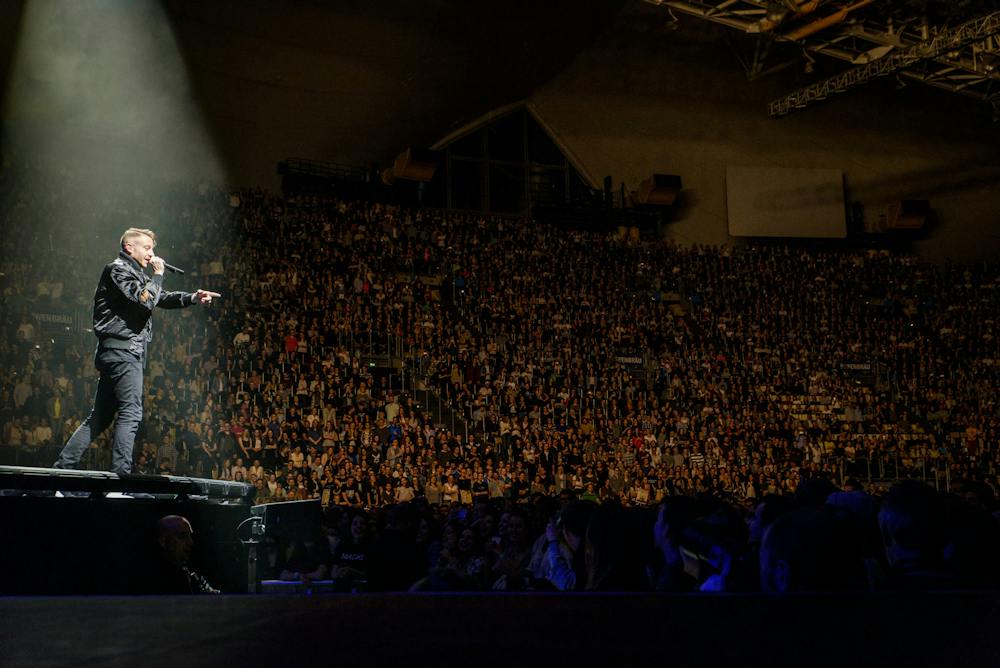
For two nights, Macklemore advocated for Palestine after his opening act performances under Ed Sheeran’s Loop Tour.
The next day, Sheeran’s tour promoter dismissed Macklemore; starting a cascade of remaining opening acts — including Lukas Graham and Finneas — along with Sheeran’s supporting band leaving the remainder of the tour.
Now, Sheeran continues his tour solo.
Sheeran’s tour is one of the most recent arenas of escalating public discourse over the war in Gaza. For nearly a century, territorial conflicts and tensions have existed between Israel and Palestine. The strife between the two countries intensified greatly after the October 7, 2023 attacks where Hamas — a militant Palestinian nationalist organization — launched an attack on Israel, killing more than 1,200 people and capturing 251.
A long public critic of the war in Gaza, Macklemore performed his song “Hind’s Hall” — a reference to how Columbia University’s pro-Palestine protesters renamed one of the university halls after Hind Rajab, a Palestinian child killed by Israeli Defense Force soldiers — Sept. 4 at East Rutherford’s MetLife Stadium.
“The people all the way in Gaza to the occupied West Bank know that we have not forgotten about them. I say: Free Palestine,” Macklemore said at the time. “I say: Free Lebanon. Free Cuba to the Congo to Sudan to Iran.”
Macklemore continued his advocacy the next night, saying that his “criticism of Israel, criticism of apartheid, being against genocide” was not a criticism of Jewish people.
Robert Kraft — the multi-billionaire businessman whose Gillette Stadium is set to host Sheeran’s Loop Tour Sept. 25 — along with many other stadium owners prohibited Sheeran’s Loop Tour from occurring on their venues if Macklemore was kept as an opening act.
According to Macklemore’s statement on Instagram over his dismissal Sept. 14, Sheeran struggled with his “typical apolitical stance” and “couldn’t get past his public facing, ‘I don’t take sides.’”
Just Saturday, Sheeran apologized to fans for “making mistakes” over Macklemore’s drop, saying that he has tried to “not be a political commentator of any kind” but the controversy put him in “an important and passionate argument about free speech and the most complex political issue on the planet.” He went on to condemn both the Oct. 7 attacks and Israel’s actions in Gaza.
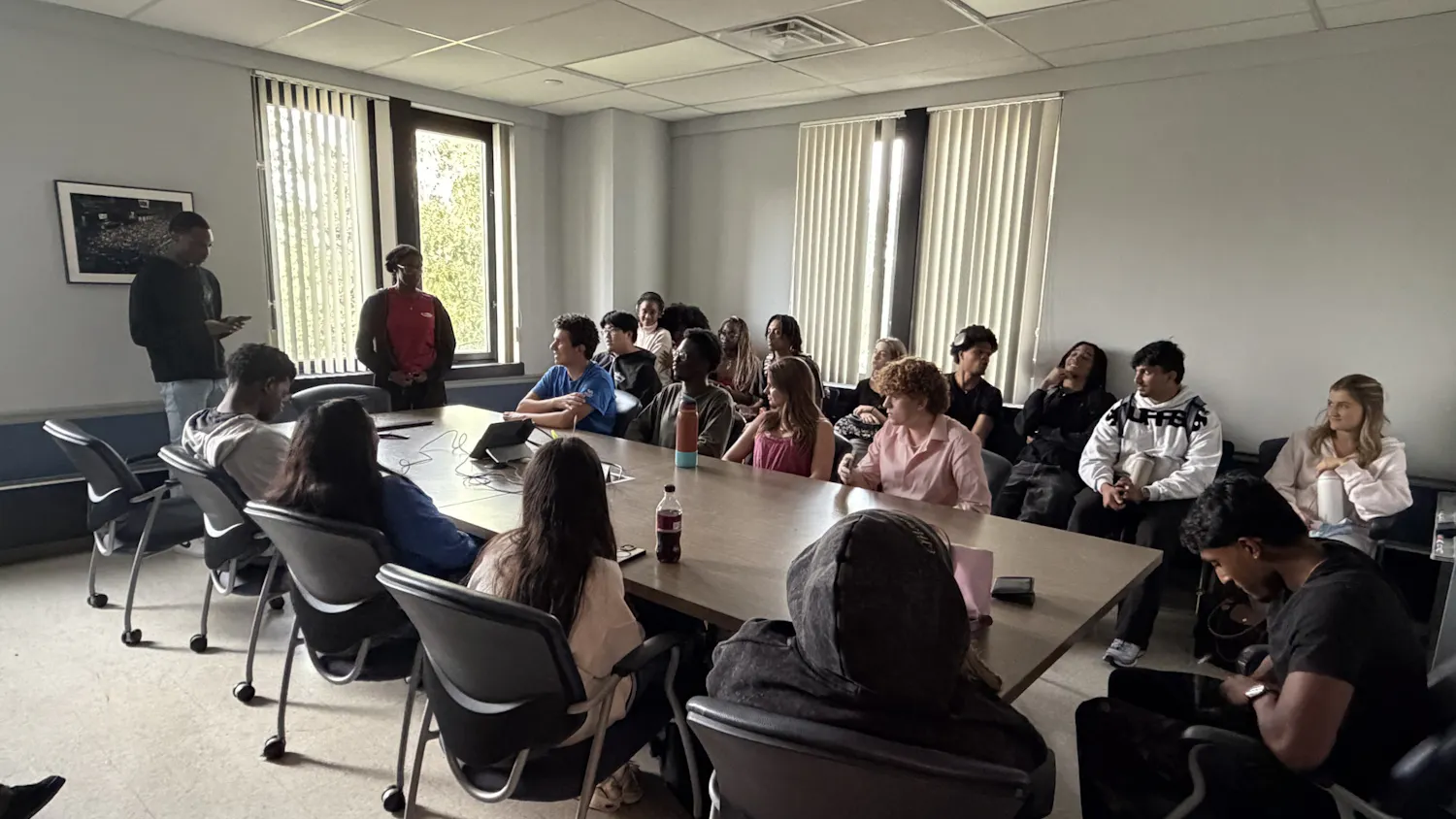
Several students that spoke to The Spectrum believe that celebrities should use their platform.
Chance Andrusco, a sophomore majoring in mechanical engineering, says venues shouldn’t stop artists from spreading their messages regardless of the topic’s content or place of discussion.
“It doesn’t harm anyone to speak out,” Andrusco said.
Will Hazan, a sophomore who plans to major in nursing, said a concert is a great way to speak up, as “people don't expect it” to happen.
“There’s not a bad time or place to advocate for people who need it,” Hazan said.
Torin Ferguson, a sophomore majoring in aerospace and mechanical engineering, placed a limit on the platform, saying that celebrities should use their platforms as long as “they know what they're talking about.”
Michelangelo Fontana, a senior law major and last year’s undergraduate Student Association senator, said that although the situation and Kraft’s decision “suck,” Kraft is the owner of the Gillette stadium and “has every right” to say who can and cannot perform at his venue.
Freshman psychology major Jackie Negri has a different take on Kraft’s decision, saying that people should still feel comfortable speaking to those that do and do not agree with their views.
Kelly McKiernan is the assistant arts desk editor and can be reached at kelly.mckiernan@ubspectrum.com.